

Key Points:
- A new Iliff School of Theology course aims to give pastors and others the foundation they need to support the dying and their families.
- It is billed as the first theology school to offer this training.
- Beth Elliot, a death doula who leads the Foundations of Death Care course, said incorporating dying as a part of life and speaking about it can help ease the way at the end.
Counseling someone approaching death can be difficult territory, not to mention supporting family members who have their own needs.
Working as a chaplain at St. Vincent’s Regional Hospital in Billings, Montana, to earn continuing professional education hours, the Rev. Sam Beaves-Fisher didn’t feel that he had enough know-how to help dying people and their families.
“I was really lacking around real concrete things about death,” said Beaves-Fisher, pastor of Park City Community Church in Park City, Utah, a United Methodist church.
“Oftentimes we think about death and dying being stressful (only) on families,” he added. “Well, that’s because the dying person isn’t communicating in the way that they typically had.”
To address it, Beaves-Fisher turned to his seminary, Iliff School of Theology in Denver, one of 13 United Methodist theological schools in the U.S. There, a certificate program was started last fall to better equip professionals to help families and people close to passing away.
Beth Elliot, the death doula program lead at Iliff, teaches the Foundations of Death Care course, which is available as an online or in-person experience.
The course is part of the Iliff Death Care Collective, a community of death care professionals, educators and advocates who are dedicated to reimagining the way people care for the dying, the deceased and their loved ones.
Subscribe to our
e-newsletter
“There’s a lot of ways that thinking and incorporating death into our world currently can enhance the way we live,” Elliot said. The Unitarian Universalist minister has been an end-of-life doula for more than two decades.
A talk on death she gave at Iliff while working toward her master’s degree led to the launch of the new offering.
“I spoke about my end-of-life doula work, and what that looks like amid the spectrum of care with hospice and palliative care and chaplaincy,” she said. “After that, we started talking, and the class was born. It’s the very first (such course) that is endorsed through a school of theology, so we have a very unique perspective from that point of view.”
It’s important to “change the narrative around death,” she said.
“I do believe that speaking about death and incorporating it as part of your life and your conversations and your awareness does help ease the way at the end,” Elliot said.
In addition to tending to mental health and stress, it is vital to have the paperwork in place and medical forms completed so “your family all know exactly what you want,” Elliot said.
Jiyoon Lee, director of the Dallas Meditation Center, lost her brother because of COVID-19. She took the Foundations of Death Care course last fall in hopes of giving others the support she didn’t receive.
“I have been interested in how to support people during their difficult times because my personal experience of navigating bureaucratic aspects of losing somebody and taking care of the aftermath was difficult,” Lee said.
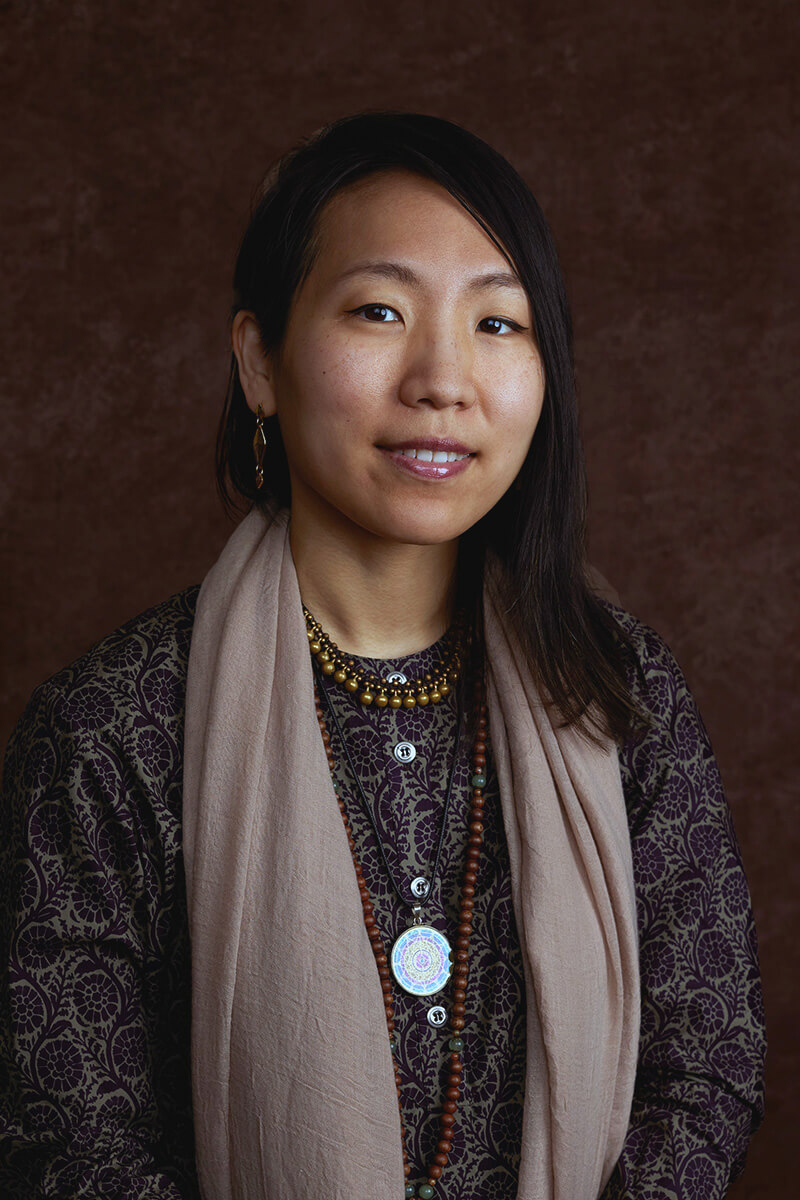
In addition to meditation, Lee teaches yoga and provides somatic experiencing therapy, an alternative treatment for trauma and stress-related disorders.
“My focus would be emotional support and interpersonal aspects of supporting the family and the dying,” Lee said. “That’s how I’m envisioning it as of now, but I’m also keeping my mind open. I do want to be better equipped with legal aspects of this process, too, because I myself had a hard time navigating dealing with probate lawyers and unreturned calls and complications. So that’s somewhere that I can grow into.”
The course is well thought out, Lee said.
“It is a great survey of various types of information that people should be equipped with,” she said. “Each module covers different aspects of the journey.”
That includes the medical, legal and emotional aspects of the death experience.
“It allows you to use it as a starting point of envisioning what kind of end-of-life support or death doula you want to be,” Lee said.
Beaves-Fisher is considering hosting a two-day retreat about death at his church with the help of Iliff.
“We were really intrigued by their certification program,” he said. “I have a lot of midwives and birth doulas in my circle here in Park City who are kind of interested in the other end of things.”
Park City Community Church leans more traditional than Iliff, he said.
“I was a little hesitant bringing Iliff into what I would say is a more conservative culture and church, but I really trust what they’re doing through their innovation office,” Beaves-Fisher said. “I had the chance to work in that office for a while in seminary, and I really trust that their ultimate goal is to provide the best knowledge from multiple faith traditions and allow people to pick what works best for them.”
The first Foundations of Death Care course had 13 students, said Jeni Rinner, product development and user experience manager at Iliff.
“I’m genuinely overwhelmed at the amount of interest in this program,” Rinner said. “We’re working hard to build capacity to meet the need that we’re finding.”
Death should be “a friend or companion,” Elliot said. “In my life, I have witnessed more people than I can count in the moment they leave this earth, and I think with enough exposure, some of the fear does go away.”
Patterson is a UM News reporter in Nashville, Tennessee. Contact him at 615-742-5470 or newsdesk@umnews.org. To read more United Methodist news, to the free Digests.

