

Key points:
- Seventy years ago, the Methodist Church supported full conference membership for women clergy.
- The decision would have a resounding impact when The United Methodist Church formed in 1968 and in other developments that expanded clergy recognition.
- The setbacks on the way to full clergy rights offer lessons as women’s leadership and voting rights face increasing public pushback today.
After a debate that lasted part of the morning and all afternoon on the first Friday of General Conference, the Rev. Zach T. Johnson stepped forward to propose substitute legislation that he hoped would break the impasse.
He moved that the lawmaking body add one sentence to the denomination’s Book of Discipline that would make women eligible for Methodist “traveling ministry” under the same church rules that governed men.
“This is a positive approach,” Johnson, a delegate from Wilmore, Kentucky, and president of Asbury College, said in speaking to his proposal.
“And it simply says we are willing to admit any woman who can meet the same conditions that men now meet, to enter any conference. It leaves the matter for the conference to decide … the specific requirements for admission.”
A few moments later, delegates supported Johnson’s substitution by a vote of 389 to 297 — a 56.7% majority. Then, by an overwhelming show of hands, the delegates gave their final approval for the change before adjourning at 5:10 p.m. for a delayed dinner break.
Thus, the Methodist Church’s General Conference, meeting in Minneapolis, granted full clergy rights to women 70 years ago on May 4, 1956. That decision would reverberate in future developments from the 1968 dissolution of the segregated Central Jurisdiction as part of the formation of The United Methodist Church to the 2024 removal of denomination-wide bans on gay clergy.
Bishop Tracy S. Malone, who last week completed her term as the first Black woman to serve as Council of Bishops president, is among those celebrating this 70th anniversary.
“I carry deep gratitude for the many clergywomen who paved the way — those who persevered when doors were closed, preached when their voices were questioned and trusted God’s call even when the Church did not fully recognize their leadership,” said Malone, who leads the Indiana Conference.
“This milestone invites honest reflection. While we celebrate meaningful progress, the journey towards full equity is not complete.”
Nevertheless, the 1956 General Conference vote marked a significant shift that carried more weight than ordination alone. In fact, according to the New York Times, the Methodist Church already had about 50 ordained women preachers when the vote took place.
However, the local ordination available to Methodist women before that year was structurally different from full conference membership in ways that affected every dimension of a woman’s ministry, said the Rev. Emily Nelms Chastain, Ph.D.
A historian of women’s ordination, Nelms Chastain is an ordained United Methodist deacon and assistant professor of Christian history and Methodist studies at Southern Methodist University’s Perkins School of Theology in Dallas.
“Without conference membership, a woman could only possibly be appointed to whatever charge was left over after the bishop had placed all the conference members,” Nelms Chastain said. “As a locally ordained clergy, she had no guaranteed appointment, no pension, no vote in her annual conference and no formal standing as a traveling preacher. … Full conference membership in 1956 changed all of that simultaneously.”
Resources
United Methodist general agencies have assembled multiple resources for congregations and individual church members to mark the 70th anniversary of women gaining full clergy rights.
- The United Methodist Commission on Archives and History offers resources for the 2026 Heritage Sunday, on May 17 this year. The theme this year is: “The Spirit Falls Equally,” an acknowledgement that God calls — and always has called — all people, regardless of gender.
- Ashley Boggan, the top executive of Archives and History, and the Rev. Emily Nelms Chastain will discuss the history made in 1956 in a special live episode of the "Un-Tied Methodism" podcast at 7:30 p.m. U.S. Eastern time May 4.
- Discipleship Ministries and the Commission on the Status and Role of Women have assembled worship resources and preaching notes to celebrate the anniversary.
- Status and Role of Women also has put together a liturgical resource.
Women pastors could now be appointed on the same terms as men — with a pension, a vote and the church’s formal recognition of their vocation. Nelms Chastain stressed that the decision was more than administrative.
“It was a theological claim that Methodists acknowledged: The Spirit’s gifts are not gendered,” she said, “and the call of God does not become real only when men certify it.”
Today, women clergy and other women leaders in The United Methodist Church offer a Gospel-informed counterpoint to the increasing hostility women face in public life. In March this year, the United Nations released a report warning that women’s rights are regressing worldwide. Even in the U.S., women — especially of color — face both more public pushback and potential barriers to their right to vote, a right established in the U.S. Constitution just 36 years before the Methodist clergy decision.
“I think this is a moment in time when our Social Principles and Book of Discipline can be a huge gift to us if we teach what they say and live by them,” said the Rev. Stephanie York Arnold, the top executive of the United Methodist Commission on the Status and Role of Women. Her agency works for women’s equality in church life.
“United Methodists should be pushing back and leading by a more loving, liberating and courageous example,” she said. “We should elevate women’s leadership proudly. We should proclaim in The UMC women lead, preach and teach ... and do anything God calls them to do!”
Progress and setbacks
Arguably, the tradition of women preachers in the Methodist movement goes all the way back to Susanna Wesley, mother of movement founders John and Charles Wesley.
When her husband Samuel’s Church of England work took him away from his parish, Susanna Wesley’s Sunday afternoon family devotion time with her 10 children ended up drawing a crowd of people eager to hear her spiritual instruction.
Her son John, the main organizer of Methodism, in turn ended up authorizing women lay preachers — albeit with initial reluctance.
But the recognition of women preachers didn’t last. Jarena Lee, who preached in the early days of the African Methodist Episcopal Church, lived long enough to see her denomination repeatedly deny women the license to preach. The AME Church began ordaining women to itinerant orders in 1960.
Within the broader Methodist movement in the 19th century, laywomen including abolitionist Sojourner Truth and Holiness Movement founder Phoebe Palmer continued to testify and take leadership roles. But the long road to women’s full clergy rights came with struggle, setbacks and sacrifice.
The Rev. Antoinette Brown Blackwell, the first U.S. woman ordained a minister, was Congregationalist — part of what is now the United Church of Christ. But she was ordained in 1853 by a Methodist, the abolitionist Luther Lee.
In 1866, the Rev. Helenor M. Davisson was ordained a deacon in the Methodist Protestant Church — making her the first ordained woman in the Methodist tradition. The Rev. Anna Howard Shaw, after the Methodist-Episcopal Church refused to ordain her in 1880, joined the Methodist Protestant Church and was ordained that same year.
In 1889, the United Brethren Church granted full clergy rights to the Rev. Ella Niswonger.
But denominational mergers, at least temporarily, put an end to women’s full ordination. As part of the reunion of three Methodist denominations in 1939, Methodist Protestant clergywomen lost their full clergy rights. More notoriously, the 1939 merger also saw the establishment of the segregated Central Jurisdiction.
Similarly, the merger of the United Brethren and Evangelical Church that formed the Evangelical United Brethren Church in 1946 called for a halt to women’s ordination. While never an official ban, women’s ordination slowed greatly in the resulting union.

What was happening in 1956
By the 1950s, views of women in leadership had shifted again — thanks both to women’s changing roles during World War II and to decades of organizing work by Methodist laywomen, especially those involved in the forerunners of today’s United Women in Faith.
“This movement took many years as movements do,” said Sally Vonner, the organization’s top executive. “I’m proud that this is part of our legacy of heeding God’s call to be changemakers in the midst of resistance.”
Sung-Ok Lee, connectional officer for United Women in Faith, said that the laywomen —through missionary societies and later the Women’s Society of Christian Service — raised funds, ran schools and hospitals and shaped mission priorities across the globe. They also commissioned deaconesses, laywomen trained and consecrated to church service.
“In doing so, they demonstrated something powerful: Women were already leading the church in every way except officially,” said Lee, a deaconess herself.
Subscribe to our
e-newsletter
In 1952, the Women’s Society of Christian Service surveyed 577 district superintendents. The overwhelming majority of respondents said the women supply preachers were superior or equal to men in both education and ministry effectiveness.
In 1954, the Norwegian Annual Conference held an ordination service for the Rev. Agnes Nilsen Howard on a return trip from serving as a missionary in India. The conference clergy had earlier voted to ordain her in 1932, immediately before she was sent in missionary service.
“Agnes was a missionary in India all her adult life,” said the Rev. Hilde Marie Øgreid, who is working on a book about women clergy in Norway. Øgreid is a theologian and rector of the United Methodist seminary in Oslo, Norway.
“She was, most of the time, a hospital chaplain, but it sounds like she ran the whole thing,” Øgreid said. Howard even acted as a district superintendent in India — advising the bishop on pastoral appointments.
Lee said that by the time General Conference met in 1956, the question was no longer whether women were capable of ministry.
“That had already been answered,” Lee said. “The question was whether the Church would formally recognize what was already in practice.”
Nelms Chastain, the historian, noted that the 1956 General Conference received more than 2,000 memorials — the 1950s equivalent of petitions — just on the question of women’s full-conference membership. That was more than the total number of memorials submitted to every previous General Conference. To put that amount in perspective, the most recent General Conference in 2024 received about 1,200 petitions in total.
The Association of Women Preachers, founded by Methodist preacher M. Madeline Southard in 1919, offered model petition language, provided study materials and tracked denominational progress around the world. Nelms Chastain said Southard and the association she led helped make those 2,000 memorials possible. Southard was in her late 70s when the vote took place.
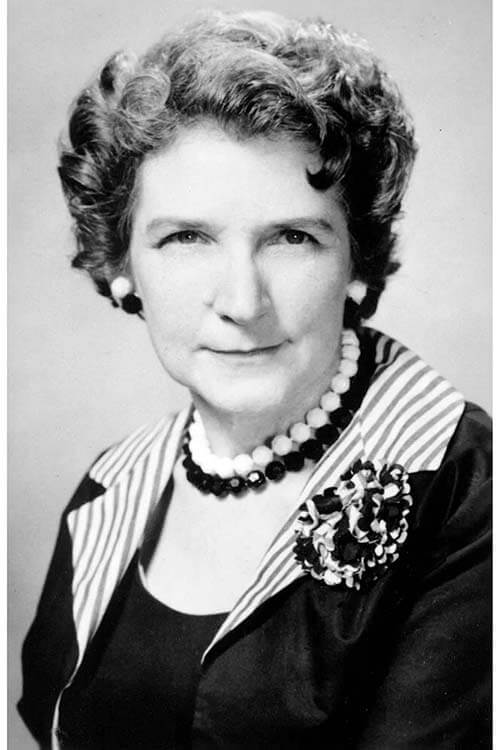
What is striking during the lengthy debate on May 4, 1956, was that there was no argument about whether the Bible permitted women to preach or lead. In fact, the big sticking point was how to handle women clergy when congregations refused their appointment as pastor. The 1956 delegates turned down a proposal that would have allowed only single women and widows to serve as full-fledged clergy.
Two weeks after General Conference approved full clergy rights, the Central Pennsylvania Annual Conference admitted “on trial” the Rev. Maud Keister Jensen — a longtime missionary to Korea — putting her on the path to full conference membership. In 1956, the Presbyterian Church in the United States of America also ordained its first woman minister of word and sacrament.
Jensen and other women clergy saw their rights maintained when 12 years later the Methodists and Evangelical United Brethren formed The United Methodist Church.
Where do we go from here
Still, the appointment concern turned out to be a real problem for women clergy well beyond 1956.
“Studies conducted in the decades after 1956 consistently showed that women received smaller congregations, more rural and declining charges, and less access to the large steeple appointments that built institutional visibility and career pathways,” Nelms Chastain said.
“The gap between what the Discipline said and what the appointment system produced is precisely what accountability organizations like the General Commission on the Status and Role of Women were formed to address.”
While United Methodists have elected women bishops on all four continents where the denomination is present, York Arnold of Status and Role of Women said women still struggle to get large-church appointments and their compensation often still lags behind male colleagues' pay.
“At times parishioners will say that they agree women are equal but their church just ‘isn't ready’ for a female pastor yet,” York Arnold said. “But at the same time those churches have been allowed over the years to not make any intentional progress in growing in their awareness and engagement of female clergywomen.”
Even the acceptance of laywomen has long been an open question. Only last year — after multiple attempts — did the denomination ratify a constitutional amendment that adds “gender” and “ability” to the list of qualities that do not exclude a person from church membership.
York Arnold said she dreams of a United Methodist Church where no congregations make statements about not accepting a woman, person of color or LGBTQ person as pastor.
“I long for the day that our district superintendents and bishops simply do not tolerate those conversations, but reaffirm that as United Methodists, ALL persons belong,” she said. “And we match congregations with pastors who have the gifts needed to serve that church well … period.”
York Arnold acknowledges that some parishioners will leave if the church takes a strong stance. However, she thinks more will end up joining.
“Explicitly and unapologetically living into our values is the antidote our world needs right now to the misogyny, racism, homophobia and bigotry that is running rampant,” she said. “The Church must lead in this way.”
Hahn is assistant news editor for UM News. Contact her at (615) 742-5470 or newsdesk@umnews.org. Frances Lyons, reference archivist for the United Methodist Commission on Archives and History, contributed to the article. To read more United Methodist news, subscribe to the free UM News Digest.

