
Key points:
- More than 300 delegates are meeting this week in Kitwe, Zambia, for what United Methodists expect to be the last set of bishop elections for the next four years.
- The Mid Africa Central Conference, formerly known as the Congo Central Conference, plans to elect three new bishops including one who will oversee a newly formed episcopal area.
- By the end of the meeting, the denomination will have elected 13 new bishops around the globe over the past year.
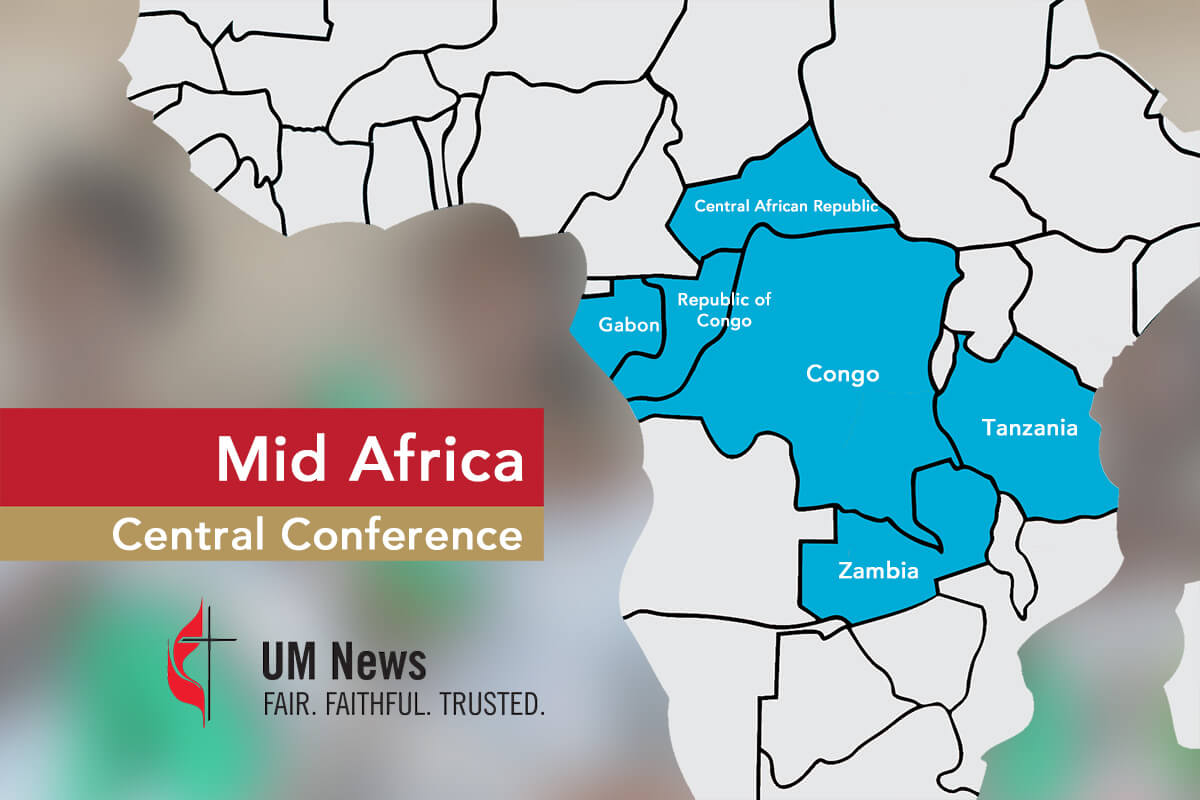
What was once the Congo Central Conference now has a new name — the Mid Africa Central Conference.
The United Methodist central conference also is getting an additional bishop, bringing its total to five.
More than 300 lay and clergy delegates are meeting this week in Kitwe, Zambia, for what United Methodists expect to be the last central conference and final set of episcopal elections for the next four years. The Mid Africa delegates plan to elect three new United Methodist bishops before the conference closes on July 13.
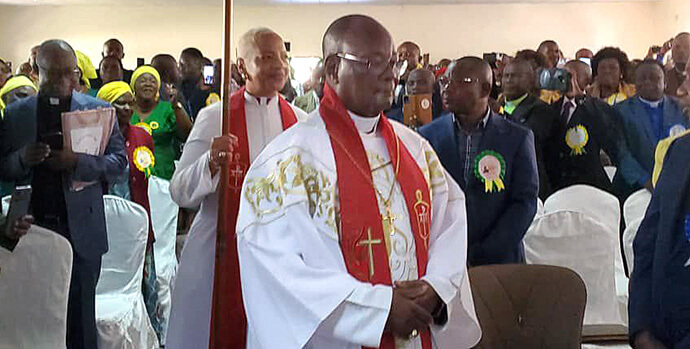
“In this complex, we are asking all delegates to ask the help of our God,” Bishop Gabriel Yemba Unda, president of the central conference’s bishops, preached during opening worship. He preached in French with English interpretation.
“May the Spirit of God work in us,” he said, “because Jesus Christ is the king of the church.”
By the meeting’s conclusion, The United Methodist Church will have elected 13 new bishops over the past year — two in the U.S., two in Europe and nine in Africa.
The denomination has eight central conferences — church regions in Africa, Europe and the Philippines. Central conferences consist of multiple regional bodies called annual conferences. The central conferences typically meet once every four years to elect bishops and adapt parts of the Book of Discipline, the denomination’s policy book, as their missional contexts require.
Watch livestream
Congolese communicators are posting livestream videos of the Mid Africa Central Conference on the Zambia Annual Conference Facebook page. Most of the proceedings will be in French with English interpretations.
General Conference, the denomination’s top legislative body, renamed the central conference last year as part of broader changes to the denomination’s map on the African continent.
The lawmaking assembly split the former Africa Central Conference into the East Africa and Southern Africa central conferences and added two bishops to the continent, where the denomination’s membership is growing. That same meeting voted to reduce the number of active bishops in the United States from 46 to 32.
General Conference delegates also voted for one of the new bishops to go to the Mid Africa Central Conference.
General Conference determines the number of central conferences and the number of bishops. But it’s up to each central conference to determine the borders of the episcopal areas that bishops oversee. United Methodist episcopal areas often consist of multiple annual conferences.
On July 10, a majority of Mid Africa Central Conference delegates voted to create its new episcopal area by splitting the North Katanga Area. The North Katanga Area encompasses parts of the Democratic Republic of Congo as well as Tanzania.
The central conference’s new name also officially took effect when the gathering opened that same day.
The new name better reflects the multinational nature of the central conference. The middle African body consists of the United Methodist annual conferences in the Democratic Republic of Congo, Tanzania and Zambia. The central conference also encompasses the United Methodist mission presence in the Central African Republic, Gabon and the Republic of Congo.
The Democratic Republic of Congo still comprises much of the central conference. The nation, where the denomination has seen some of its most rapid growth, has the second highest number of United Methodists after the United States.
All four of the central conference’s current bishops also hail from the DRC.
Bishop Unda, who leads the East Congo Episcopal Area, and Bishop Owan Tshibang Kasap, who leads the South Congo and Zambia Episcopal Area, are retiring.
Not retiring are Bishop Daniel O. Lunge, who currently leads the Central Congo Area, and Bishop Mande Muyombo, who currently leads the North Katanga Area and chairs the Connectional Table that serves as a denomination-wide coordinating body.
At a special session in 2018, the central conference voted for its bishops to serve until they reach mandatory retirement age.
Subscribe to our
e-newsletter
The bishops who join Lunge and Muyombo as active episcopal leaders will face the challenge of leading in a time of war.
The Mid Africa Central Conference was originally scheduled March 30 to April 4 in Kindu, Congo. But because of ongoing conflict in eastern Congo, the meeting needed to be relocated and rescheduled.
The capture of Goma and Bukavu by the rebels of the March 23 (M23) Movement marked a significant escalation in the long-simmering conflict. The events have led to a humanitarian crisis, with thousands of displaced civilians and heavy loss of life. The United Methodist Church in eastern Congo, with funding from the United Methodist Committee on Relief, is providing vital aid in the war-torn region.
United Methodist bishops around the globe also are praying and working for peace.
Hahn is assistant news editor for UM News. Londe, who is attending the central conference, is a communicator and UM News correspondent in Congo. Contact them at (615) 742-5470 or newsdesk@umnews.org.


