Key points:
- Twenty-five years ago, the Igniting Ministry initiative rolled out a brand promise for the denomination: “Open Hearts. Open Minds. Open Doors.”
- Conservatives, progressives and centrists initially welcomed it, but the promise eventually exposed deep divisions that already existed in the church.
- Today, The United Methodist Church has a chance to matter again, and a hurting world needs the promise of open hearts, open minds and open doors.

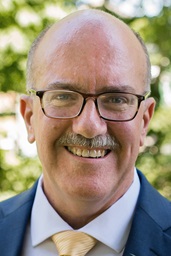
Photo courtesy of the author.
Commentaries
Twenty-five years ago, The United Methodist Church did something unusual for a mainline Protestant denomination.
We bought television time.
Not local cable-access time. Not a late-night religious broadcast slot. National television time. For the first time in history, a mainline denomination placed commercials on major broadcast and cable networks to tell the American public that there was a church willing to welcome them.
The initiative was called Igniting Ministry. It launched on Aug. 28, 2001. Fourteen days later, 9/11 occurred, and a campaign about openness suddenly found itself speaking to a nation gripped by fear. The nation went into shock, and nearly every institution in American life was forced to ask whether its message still mattered.
In our case, the question became painfully immediate: What does it mean to say “Open Hearts. Open Minds. Open Doors.” when the world is afraid, grieving, suspicious and ready to divide?
I led the team at United Methodist Communications that shaped that phrase and the campaign. I have spent my life at the intersection of ministry, media, and public communication — as a United Methodist pastor, a communications executive, a filmmaker and later as a five-time Emmy-winning producer. But few projects have stayed with me like this one.
Making a promise
The reason we began the work was simple enough: The United Methodist Church was becoming invisible to much of the country. We were everywhere and nowhere. We had churches in cities, suburbs, small towns and rural crossroads. We had hospitals, universities, mission agencies, camps, justice ministries, disaster response networks, choirs, potlucks, food pantries, youth groups and saints in the pews.
Yet to many outside our walls, we had no clear public identity.
People did not know who we were. Worse, many assumed they did know. They thought the church was judgmental, irrelevant, politically captured, spiritually thin or simply not for them. Some had been wounded by religion. Some had drifted away. Others had never been invited in a way that felt honest.
So we asked a dangerous question: What promise could The United Methodist Church make to the world?
After research, testing, argument, prayer and more argument, the phrase emerged:
Open Hearts. Open Minds. Open Doors.
It had rhythm. It had warmth. And it sounded like United Methodism at its best — grace before judgment and hospitality before gatekeeping. It suggested that we were a church willing to love widely, think deeply and welcome generously.
A brand promise is not a tagline. A tagline describes what an institution wants to say about itself. A brand promise describes what people should be able to count on when they encounter you.
That distinction matters.
“Open Hearts. Open Minds. Open Doors.” was never meant to be self-congratulation. It was never meant to say, “Look how wonderful we already are.” It was meant to say, “This is who we are called to become.”
That is where the trouble began.
The genius and the danger
The phrase was mostly welcomed across the church, at least at first. Conservatives heard evangelical warmth, the open door of salvation and the invitation to come home. Progressives heard inclusion, intellectual openness and a refusal to reduce the gospel to rigid boundaries. Centrists could hear in it a broad tent of Methodism. For a brief moment, everyone could stand beneath the same banner.
But banners have a way of exposing the crowd beneath them because when you tell the world your hearts are open, people ask whose lives you mean; when you tell the world your minds are open, people ask which questions are permitted; and once you tell the world your doors are open, people ask why some people still feel unwelcome.
That was the genius of the promise. It was also its danger.
It gave us language large enough to hold the best of our tradition. But it also gave the world language by which to judge us. In many cases, the world was right.
Sometimes we were open only to people who already knew the hymns, understood the unwritten rules, looked the part, believed the right things, voted the acceptable way, loved the approved people and did not ask questions that made us uncomfortable.
The commercials invited everyone to visit us. But the deeper work was never on television. It was in the narthex and the parking lot, as well as the sanctuary and Sunday school room.
Igniting Ministry included training for congregations precisely because we knew advertising alone would be a betrayal. There is little more damaging than inviting people to a door that is advertised as open, only for them to discover that the insiders are startled they came in.
One of the surprises came almost immediately. We received calls from people telling us the church doors near them were locked. They thought “Open Doors” meant literally open doors, not just a spiritual welcome. In a way, they were right. A church cannot claim to have open hearts and open minds if its doors, physical or otherwise, remain closed.
We learned quickly that openness and welcome are not moods. They are disciplines.
They involve signage, language, accessibility, follow-up, worship clarity, children's safety, cultural humility and the willingness to notice who is missing. They require changing habits that serve insiders but confuse everyone else. They demand asking whether a stranger can find the nursery, understand communion, know where to park, survive coffee hour and leave believing that God might actually love them.
It also meant helping people find us in the first place. Today, that seems obvious. But in 2001, there was no denomination-wide “Find a Church” website available on a smartphone. We quickly discovered that a welcoming church is hard to visit if you cannot locate it, do not know when it meets or have no way to contact it. Hospitality begins long before someone walks through the front door. So, some smart people at United Methodist Communications got to work. But that’s a story for another article.
What surprised me most, however, was not the criticism that came from outside the church. It was the debate that emerged inside it.
An identity challenge
The campaign revealed something deeper than a communications challenge. It exposed an identity challenge. We were not arguing about advertising. We were arguing about who we were and who we wanted to become.
The larger challenge was theological and moral. Did we really mean open hearts, open minds and open doors? That question has haunted me for 25 years.
The painful truth is that “Open Hearts. Open Minds. Open Doors.” may have driven a wedge deeper into The United Methodist Church even as it gave us our most recognizable public identity. Not because the words were wrong, but because they named a gospel-shaped aspiration we could not all interpret the same way.
The words did not create our division. They revealed it.
Eventually, the division became institutional. The United Methodist Church spent decades debating human sexuality, biblical interpretation, authority and belonging. The conflict culminated in separation and the formation of a new conservative denomination.
Yet here is the strange and perhaps hopeful irony: It may be easier now for The United Methodist Church to embrace the promise than it was when the whole family was still fighting over the meaning of the front door.
The church that remained United Methodist has a choice. It can treat the promise as a nostalgic marketing line from a more optimistic era and place it in the denominational attic alongside old campaign materials, VHS tapes and faded banners.
Ironically, some churches have done just that. The phrase is sometimes dismissed as outdated, insufficiently inclusive or simply not compelling enough for a new generation. The same thing has happened with the Cross and Flame logo. In more than a few United Methodist churches, you can search the building, website and signage and never know you are in a United Methodist congregation. Local slogans and custom identities have replaced the shared symbols of the denomination.
I remember wondering how we could ever expect to embody a common brand promise when we could not even agree to display the logo.
Looking back, the deeper issue was never marketing. It was whether we wanted to be part of a common story at all.
The promise still matters
Methodists have always understood themselves as a connection. We are at our best when local congregations see themselves as part of something larger than themselves. Shared symbols matter because they remind us that we belong to one another. Shared language matters because it helps us tell a common story. The debate was never really about logos, slogans or advertising campaigns. It was about whether we still believed we were connected by a mission larger than our local preferences.
And yet, perhaps that is exactly why the promise still matters.
“Open Hearts. Open Minds. Open Doors.” was never intended to be a marketing achievement. It was not a description of who we were. It was a declaration of who we hoped to become. The phrase endured not because we mastered it, but because we never fully did. It continued to challenge us because it exposed the distance between our aspirations and our reality.
It was always aspirational.
And aspiration is not hypocrisy unless we stop moving toward it.
John Wesley understood that Christianity is lived in the tension between aspiration and reality. Methodists have always preached a holiness we have not fully attained and grace we do not always extend. The question is not whether there is a gap between proclamation and practice. There is always a gap. The question is whether we are honest enough to acknowledge it and faithful enough to keep closing it.
None of this is easy. It never was. The promise was difficult in 2001, and it remains difficult today because it asks more of us than agreement. It asks transformation.
Open hearts are hearts vulnerable to the pain of others, willing to be interrupted and unwilling to confuse discomfort with persecution; open minds are minds humble enough to keep learning; and open doors are doors that welcome more than insiders and more than those who already know the code to get in.
Subscribe to our
e-newsletter
This is where The United Methodist Church has a chance to matter again.
Not because it is large; it is smaller than it was. Not because it is culturally dominant; it is not.
But because millions of people are lonely, exhausted, suspicious of institutions, spiritually hungry and tired of being sorted into opposing camps. They do not need a church that offers a religious version of the same polarization they can find everywhere else. They need communities capable of practicing a different way of being human and reflecting Jesus Christ.
That was the best instinct behind Igniting Ministry.
We were not trying to sell church like toothpaste. We were trying to communicate that there were still places where grace was real and strangers could become neighbors.
In fact, I believe that more now than I did 25 years ago.
The question we face
When Igniting Ministry launched, we thought we were inviting people into our churches. After 9/11, we realized we were also inviting the church into a wounded world. The timing was not what we planned, but it clarified the stakes. A frightened world does not need a frightened church. A grieving world does not need a church that protects itself from grief.
It needs open hearts. Open minds. Open doors.
But this time, the words must cost us something. They must cost us our nostalgia, our insider language, our fear of new people and new questions, and the illusion that welcome can be declared without being practiced.
The 25th anniversary of Igniting Ministry should not be a celebration of a campaign. It should be an examination of conscience.
Twenty-five years ago, we made a promise to the world. The question is not whether the world heard it.
The question is whether we are finally ready to live it.
Horswill-Johnston serves as senior vice president for Advancement & Communications at United Methodist-related Claremont School of Theology in Los Angeles. He is also a United Methodist pastor and former staff executive with United Methodist Communications and Discipleship Ministries. He has received numerous church and secular awards for his work as a communicator and filmmaker.
News media contact: Julie Dwyer, news editor, newdesk@umnews.org. To read more United Methodist news, subscribe to the free UM News Digest.