

Key points:
- A few weeks into the 1979 Iranian hostage crisis, Bishop C. Dale White of New Jersey joined a small delegation of religious leaders headed to Iran in hopes of fostering dialogue.
- The 11-day visit led to action by the denomination’s top legislative body and a White House meeting with President Jimmy Carter in April 1980.
- Carter’s response, read before the 1980 General Conference, said that he appreciated the offer of prayers and support from United Methodists while facing “the difficult decisions of the days ahead.”
Decades before this year’s U.S.-Iran conflict, a United Methodist bishop set off for Iran on a Christmas mission for peace.
Weeks earlier, on Nov. 4, 1979, 66 Americans had been taken hostage at the U.S. Embassy in Tehran. Eight African American and six female hostages were released about two weeks later, but 52 other Americans still were being held.
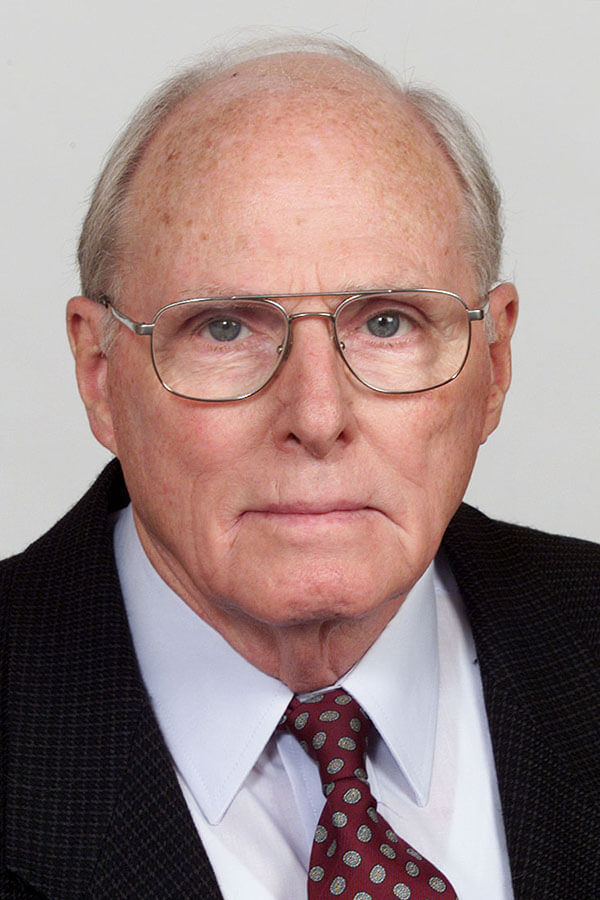
Bishop C. Dale White of New Jersey joined a small delegation of religious leaders headed to Iran in hopes of fostering dialogue. The 11-day visit not only made an impact at the moment but also led to action by the denomination’s top legislative body and a White House meeting with President Jimmy Carter in April 1980.
Among those traveling with White were the Rev. William Kirby, a United Methodist and chaplain at Princeton University; and the Rev. Jimmy Allen, former president of the Southern Baptist Convention. They were concerned about the hostages, but also wanted to learn more about the suffering of the Iranian people under the longtime rule of Mohammad Reza Pahlavi, the deposed Shah of Iran. He had been allowed into the U.S. for medical treatment.
In a press statement issued upon arrival, White’s group described the nature of their visit as “fact-finding and dialogue” with the hope of “discovering new levels of communication” and ways to reaffirm and restore the friendship between American and Iranian people. “In these days of crisis, we join with our Islamic brothers in praying for peace with justice,” the statement said.
David Wildman, a longtime staff member of the United Methodist Board of Global Ministries, the denomination’s mission agency, was a student at New York University in 1979-80. He remembers “a lot of discussion going on in a lot of places, especially New York,” about the situation in Iran.
Wildman also recalled another group of prominent clergy members — including the Rev. William Sloane Coffin Jr., senior minister of Riverside Church in New York — who made the trip to Iran at Christmas time in 1979.
That group, the New York Times reported, was able to visit with the hostages at the U.S. Embassy for five hours on Christmas Day. The Times story included a brief reference to White’s presence in Iran, noting that “a group of American ministers who came on their own also arrived here.”

Such actions were not uncommon then, Wildman said. “There was, I think, a movement across churches of trying to connect to people on a broad level in the midst of conflicts,” he said. “He (White) was one of the people who did that.”
The effort by the bishop to connect with the Iranian people was in keeping with his core beliefs, noted Jaydee Hanson, a longtime friend and former staff executive with the United Methodist Board of Church and Society.
Agency had mail service for hostage families
The Rev. Thom White Wolf Fassett witnessed a less public United Methodist connection to the hostage crisis as a staff member of the United Methodist Board of Church and Society.
“We decided that we would ask if the families of the hostages wanted to send mail to them,” he told UM News. The idea was to collect the mail at the United Methodist Building in Washington, where the agency was based, and have a courier carry it in a mail pouch to Tehran.
“We decided a Native American courier would be best,” added Fassett, who later became the social justice agency’s first Native American top executive.
John Thomas, who was active with the American Indian Movement and had worked closely with Church and Society, was the courier who took the mail to Tehran several times, Fassett said. The agency raised funding independently for the project, he explained, so that church dollars would not be used to support it.
The Church and Society staff had no personal contact with the families of the hostages. “They simply trusted us to handle the correspondence,” Fassett added.
Hanson later worked with White on “In Defense of Creation: The Nuclear Crisis and a Just Peace,” a pastoral letter and study guide published in 1986. White died in 2019 at the age of 94.
Hanson believes the impact of the mission trip to Iran had an influence on White’s crafting of that pastoral letter. “Dale understood that you have to make peace with your enemies,” he told UM News. “In order to do that, you have to talk to them.”
The Rev. Thom White Wolf Fassett, who was a Church and Society staff member at the time of the hostage crisis and later led that agency, said he considered White to be “a dynamo of Christian social justice.”
A press statement issued on Jan. 3, 1980, as White’s delegation prepared to depart the Tehran Airport, expressed regret over not being able to speak with the U.S. hostages. But the group highlighted two conversations of more than two hours each with the Iranian students holding them.
In an article for United Methodist publication “Newscope,” Betty Thompson reported White believed that until the U.S. showed more understanding of the “despotic nature” of the Shah’s rule over Iran, the hostage crisis would not ease. But the bishop did not think the hostages were in physical danger.
1980 General Conference takes action on Iran
The importance of the delegation’s visit to Iran was affirmed a few months later when the 1980 United Methodist General Conference met in April in Indianapolis. Speaking to the conference delegates, White noted that his group had consulted with the White House and U.S. State Department at great length before the trip, which he described as “a quiet mission of understanding.”
Part of the mission involved dialogue with Iran’s religious leaders. The bishop spoke about his delegation’s meeting with the Ayatollah Ruhollah Khomeini after they visited the cemetery where markers named the hundreds of young people killed by the Shah’s forces during the Iranian revolution.
The U.S. delegation shared with Khomeini the Christian belief that Jesus “gave his life that all might know God’s gifts of freedom.” The prayer, White said, is that “just aspirations for freedom and independence” be fulfilled for all peoples.
White said his delegation also voiced its “prayerful concerns” with Khomeini “over the present crisis and over the confinement of our fellow citizens at the embassy,” and that they prayed “for mercy and compassion to be exercised” by an early release.

In his address to General Conference delegates, White urged the denomination to be the first major world Christian body to send Khomeini “a message in the name of God the merciful, the compassionate.”
As reported in the Tuesday, April 22, 1980, edition of the Daily Christian Advocate, General Conference did agree “by an almost unanimous action” to send a message to Khomeini, assuring “the agonies of your people” and their cries for freedom were being heard.
Two proposals were rejected that would have expressed regret by General Conference for American “complicity” in the crimes and injustices against the Iranian people by the Shah and would have supported Iranian rights for self-determination.
Pastor ministered to hostages, talked to students
The Rev. Jack Bremer’s background as a campus minister and social justice activist and volunteer provided him a unique opportunity to play a small but direct role in the Iran hostage crisis.
That role also landed him on the delegation sent by the 1980 United Methodist General Conference to meet with President Jimmy Carter about that issue. Bremer died in 2020 at the age of 96.
Bremer was part of the American-Iranian Reconciliation Committee. According to his obituary, some of the Iranian students who were involved in the hostage situation knew Bremer from attending his classes. “It was their respect for his truthfulness and reverence for God that helped open the doors for him to visit with and attend to the hostages,” the obituary said.
Bremer was one of three clergy who conducted Easter worship services for the American hostages in Tehran in April of 1980. He earlier visited the hostages in February that year.
White also called on the 1980 General Conference to send representatives to President Carter “to counsel the utmost patience and restraint, to implore him to offer assurance to Iran that we will honor their national independence and assist them in their struggles for a balanced, just, sustainable economy.”
Plans were set for an 11 a.m. meeting with Carter on Wednesday, April 23, at the White House. That same group would return to Indianapolis via New York to deliver the General Conference’s message for Khomeini to the Iranian Ambassador to the United Nations.
The White House delegation included three bishops — White, Roy C. Nichols and William R. Cannon; Mai Gray, president of the Women’s Division, Board of Global Ministries; Judge James M. Dolliver, a justice in the State of Washington Supreme Court; the Rev. Jack Bremer, a campus minister and one of three clergy who conducted worship services for American hostages in Tehran on Easter; Christopher Mitchell, a young adult who was part of the laity address to General Conference; and David W. Brooks, an Atlanta business executive and personal friend of President Carter.
Brooks was introduced by Nichols as “our key” to the White House invitation. In his remarks, Brooks told the General Conference that he “also had the privilege” of being an advisor to six presidents, which included “living with them through some of the most terrible crises we’ve had in this nation.”
Bremer, who had a previous connection with a few of the students in Tehran, said he tried to share his impressions with Carter from his firsthand experiences in Iran in February and at Easter. He mentioned visiting with the hostages “and how, given the length of their confinement, they were to me in surprisingly good physical, mental and spiritual condition, for which we thank God.”
Gray, the first African American board president of the Women’s Division, noted that the Iranian ambassador to the United Nations was invited to speak at the division’s Spring 1979 board meeting and told Carter this was an example of how women of the church were engaged in mission and building bridges of hope.
“I would ask you, Mr. President, to continue to do all in your power to move toward a path of reconciliation,” Gray said during the White House meeting.
The delegation that met with Carter carried a simple but profound message, said Dolliver — that individuals, governments and people can live together in a spirit of reconciliation.
Dolliver added that his request to General Conference delegates was to take this message of reconciliation back to the local churches, which he admitted would be a tough assignment.
Subscribe to our
e-newsletter
“This is the most difficult kind of Christian witness in the world — to be a reconciler,” he said.
“You are not going to be loved. You will be reviled, perhaps, by some. You will be embraced by others, but in your own way, quietly, compassionately, prayerfully and with dignity, you will join these eight that you sent forth and take those further steps toward peace and reconciliation in our world.”
Carter’s short official message back to the General Conference, also printed later in the Daily Christian Advocate, was read to conference delegates minutes after it was received by telephone. It placed the blame for the hostage situation on Iranian leaders being “unwilling to fulfill their responsibilities and obligations as a government … .”
The president wrote that he appreciated the offer of prayers and support from United Methodists while facing “the difficult decisions of the days ahead.” A relationship of mutual respect with Iran, he wrote, “cannot develop while innocent Americans are being held prisoner.”
The Iranian students set their hostages free on Jan. 21, 1981.
Bloom is a retired assistant news editor for UM News. She lives in New York.
News media contact: Julie Dwyer at newsdesk@umnews.org. To read more United Methodist news, subscribe to the free UM News Digest.
