Key points:
- In the new vision statement, words such as “boldly,” “joyfully” and “courageously” reflect an extroverted ideal.
- To an introvert, those words can seem to impose an expectation rather than extend an invitation.
- With a different perspective, the vision statement can be read in a way that resonates well with introverts.

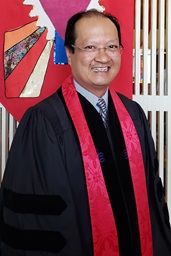
Photo courtesy of the author.
Commentaries
“The United Methodist Church forms disciples of Jesus Christ who,
empowered by the Holy Spirit,
love boldly,
serve joyfully,
and lead courageously
in local communities and worldwide connections.”
— The new vision statement for The United Methodist Church
When I first admitted I was an introvert, most people didn’t believe me. And I understand why. I’m a pastor — over 6 feet tall, weighing more than 200 pounds, always smiling, cracking jokes in sermons, and seemingly able to make friends with just about anyone.
The only person who truly understood was my wife. After 25 years of sharing the most private corners of my life, she knows me well. She knows how long it takes me to work up the courage for a simple “hello,” how I spend most weekends and holidays with no one but her and our two boys, and how I retreat to the basement after Sunday worship.
She’s seen me spend hours behind a closed door, reading in silence, listening to music, letting stillness do its quiet work.
So to those who doubt my confession, I often say with a smile: “What you see — the outgoing part of me — is mostly ... occupational.”
That’s why, when I came across the new vision statement of my beloved denomination, three words gave me pause: boldly, joyfully, courageously. They weren’t just adverbs. They echoed something deeper — an assumption about how we are expected to carry out our mission.
In seminary, I learned the distinction between mission and values. The mission tells us what we are called to do; values define how we live it out.
For example, we make disciples for the transformation of the world — that is the mission. But we might live it out inclusively, by crossing lines of gender, race, class and nationality. Or biblically, grounded in the Scripture. We might act upon the mission locally and/or globally.
In that light, the three adverbs in our new vision statement are not about what we do, but how we are invited to do it. And that’s where my quiet concern arises: all three adverbs — both clearly and implicitly — are rooted in an extroverted ideal. To someone like me, they don’t extend an invitation; they impose an expectation.
In her book “Quiet: The Power of Introverts in a World That Can’t Stop Talking,” Susan Cain describes how modern culture — especially in the U.S. — is dominated by what she calls the “Extrovert Ideal,” where charisma, confidence and expressiveness are prized above quiet thoughtfulness.
Many introverts, she argues, feel pressure to perform a kind of “pseudo-extroversion” in order to succeed — leading to fatigue, disconnection and even burnout. While she never critiques phrases like “love boldly” directly, her analysis suggests that such extrovert-centric values can be alienating, even oppressive, to those whose strength lies in listening, contemplation and quiet faithfulness.
Subscribe to our
e-newsletter
I’m fully aware that the leaders of my beloved denomination who crafted this vision statement did not intend to marginalize introverts like me. I trust their hearts and their vision. Most of all, I love our mission — to make disciples of Jesus Christ for the transformation of the world. And yet, I cannot help but feel that, once again, I am being asked to become someone God did not create me to be.
Often, I find myself identifying with Elijah after his stunning victory at Mount Carmel, not during it. I grew up hearing preachers describe Elijah’s retreat to Mount Horeb as an act of cowardice — running from Jezebel. But I don’t see cowardice. I see exhaustion, instead. I see the soul of a prophet, spent and emptied, making his way back to the place of covenant — not to fight another battle, but to listen for the still, small voice.
That, to me, is what Sunday afternoons feel like. After pouring out every drop of my “occupational (or vocational) extroversion,” I retreat into the quiet — not waiting for the whirlwind or the fire, but for the whisper of God.
So I ask, gently but earnestly, as a not-so-obviously introverted, occupationally extroverted pastor, may I read this vision statement a little differently?
May I love sincerely, instead of boldly — serve humbly, even when joy feels far away — and lead faithfully … even when I do not feel brave?
May I, please?
Han is lead pastor of The United Methodist Church at New Brunswick in New Brunswick, New Jersey.
News media contact: Julie Dwyer at newsdesk@umnews.org. To read more United Methodist news, subscribe to the free UM News Digest.