
Key points:
- The Rev. Gilbert Haven, a Methodist pastor, believed that when we open ourselves to God and see things from a divine point of view, we can act from cleaner motives.
- Haven’s higher law calls us into a deeper understanding of God, ourselves and others, and it offers a way of responding to the brokenness that we see today, writes the Rev. Dr. Christopher P. Momany.
- Will we respond to distortions of public power by hating those who are to blame, or will we step boldly into an understanding of law and love that affirms the value of all?
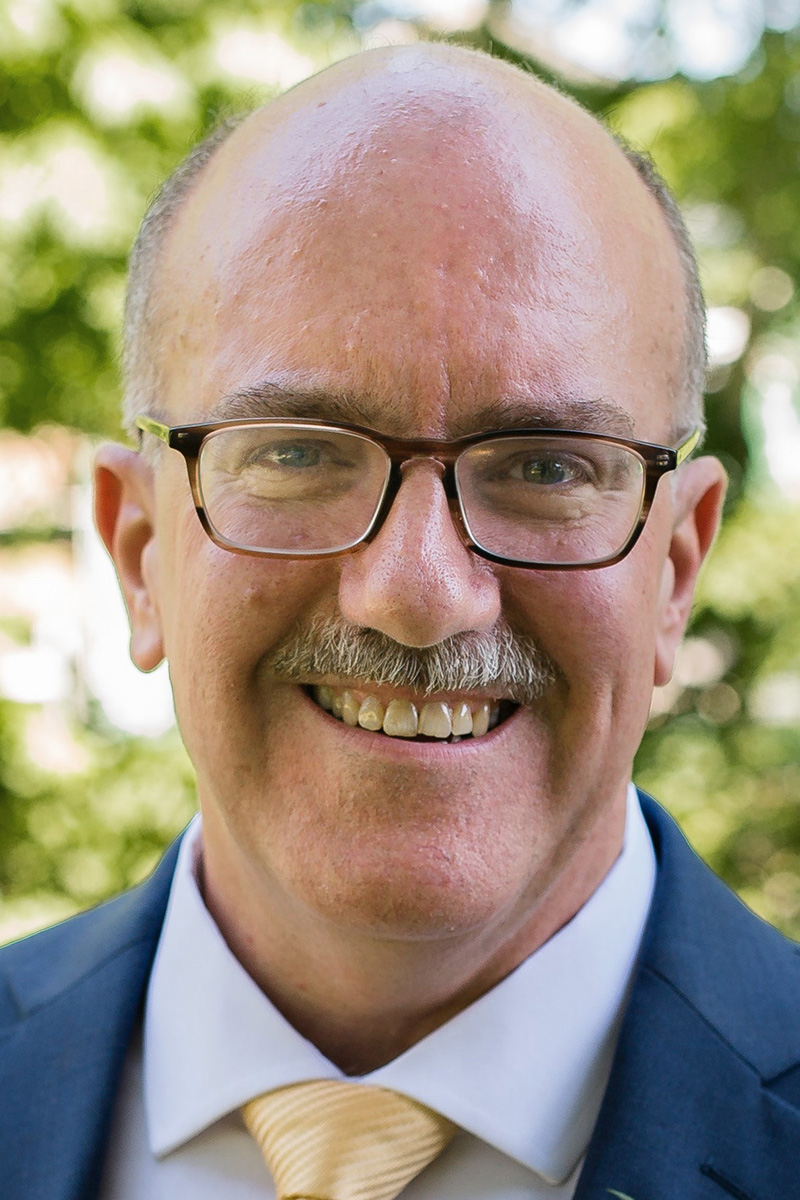
Photo by Kristen Schell.
Commentaries
In 1850, U.S. President Millard Fillmore signed legislation that has since been known as “the fugitive slave law.” This civil law tightened prohibitions against aiding people on the Underground Railroad, and it demanded that all Americans support the return of self-emancipated people.
The sin of slavery was given explicit, nationwide endorsement.
A great movement arose to resist this unjust law — which was really a human code that violated God-given dignity. Many of those who rose up understood themselves to be following a “higher law,” a law that reflected God’s intention for humanity. One advocate of this higher law was a Methodist pastor and teacher named Gilbert Haven.
Haven was born in 1821 and raised outside of Boston. Regional traditions of patriot courage fired his imagination, and the defense of freedom meant everything to him.
Haven was also perpetual motion — known for his wild red hair and determination to act. After attending Wesleyan University in Connecticut, he worked as a teacher and then the principal of a little academy in Amenia, New York, and later in life became a Methodist bishop. In Amenia, he wrote and preached a sermon that defined his entire vocation. The document bore the simple title, “The Higher Law.”
Haven did not simply assert his political convictions and then claim that they came from God. He analyzed human nature itself to discern God’s design for true community. He employed a popular description of human nature that was known as “faculty psychology.”
This school of thought posited that people are composed of Intellect, Sensibility and Will. The Intellect perceives and processes reality. The Sensibility responds to perception and experience through feeling. And the Will initiates deliberate action, given perception and response.
Related podcast: ‘Un-Tied Methodism’
For more on this topic, listen to the Rev. Dr. Christopher P. Momany’s conversation with Dr. Ashley Boggan, top staff executive of the United Methodist Commission on Archives and History, on her podcast, “Un-Tied Methodism.”
Haven united the idea of a higher law with faculty psychology and called it “the higher law of our nature.” He believed that people suffer from the pathological disorientation of the three faculties. We might call it the residue of sin. A cloudy Intellect often feeds the reactions of a self-interested Sensibility. The destructive urges of the Sensibility can be allowed to drive the Will.
Haven contended that when we open ourselves to God and see things (more-or-less) from a divine point of view, our sensitivities can be properly ordered, and we can act from cleaner motives.
He described unjust laws as the assertions of raw power, fueled by sick mental faculties. God’s divine law of justice is higher, better, nobler. The higher law lifts personal and social dignity.
The recent state-sponsored violence in America, the lying by government officials and the propaganda of certain media empires have placed us back in 1850. Will we accept and suffer under the very corruption of the idea of “law,” or will we choose a higher path? Will we react by hating those who perpetuate this abusive distortion of public power, or will we step boldly into an understanding of law and love that uplifts and affirms the value of each and all?
Subscribe to our
e-newsletter
Our United Methodist baptism liturgy is often invoked these days: “Do you accept the freedom and power God gives you to resist evil, injustice and oppression in whatever forms they present themselves?” The liturgy offers substantive motivation for resistance, but we also need to articulate a theological (and even philosophical) rationale for why human dignity matters. That was the focus of an essay I wrote in January 2025, and I stand by that argument today.
The notion of a higher law should not be hijacked to legitimize arbitrary disobedience. Rather, it calls us into a deeper understanding of God, ourselves and others. It is truly a better way, and it must be advanced through thoughtful nonviolence. People around the world from the broad Methodist family have a rich heritage of considered resistance, which is really more about fidelity to God than it is about protest.
I like the way one of Gilbert Haven’s elder colleagues put it. Asa Mahan was a Wesleyan philosopher and college president who wrote: “To obey any law that prohibits what God commands, or commands what He prohibits, is treason to God.”
Our very faithfulness depends on getting this right, and others need us to step up in love and justice.
Momany is an historian and writer serving as pastor of First United Methodist Church in Dowagiac, Michigan. His most recent books are: “Compelling Lives: Five Methodist Abolitionists and the Ideas That Inspired Them” (Cascade, 2023) and the collaborative “Awakening to Justice: Faithful Voices from the Abolitionist Past” (InterVarsity, 2024).
News media contact: Julie Dwyer, news editor, newdesk@umnews.org. To read more United Methodist news, subscribe to the free UM News Digest.


