
Key points:
- United Methodists joined in a celebration in San Antonio, Texas, of the United States Mint’s coin bearing the image of Jovita Idár.
- Idár was a Methodist who worked as a journalist and activist to advance the rights of Mexican American women and others in the early 20th century.
- With growing interest in women’s and ethnic history, Idár’s story has become better known.
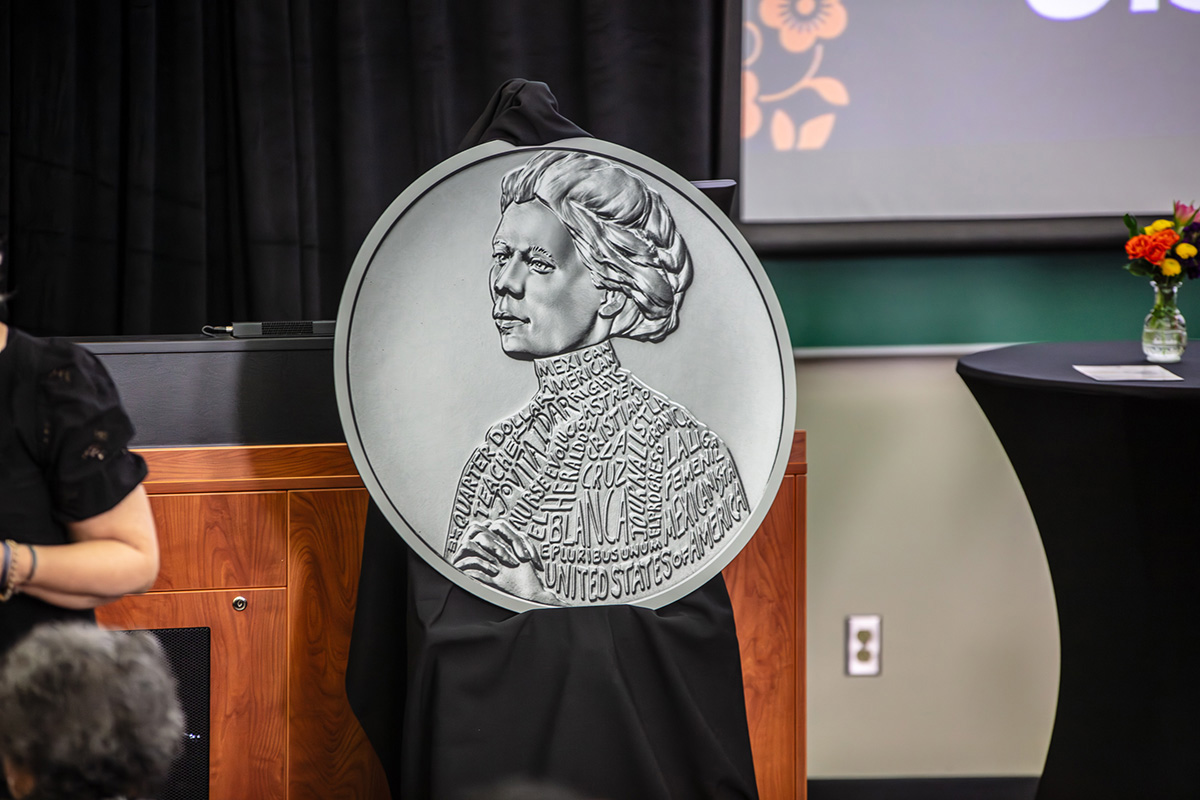
United Methodists and others gathered in San Antonio recently to celebrate the minting of a U.S. coin bearing the image of Jovita Idár, a Methodist, journalist and activist who worked to empower Mexican American women and others in the early 20th century.
The United States Mint included Idár (1885-1946) as part of its American Women Quarters series. Other honorees include Eleanor Roosevelt, Maya Angelou and Sally Ride.
Representatives of the Mint joined members of Idár’s family, as well as retired United Methodist Bishop Joel Martinez, in a roundtable discussion about Idár during the Sept. 14 celebration at the University of Texas at San Antonio’s downtown campus.
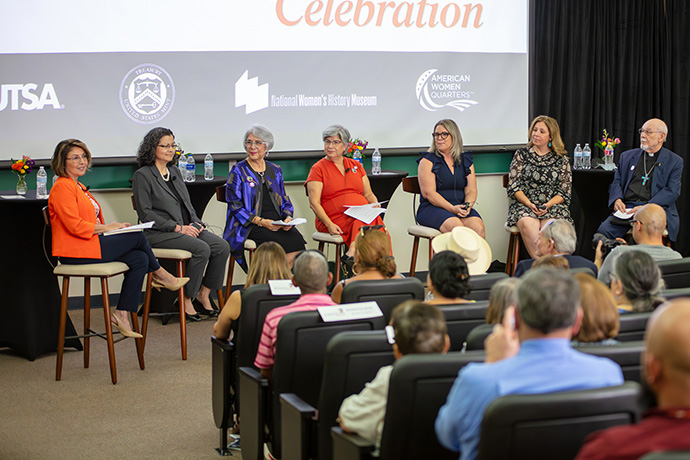
Martinez encouraged those in the crowded lecture hall to be like Jovita Idár, specifically by refusing to be limited by others’ expectations.
“We have a tendency to confine and assign roles,” said Martinez. “Don’t be defined by those who want to limit you. Be defined by the creator who gave you all the gifts that you have and sense and explore them.”
Idár’s modest celebrity faded after her death and she remained an obscure figure until the late 1970s and early 1980s, when interest rose sharply in women’s and ethnic history.
She’s since been the subject of a documentary, a New York Times feature and a historical marker. Laredo, Texas, has named a park in her honor.
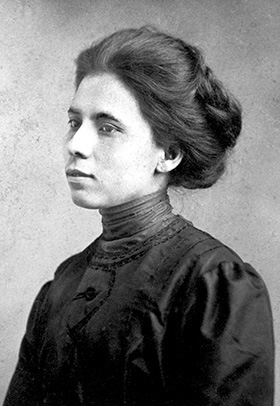
Idár was born into a large, relatively well-off Mexican American family in Laredo, and was educated at a Methodist school there.
She would go on to work for her father’s newspaper, La Crónica, writing editorials decrying discrimination faced by Mexican Americans and championing women’s suffrage.
She helped organize El Primer Congreso Mexicanista, a 1911 meeting of Mexican American activists from both sides of the border. Out of that emerged a women’s organization, and she was its first president.
Idár was part of a medical relief group during the Mexican Revolution, and in the latter part of her life, spent in San Antonio, she edited the Rio Grande Conference newspaper and was active at La Trinidad Methodist Church.
The Rev. Elizabeth A. Lopez and Martha L. Aki are great nieces of Idár and in the recent celebration shared about growing up hearing their mother’s stories about “Tia Jovita.”
“Her commitment to The United Methodist Church’s values of personal and social holiness prepared a way for me to confront the patriarchal constraints and racism that exists within the UMC,” said Lopez, a retired United Methodist elder.
Idár’s faith undergirded “everything she did,” including her work at La Trinidad, Lopez said.
That church now has on its pastoral staff a woman, the Rev. Raquel Cajiri Feagins.
“My Tia Jovita would be excited and applaud,” Lopez said.
Aki recalled that her and Lopez’ mother would, as a girl, sneak in and listen to Idár’s political discussions with the family.
“We got those stories firsthand from our mom,” Aki said.
Idár’s activism was supported by her brothers.
More on Idár
The University of Texas at San Antonio has a website collecting information about Jovita Idár.
She’s also featured on the Women in Texas history site.
A recording of the celebration for the Idár coin can be found here.
“It was just Jovita and the boys — all her brothers. She was an advocate for women’s rights because she was supported by her brothers to be that woman,” said Aki. “She was encouraged to study, get out there, write articles for La Crónica.”
Martinez emphasized Idár’s value as a role model, and he pointed to other groundbreaking Methodist women.
“In 1956, women were authorized to preach in the UMC, and some of their families were aghast!” Martinez said. “But they wanted to go into preaching. I would raise that up for us to ponder. Do not limit your children — boys or girls — to what you think is their probable potential path to the future. Pray them into a freedom that might take them all the way to a place where you don’t want to see them go. … God will be with them there.”
Gabriela González, an associate professor of history at UTSA, is working on a book about the life of Jovita Idár.
“Jovita would teach through example,” González said. “The way she dressed and talked, handled herself in public. She talked with gravitas. She was a mentor, teacher and friend. She was nurturing but also firm and could call you out.”
The Rev. Miguel Padilla was part of the Rio Texas Conference delegation attending the coin celebration.
“I was happy to hear of the United States Mint’s efforts to be more inclusive,” Padilla said. “It is affirming how important it is to bring stories of women who look like my sisters and mother. Jovita’s story led me to see that we need everyone’s ideas and voices to create a community where everyone is welcome. It also breaks the stereotype of the silent woman. We need the female perspective and leadership to create new models, systems and ways to do things.”
The Rev. Dr. Robert Lopez is assistant to the bishop of the Rio Texas Conference. Austin Newton is the conference’s assistant director of communications.
News media contact: Julie Dwyer at (615) 742-5470 or newsdesk@umnews.org. To read more United Methodist news, subscribe to the free Daily or Weekly Digests.


