
Key points:
- The board of the United Methodist Church’s finance agency heard a midyear review on the state of church giving.
- Members also made decisions related to church property insurance and agency employees’ health insurance.
- In addition, the members’ summer meeting included a preview of the denominational budget process ahead.
United Methodist leaders got a midyear checkup on the denomination’s financial health — and all vital signs point in the right direction.
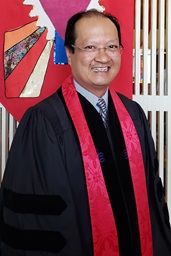
“It’s all good news, folks,” the Rev. Sheila Ahler told the board of the General Council on Finance and Administration, the denomination’s finance agency.
Ahler, a retired pastor and accountant who chairs the board’s General Agency and Episcopal Matters Committee, was addressing the board’s Aug. 21 hybrid meeting, which included members joining online and in Nashville.
Bottom line: Giving has been holding relatively steady, while some expenses are down.
As of the end of July, the denomination had collected about $31.3 million in total apportionments — requested shares of church giving for denomination-wide ministries. That’s slightly more than the $31.1 million that the denomination had received by the same time last year.
That total includes an increase of nearly $136,000 in collections from the four United Methodist regional conferences in Africa.
While most church offering remains within the congregation, apportionments fund ministry beyond the work of an individual local church. Each annual conference — a regional body consisting of multiple churches — requests a portion of local church giving that in turn supports both annual conference ministries as well as a portion of funding for the general ministries supported by the General Conference-approved denominational budget.
The most recent General Conference in 2024 approved a significantly smaller denominational budget for the years 2025-2028. That means, the apportionments requested from annual conferences are lower than before 2025. At the same time, the denomination’s financial leaders rejoice that revenue for ministry is now more predictable than during the tumultuous previous four years that saw the denomination rocked by both the global pandemic and church disaffiliations.
The bulk of giving continues to come in at the end of the year. Last year, the denomination received a total of about $74.2 million in apportionments.
While revenues are slightly up, it helps that expenses are also down, especially for the long-beleaguered Episcopal Fund that supports the work of bishops. GCFA is dipping into the Episcopal Fund’s reserves to cover compensation and office staff for the 32 bishops in the U.S. and 20 bishops in Africa, Europe and the Philippines.
As of the end of July, apportionments for the Episcopal Fund were up by $537,000 and expenses were $221,000 below budget due to lower travel and meeting costs. As a result, the Episcopal Fund is operating at a deficit lower than initially budgeted.
Work already has begun on developing the 2029-2032 budget for denomination-wide ministries, including the Episcopal Fund, which will go before delegates at the 2028 General Conference.
GCFA board members learned that the Interjurisdictional Committee on Episcopacy is currently recommending 34 bishops in the U.S. starting in late 2028 — two more than there are currently.
Representatives from the committee, GCFA board and the Connectional Table, a leadership body that coordinates denominational ministries, met in July for the second of two summits to begin modeling what impact an increase in bishops would have on the denominational budget. With two more U.S. bishops, GCFA staff project the Episcopal Fund will operate at a $4.1 million annual deficit in the years 2029-2032.
Ahler told the board that the interjurisdictional committee will meet again in January 2027 to confirm or update its recommendation.
Meanwhile, GCFA also is waiting for a recommendation from the Standing Committee on Regional Conference Matters outside the USA, for the number of bishops in Europe, the Philippines and especially Africa where the denomination is growing. That recommendation is expected to come in October this year.
Two additional bodies are meeting that will help shape the next quadrennial budget.
Subscribe to our
e-newsletter
The Economic Advisory Committee, a group of United Methodist economists and other financial experts, offers projections for apportionments based on church membership, attendance, economic conditions and local church financial health. As of May, the committee projected apportionment collections of $357.3 million for the years 2029-2032. The committee plans to meet Aug. 26 to update its projections.
The Budget Advisory Committee, using the Economic Advisory Committee’s projections, helps develop proposals for the total budget that will go before the full Connectional Table and GCFA board. This panel consists of representatives from both the board and Connectional Table. For the first time, the Budget Advisory Committee also includes a bishop, helping to offer a perspective of those most affected by the Episcopal Fund as the denominational budget develops.
Next year and into 2028, the Connectional Table and General Council on Finance and Administration will continue to meet to consider the budget’s bottom line and its allocations before GCFA submits the budget to General Conference.
“There is so much work going on,” Ahler said. “It’s like the little duck on the water that’s swimming nice and slow — but underneath is paddling like crazy. That’s what we’re doing right now.”
In other actions, board members:
- Approved new proper insurance coverage standards for churches. The standards include guidance for liability insurance for congregations with under 100 members, with between 101 and 500 members and those over 500.
- Heard that United Methodist Insurance, a nonprofit owned by the General Council on Finance and Administration, has seen a growth in clients. United Methodist Insurance works with a third-party insurance agency to connect churches with various insurers that underwrite property and liability insurance for houses of faith. Jeff Koch, president and chief executive officer of United Methodist Insurance, told UM News that this is the second year that the nonprofit has seen more revenue than insurance costs. “This means we are no longer operating at a deficit,” Koch said.
- Approved health benefits for general agency employees. The benefits include a 26.6% increase in medical premiums that starts in 2027. Ken Ow, the chair of the GCFA board’s Committee on Personnel Policies, said that for 77% employees, the increase will mean between an additional $12 and $48 taken out of each paycheck to cover their benefits.
- Approved a 4% increase in the pay scale used for agency employees’ compensation, starting in 2027. The increase does not mean that every employee is getting a raise, but it does increase the minimum and maximum an employee can be paid based on their job category. Ultimately, agencies determine individuals’ salaries.
- Learned that GCFA has hired Sara Goetze as director of its financial support services. In that role, she will assist annual conferences. Goetze, who starts her new position Sept. 1, has most recently served as director of finance and assistant conference treasurer for the Greater Northwest Area that encompasses the Alaska, Oregon-Idaho and Pacific Northwest conferences.
- Learned that Rick King, who has served as GCFA’s chief financial officer since 2013, plans to retire. GCFA has just officially begun the job search and in this time of transition, King remains on staff.
Caitlin Congdon, who earlier this year became the finance agency’s top executive, told the board that she and GCFA staff are committed to collaborating with church leaders across the denomination.
“Here is my vision: Strong churches, resourced for local impact; equipped leaders, supported with data and tools and guidance; global impact, enabling missions and ministry around the world,” she said. “A sustainable United Methodist Church can be built by the decisions we make today. None of those things GCFA accomplishes. They are things the church accomplishes when GCFA does its job well.”
Hahn is assistant news editor for UM News. Contact her at (615) 742-5470 or newsdesk@umnews.org.To read more United Methodist news, subscribe to the free UM News Digest.