Key points:
- Key figures in the Civil Rights Movement were interviewed on “Night Call,” a call-in radio program that United Methodist Communications produced in 1968-69.
- More than 1,200 audio programs are freely available on the SoundTheology Religion Audio Archive, with content from the Methodist Church and other faith traditions.
- New programs are being added, and the audio collection has been selected for inclusion at the Library of Congress.
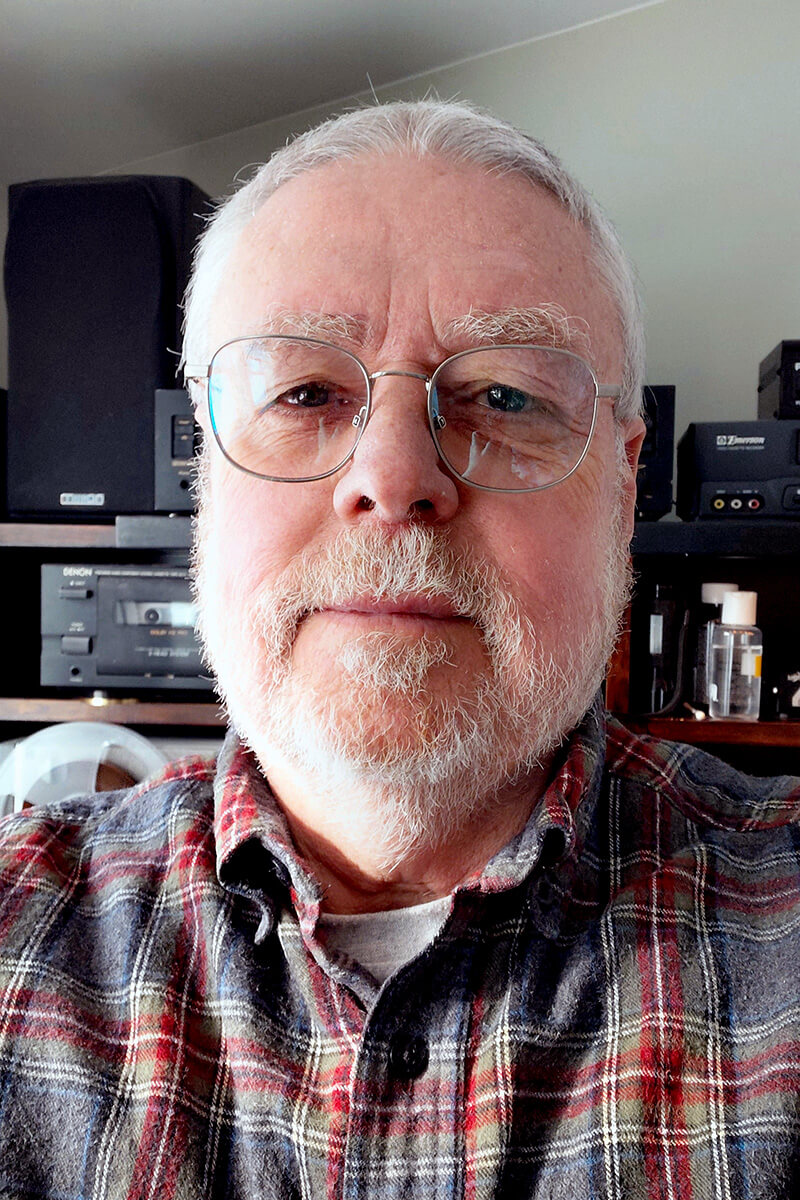
Photo courtesy of the author.
Commentaries
The civil rights era was at its peak in the 1960s. American cities struggled with civil unrest. Police countered demonstrators with dogs and firehoses. But the greatest tools for change, even in the ’60s, were words … not bullets or fires or dogs … but powerful words.
The greatest figures of the Civil Rights Movement were those who spoke and wrote the words that explained, that exhorted, that pleaded, that prayed. Many of those historic figures are now elderly; the majority have died. Their truly powerful voices are silent.
And yet, you can still hear the contemporaneous thoughts of Stokely Carmichael, Shirley Chisholm, Eldridge Cleaver and Ruby Dee, thanks to a radio program called “Night Call” that United Methodist Communications created and produced in 1968-69.
“Night Call” originated at a studio at Riverside Church in New York City. This one-hour radio program was heard on scores of radio stations across the country, broadcast live, five nights a week, giving the nation a way to hold civil discussion, listen to varying points of view and learn how others thought and felt.
Host Del Shields and callers from across the country talked with Dick Gregory, Roy Innis, Jesse Jackson and A. D. King. They heard from Ralph Abernathy, Muhammad Ali, James Baldwin and Julian Bond. The program benefited from the presence of Chester Lewis, Ralph McGill, Nina Simone and Andrew Young. These and others in the civil rights struggle of the ’60s took the opportunity to discuss the issues and their solutions with Shields and the listeners across the country.
You can still hear these voices on the SoundTheology Religion Audio Archive. In addition, SoundTheology.org carries 21 interviews conducted by Pamela Crosby with United Methodist Communications at a 2004 reunion of persons who were part of the segregation-era Central Jurisdiction of The Methodist Church. These United Methodists grew up in the separate, Black annual conferences of the church that had been established in 1939 and continued until 1968. Among those interviewed are Gilbert Caldwell, James Feree, Mai Gray, Walter McKelvey, Forrest Stith and Barbara Ricks Thompson. They brought their experiences and leadership from the old Central Jurisdiction into The United Methodist Church.
Many significant Black United Methodist preachers can also be heard from the early days of integration within the church itself. You can hear Leontine T.C. Kelly, Gardner Taylor, Joseph Lowery, Tallulah Fisher Williams and Roy C. Nichols.
More than 1,200 audio programs are freely available on the website — speeches, lectures, sermons, interviews and radio programs from the Methodist Church and many other faith traditions. The collection on this website has been assembled in collaboration with the United Methodist Commission on Archives and History, as well as with many other United Methodist agencies, seminaries and annual conferences. New programs are still being added.
The audio collection has been selected for inclusion at the Library of Congress, and the entire archive is copied to the stewardship of the Commission on Archives and History to preserve into the future, to continue making the programs available to listeners on the internet, and to keep their voices alive in our minds and hearts.
Hickcox is the creator and manager of SoundTheology.org. He was manager of audio initiatives at United Methodist Communications from 2006 to 2010 and began this collection at that time. Previously, he was director of communications for the New England Conference of The United Methodist Church. He has been on staff at the Iliff School of Theology in Denver, and at United Church of Christ and United Methodist churches in Connecticut and New Hampshire. He also has been a commercial radio anchor and news director and has taught mass communications at the University of New Hampshire. In 2018, he retired from the position of communication director at the Society of St. Andrew national office in Virginia.
News media contact: Julie Dwyer at newsdesk@umnews.org. To read more United Methodist news, subscribe to the free UM News Digest.