
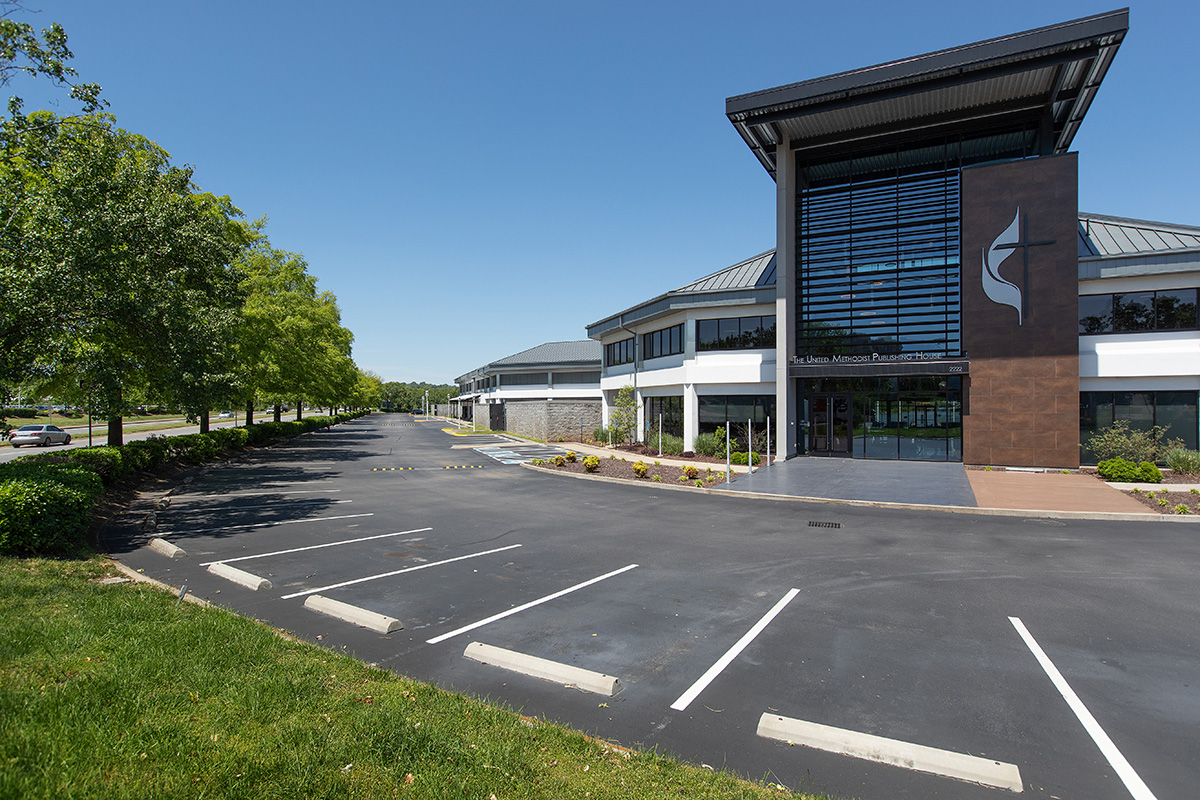
The United Methodist Publishing House’s prospects appear brighter, thanks to recovering sales and a purchase agreement for its Nashville, Tennessee, headquarters.
The historic, self-supporting agency saw sales decline gradually for decades as The United Methodist Church shrunk in the U.S., and as local churches looked elsewhere for resources.
But the COVID-19 pandemic clobbered the Publishing House as churches — unable to meet in person — chose to limit or forgo orders for Sunday school and vacation Bible school curriculum and other materials.
Sales in April 2020 were down 64% over the previous year, and the dismal trend continued through much of the year, prompting layoffs and other economy measures.
Now, though, many in the U.S. are vaccinated and the pandemic has eased considerably. More churches are meeting in person, and the Publishing House is feeling the effects.
“With the measured return to in-person worship, we are seeing a marked increase in the purchase of supplies and planning tools,” said the Rev. Brian K. Milford, president and publisher of the agency, in an email interview. “There is also acceleration in purchases of children’s Sunday school curriculum for the summer and vacation Bible school resources.”
The Publishing House shared in a press release that revenue for the last week of March was up 167% over the same period in 2020, when it plummeted. April 2021 sales through Cokesbury.com — the online retailing arm of the agency — topped $1 million.
That hadn’t happened in any single month since the pandemic began.

Meanwhile, the Publishing House last week reached an agreement to sell its Nashville office space and campus, known as New House Commons.
As a safety measure, the agency had its staff working remotely during the early months of the pandemic. The change went smoothly enough to cause Milford and other leaders to decide that the property could be put on the market.
A purchase agreement has been reached with an investment firm that is expected to lease the building as office space. Milford said earnest money has been put up, triggering steps such as building and engineering inspection, and decisions about sales of furnishings.
He expects ownership will be officially transferred in two to three months, with the purchase price made public then.
The property had been appraised at about $17.6 million, but Publishing House officials said earlier that a hot Nashville real estate market should bring in considerably more.
The agency’s board has decided proceeds of the sale will go toward guaranteeing pension benefits for more than 1,200 past and present employees. The funding will be for a defined benefits plan for staff members covered before 2009, when the agency transitioned to a different kind of plan.
The Publishing House will transfer assets required to fund the older pension plan as well as responsibility for ongoing management to Wespath Benefits and Investments, which operates pension and other benefits programs for The United Methodist Church.
“At Wespath, our mission is to care for those who serve,” said Barbara Boigegrain, Wespath’s top executive, in the Publishing House press release. “We are pleased to extend the mission to UMPH employees and retirees through the management of their pension fund. We believe all who work within the UMC connection should have access to pension benefits that support their retirement after years of dedicated service.”
The Publishing House employed about 300 people just before the pandemic, and reports a staff of 130 now.
Milford said the pandemic and trends in church life and publishing forced the agency to refocus product development and become leaner.
“We have intentionally reduced ongoing overhead expenses, the number of staff and our physical footprint, making the organization more agile to adjust faster to changes in the marketplace and respond to emerging ministry opportunities,” he said.
The Publishing House remains committed to a remote work arrangement but, with the property sale imminent, is negotiating for what Milford described as a “modest amount” of functional space for staff collaboration and other activities.
These days, many know the Publishing House through its imprint Abingdon Press, which offers books on Christian faith and leadership. But since its founding in 1789, the Publishing House has provided Wesleyan-focused resources, as well as hymnals, Bible translations and various church supplies.
As in-person church activities are picking up, the agency reports brisk sales of communion items, candles, hymnals and songbooks.
Milford said a recent Cokesbury webinar on planning for program options including outdoor vacation Bible school was viewed by more than 7,000 local church leaders.
Hodges is a Dallas-based writer for United Methodist News. Contact him at 615-742-5470 or newsdesk@umcom.org. To read more United Methodist news, subscribe to the free Daily or Weekly Digests
Like what you're reading? Support the ministry of UM News! Your support ensures the latest denominational news, dynamic stories and informative articles will continue to connect our global community. Make a tax-deductible donation at ResourceUMC.org/GiveUMCom.