
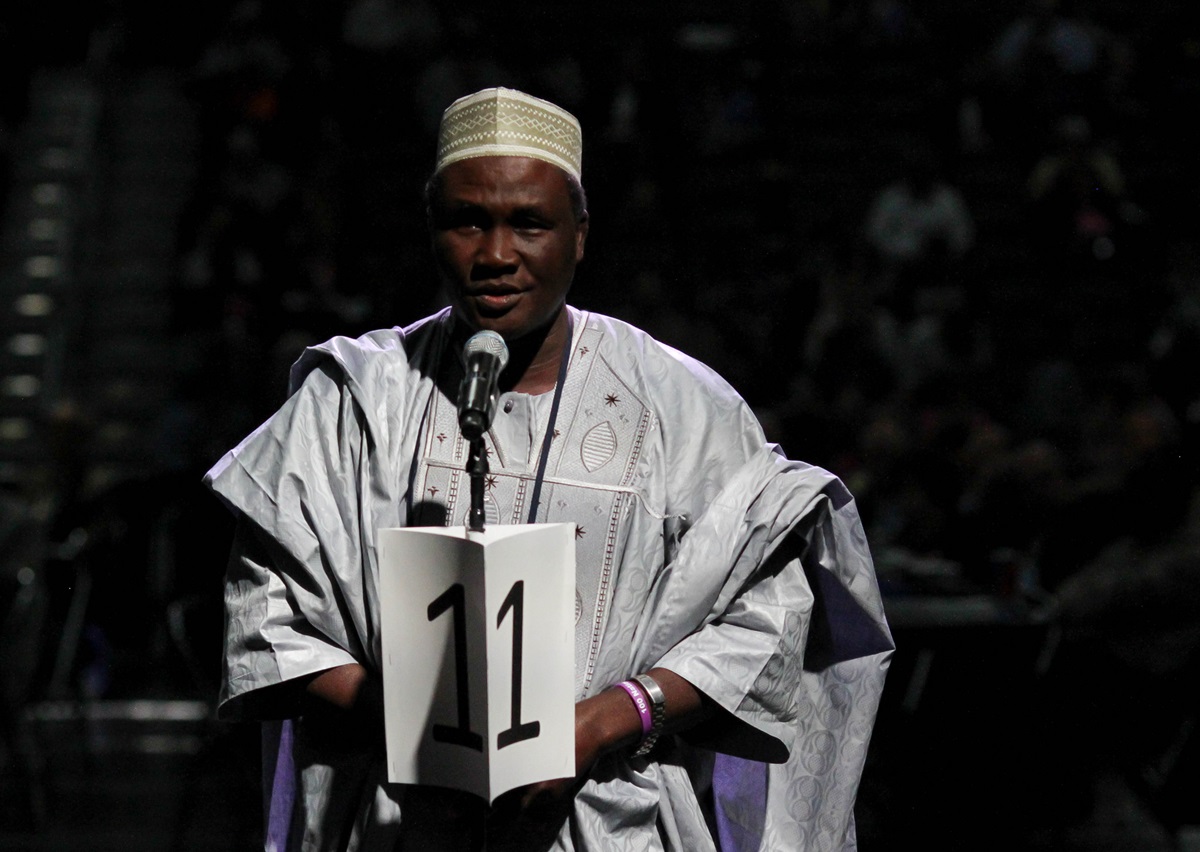
Africa will be getting five more United Methodist bishops, but not before 2020.
The denomination’s rapid growth in some parts of that continent has prompted a widespread recognition that more bishops are needed.
But on May 16, General Conference 2016 delegates narrowly defeated an effort to add two bishops right away, in Nigeria and in Zimbabwe.
Instead, they favored the recommendation of the Standing Committee on Central Conference Matters to add five bishops after General Conference 2020.
The Rev. Rodney Steele, speaking for the commission, argued for adding the five bishops at one time, under a comprehensive plan and with funding in place, rather than adding two now.
“If you throw a pebble into the lake, it will make ripples,” said Steele, of the Arkansas Conference. “If you throw a lot of big rocks, it will make waves.”
But other speakers said the need is too pressing to wait.
“It’s a huge continent, and the bishops are overloaded,” said Rudolph Merab, a delegate from the Liberia Conference.
Betty Katiyo, of the West Zimbabwe Conference, agreed, telling fellow delegates, “We are all aware that the church is growing in Africa, and we don’t want to stifle that growth.”
But another African, the Rev. Mande Muyombo of the North Katanga Conference, noted that the standing committee had done site visits in Africa and should be deferred to on how to move forward.
“We have to honor the work of the standing committee,” said Muyombo, who is also an executive for United Methodist Global Ministries.
Delegates voted 417 against and 393 in favor of an amendment to go ahead with two bishops. The original motion – to add five bishops after 2020 – then passed by a large margin.
Between now and General Conference 2020, the standing committee will work with church leaders in Africa to come up with a comprehensive plan for where central conference and episcopal area lines should be drawn on the continent to have more effective ministry.
The next four years also will give time to make sure financing is place for the bishops.
“We need to have everyone ready from Day One to begin their ministry,” Steele said.
The Renewal and Reform Coalition, which includes the unofficial conservative evangelical caucus Good News, had supported the immediate adding of bishops in Africa. So had leaders of the Africa Initiative, a group of African delegates who met in Portland just before General Conference 2016.
Hodges, a United Methodist News Service writer, lives in Dallas. Contact him at (615) 742-5470 or newsdesk@umcom.org
Like what you're reading? Support the ministry of UM News! Your support ensures the latest denominational news, dynamic stories and informative articles will continue to connect our global community. Make a tax-deductible donation at ResourceUMC.org/GiveUMCom.


