

Key points:
- In eastern Congo, a thriving farm funded through the Yambasu Agriculture Initiative combines vegetable, pig and fish farming to strengthen local food security and generate sustainable income for the community and the church.
- Through practical training for 28 farmers and livestock breeders, The United Methodist Church also is equipping local communities to become self-sufficient.
- For East Congo Bishop Gabriel Yemba Unda, the initiative is a concrete expression of faith in action.
Ten miles from Kindu, a mixed-use farm stands out as a model of innovation and solidarity.
Supported by The United Methodist Church as part of the Yambasu Agriculture Initiative, the farm in the Maniema Province is developing a variety of activities — vegetable, pig and fish farming, transforming the lives of the local community and illustrating the vision of a church that is an agent of sustainable development.
Launched in 2020 in tribute to the late Bishop John K. Yambasu, the initiative aims to make the African church and its communities more self-sufficient through agriculture. In Kindu, the second phase of the project focuses on pig production, while integrating other agricultural and aquaculture components.
According to Elie Etako Wembo, coordinator of the Yambasu Agriculture Initiative in the East Congo Episcopal Area, the program has financed the construction of two buildings for pig farming, which can accommodate up to 300 animals.
“We have put in place balanced feeding systems and vaccination programs to ensure the health of the pigs and responsible waste management to minimize its environmental impact through composting and the marketing of meat and breeding stock,” he said.
Etako said the program has promoted self-sufficiency and food security in the city of Kindu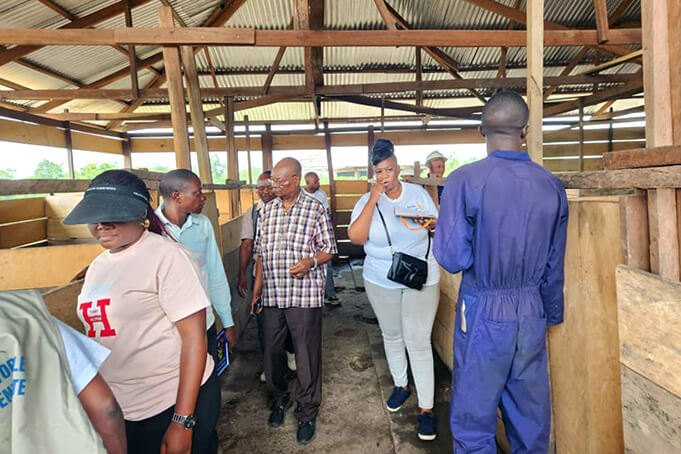
The project is not limited to agricultural production. It generates local jobs, both on the farm and in the processing, transport and sale of products. By providing an accessible source of protein, particularly through pork and fish, it contributes to the food security of a population that is still largely dependent on food imports.
“The marketing of agricultural and animal products provides income for the church, farmers and the families involved, thereby improving their standard of living,” Etako said. “Members of The United Methodist Church benefit from preferential rates or donations, strengthening internal solidarity and food resilience.”
Since its establishment in the village of Enombe, the Yambasu farm has shown encouraging growth. Between April 2024 and May 2025, it recorded the birth of 137 piglets with a mortality rate of 6%, or only eight post-birth deaths. Etako said that the sale of 63 pigs generated a total income of 17,876,250 Fc, or approximately $6,164 USD, confirming the economic viability of pig farming as a model for rural revitalization.
For Etako, these figures reflect not only valuable resource management but also a clear vision of sustainable growth.
“The project has shown that with strategic investments, the community can build a profitable, resilient and educational agricultural model for future generations,” he said.
Roland Fernandes, top executive of Global Ministries and the United Methodist Committee on Relief, touted the project’s mission innovation and collaboration.
“The Yambasu Agriculture Initiative reflects the direction of mission that is needed today — to partner with conferences and communities and equip them to lead using their own knowledge, assets and people. In Kindu, we are seeing an embodiment of this. Mission innovation and local leadership are not only feeding families, but building a sustainable future,” he said.
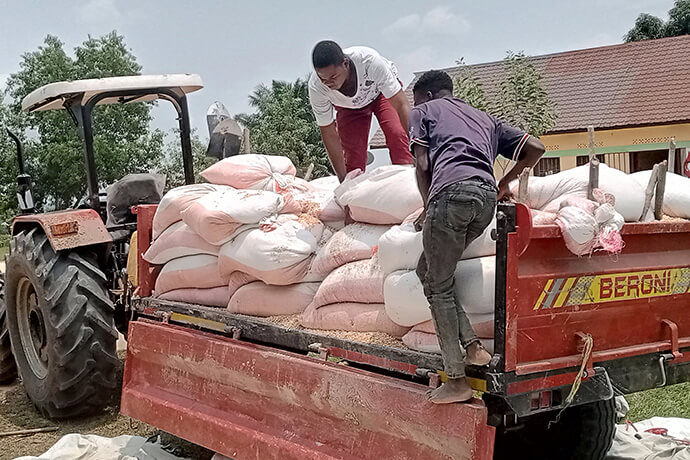
In a region where fish farming remains underdeveloped despite high demand for fish, the Kindu farm is an exception. It combines pig farming and fish farming, an integrated approach that optimizes the use of resources and generates additional income.
“Experience shows that fish farming, when done well, can be more profitable than traditional agriculture or livestock farming, while requiring few inputs,” Etako said.
How to help
To support the Yambasu Agriculture Initiative, donate to Global Ministries Advance #982188.
Richard Okoko, an engineer who is responsible for monitoring the project in the episcopal area, said the success of the Yambasu project depends on training farmers, introducing improved seeds and providing access to modern tools.
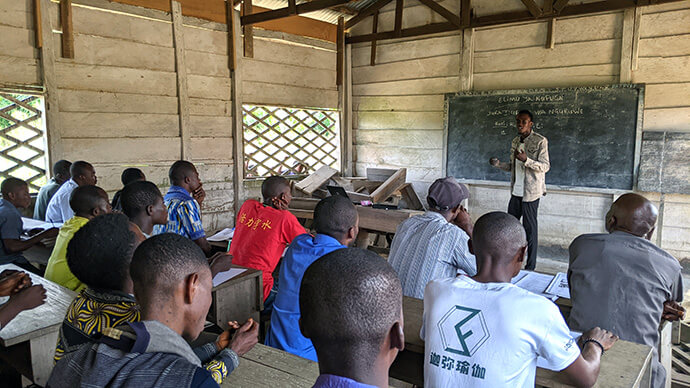
The Yambasu Agriculture Initiative also has invested in human capacity building. In Lubelenge, 28 farmers and livestock breeders benefited from intensive training sessions on key topics such as sustainable farm management, balanced animal feed, improved farming practices, disease prevention and marketing strategies for agricultural and animal products.
“These sessions, led by agricultural experts from the episcopal region of eastern Congo, aimed to impart practical knowledge adapted to local realities,” Okoko said. “The educational approach, focused on participatory learning and field demonstrations, allowed participants to become directly familiar with modern tools and innovative agricultural techniques.”
Bebe Lokondo, a farmer living in the village of Enombe, found the training beneficial.
“Thanks to this training, we have learned how to better plan our crops, feed our pigs more efficiently, and get a better price for our harvests at the markets,” Lokondo said. “It has changed the way we work and strengthened our confidence in the future.”
Etako said the training was an essential pillar of The United Methodist Church’s vision “to make local producers not only beneficiaries of the project but also informed and autonomous actors in rural development.”
The United Methodist Church in East Congo’s commitment to agriculture is more than a development strategy. It also is part of a profound theological vision, said Bishop Gabriel Yemba Unda, who is set to retire this year.
He said he sees the Yambasu Agriculture Initiative as a concrete expression of faith in action. Every pig raised, every fish fed, every seed planted is as an act of faith incarnate, Unda said, a gesture that brings the church closer to its integral mission.
Subscribe to our
e-newsletter
“The church cannot be content with preaching faith without sowing hope in the fields of everyday life,” Unda said during a pastoral visit to the farm. “Through the Yambasu Initiative, we affirm that the land, work and solidarity are also forms of prayer.”
Bishop Antoine Kalema Tambwe will lead the East Congo Area beginning Sept. 1.
As the province of Maniema relaunches its agricultural campaign under the banner of agroecology and food sovereignty, the Yambasu Agriculture Initiative farm stands out as an example to follow. It demonstrates that the church, beyond its spiritual mission, can play a leading role in fighting poverty, creating jobs and promoting agricultural entrepreneurship.
In a country ravaged by violence in the east, where millions have been displaced, the Yambasu Agricultural Initiative appears as an act of peaceful resistance, Unda said.
“Peace is not only the absence of war, but (also) a state of social well-being, justice and solidarity,” he said, adding that by cultivating the land, the church also cultivates hope.
“In every plowed field, it is a silent but powerful response to those who believe that violence is the only way,” Unda added.
Londe is UM News correspondent in Congo.
News media contact: Julie Dwyer at newsdesk@umnews.org. To read more United Methodist news, subscribe to the free UM News Digests.


