
Key points:
- The Rev. Dr. James T. Laney served as chair of the site selection committee for Africa University. His network and experience in higher education proved invaluable.
- “Africa University would not be what it is today were it not for Jim Laney,” writes James H. Salley. “His leadership at that moment in our history was purely providential. He was sent to us.”
- In the years following the school’s launch, Laney continued to provide support and input.
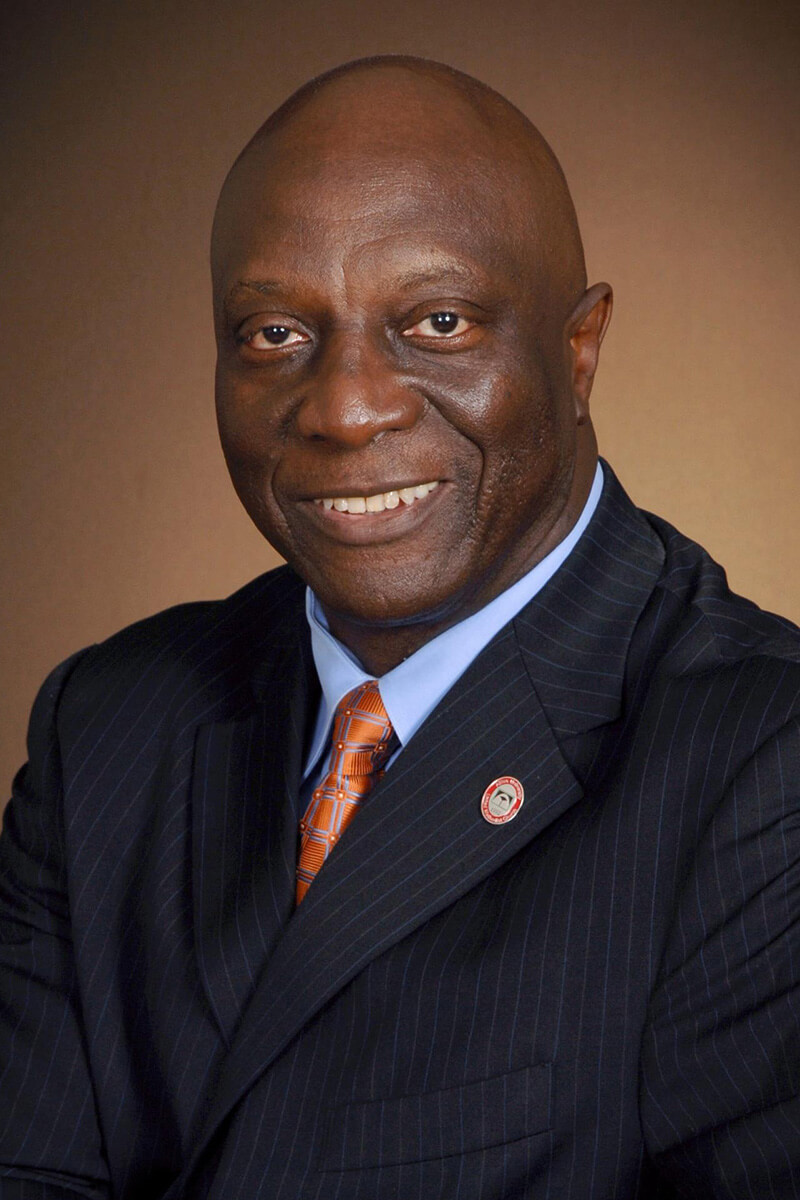
Photo courtesy of the author
Commentaries
Methodists around the world are celebrating the life of the Rev. Dr. James T. Laney — a pastor, missionary, university president, U.S. ambassador and lifelong advocate for peace who died last month at age 98.
Jim Laney was all of those things — and more.
He was my friend.
He was also a friend to Africa University, playing a pivotal role in establishing the pan-African United Methodist school in Old Mutare, Zimbabwe, more than three decades ago.
Africa University would not be what it is today were it not for Jim Laney. His leadership at that moment in our history was purely providential. He was sent to us.
Serving as chair of the site selection committee, Dr. Laney was at the helm of choosing where the university would go.
When he took on this role in 1986, he came with the appropriate inner resources for such an extraordinary task. At the time, he was president of Emory University in Atlanta and previously had been dean of Emory’s Candler School of Theology. A United Methodist pastor and former missionary to South Korea, he was a global citizen who crossed the spectrum in terms of relationships with people around the world.
Along with his experience, Dr. Laney had a remarkable network that proved invaluable to making Africa University a reality.
The United Methodist Church had long dreamed of launching a pan-African university, and momentum was building when Dr. Laney became involved. The church considered United Methodist properties in several countries: Liberia, Sierra Leone, Burundi, Rwanda, Angola, Zaire (now the Democratic Republic of Congo) and Mozambique, as well as Zimbabwe.
It was through the site selection process that I first became acquainted with Dr. Laney. I had been named to both the site selection committee and the Continuing Committee on Africa Initiative, which would later approve the site recommendation.
Dr. Laney and his team visited and carefully considered each country before recommending Zimbabwe. It proved to be a wise selection. In the decades that followed, all of the other prospective countries would experience war or civil conflict. Zimbabwe was the lone exception, a newly independent country that had already emerged from its own war for independence a few years earlier.

Political stability was one of many reasons that Dr. Laney cited for choosing Zimbabwe. Others included the strong presence of United Methodist institutions, ample room for future growth and an advantageous location on a major transportation corridor that the country shared with Mozambique, according to Angella Current-Felder’s book, “The School of Dreams in the Valley of Hope: The Africa University Story.”
The Zimbabwe Annual Conference gave the church 1,456 unused acres at the Old Mutare Mission, where the church already operated an orphanage, school and hospital.
Building a university in the hills of Old Mutare required approval at the highest level of government, and this is where Dr. Laney’s network came into play. This part of Africa University’s history is not widely known, but he was good friends with President Jimmy Carter, who knew Zimbabwe President Robert Mugabe. At Dr. Laney’s request, Carter interceded on behalf of the church, and Mugabe said he would welcome the United Methodist university in his country. Mugabe later spoke at Africa University’s opening in 1994.
In the years following the school’s launch, Dr. Laney continued to provide support and input. Meanwhile, his work as a global citizen culminated in him being named U.S. ambassador to South Korea in 1993 by President Bill Clinton, and he became an outspoken advocate for peace on the Korean Peninsula.
Subscribe to our
e-newsletter
I visited him on many occasions in Atlanta and during his tenure in Seoul. He provided wise counsel to me and also helped the university secure some major financial gifts in the Atlanta area.
After he retired, we traveled together to Zimbabwe, where he preached on campus at the Kwang Lim Chapel. It was one of the best sermons I’ve ever heard. The school bestowed on him an honorary doctorate.
Today, Africa University leads in reach and innovation, impacting the lives of hundreds of thousands across sub-Saharan Africa. It’s debt-free. We have more than $140 million in endowments and other investments, and the university is completely on solar power. That’s the hand of Jim Laney. I don’t know where AU would be today if not for his leadership.
Africa University and The United Methodist Church owe Jim Laney a debt of gratitude beyond measure. His impact continues to be felt as the school grows, and its graduates go out to transform their communities and our world.
Salley is president and chief executive officer of Africa University Inc.
News media contact: Julie Dwyer at (615) 742-5470 or newsdesk@umcom.org. To read more United Methodist news, subscribe to the free UM News Digest.


