
The United Methodist Council of Bishops has backed designating a Sunday later this year for prayers about the global migration crisis and for collecting a special offering to address suffering caused by forced migration.
The bishops, meeting May 4, also received an update on efforts toward achieving full communion between The United Methodist Church and Episcopal Church.
A handful of reports were accepted in the next-to-last-day of the council’s Dallas meeting, including one from the Council of Bishops Immigration Task Force.
“This is the day for The UMC to act with conviction and courage, giving life to its commitment to be disciples of Jesus Christ for the transformation of the world,” the report says. “How we respond to the immigration crisis at this moment will determine the vitality of the church for generations to come.”
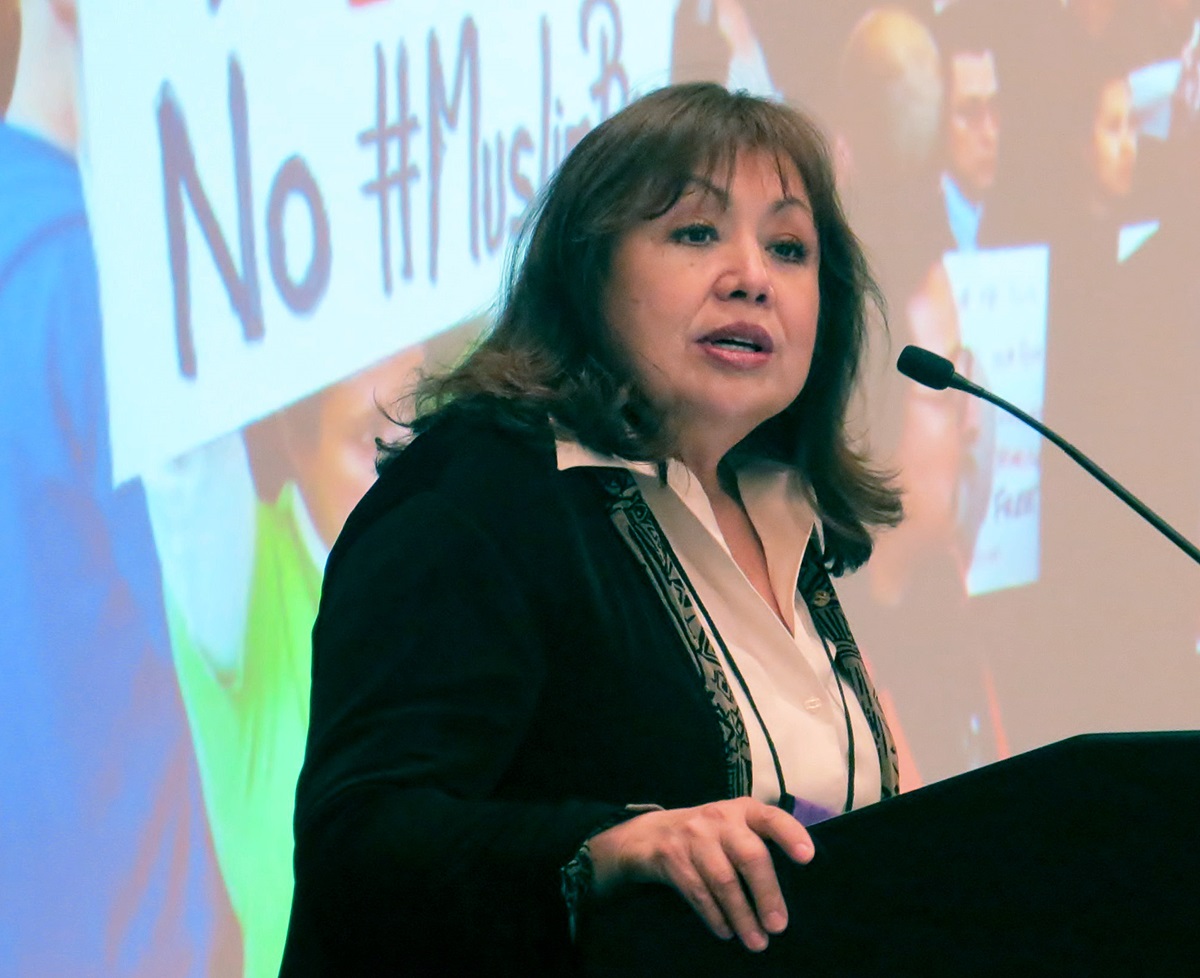
San Francisco Area Bishop Minerva Carcaño, chair of the Council of Bishops Immigration Task Force, spoke to her colleagues about the challenges posed by President Trump’s tougher approach to immigration, including his plan to build a wall across the U.S.-Mexico border.
She described as well the vast extent of forced global migration, and the challenge that poses for The United Methodist Church and other faith groups.
Carcaño, for the task force, asked the bishops to support a request already going to the Connectional Table for $200,000 to boost immigration-related work in the five U.S. jurisdictions. The funding would be shared equally among the jurisdictions, with a focus on training conference and church leaders.
The Connectional Table, which is meeting May 16-22, coordinates the denomination’s mission, ministry and resources. It also has the authority to distribute contingency funds.
That request comes from the broader United Methodist Immigration Task Force, and Carcaño urged bishops to voice their support for dedicated spending in boosting the church’s response on immigration issues.
“The present-day crisis requires an investment, a clear investment,” she said.
Nordic-Baltic Area Bishop Christian Alsted, chair of the Connectional Table, questioned why the request would be directing money only to the U.S. “I’m missing the global scope,” he said.
But Carcaño said the funding would encourage jurisdictional task forces to work beyond the U.S.
“We have many friends and folks in the jurisdictions wanting a way to strengthen their participating in the global migration crisis,” she said.
Bishop Rosemarie Wenner of Germany, also on the Council of Immigration Task Force, voiced her support for the funding.
“It’s a good first step,” she said.
After more discussion, the bishops did vote to lend their support for the request going to the Connectional Table.
Carcaño also asked the bishops to back designating a Sunday for prayer about global migration and a special Advance offering for relief efforts.
This, she noted, would be in connection with a National Council of Churches and Church World Service effort on global migration called Ecumenical Declaration: Protecting Welcome, Restoring Hope.
The bishops approved the request without dissent.
“The council will now need to work with other connectional leaders to set a Sunday,” Carcaño said after the plenary.
West Ohio Conference Bishop Gregory Palmer presented “A Gift to the World,” a report on United Methodist Church-Episcopal Church dialogue toward the possibility of full communion between the denominations.
Full communion would mean each church acknowledges the other as partner in the Christian faith, recognizes the validity of each other’s baptism and Eucharist and commits to work together in ministry. It also would mean the two denominations can share clergy.
Palmer serves as United Methodist co-chair of the dialogue on behalf of the Council of Bishops. He said that among those participating in the dialogue, major obstacles appear to have been removed.
“It is our hope to bring proposals to the 2020 General Conference of our church and the 2021 General Convention of the Episcopal Church,” Palmer said. “That’s the end toward which we will work.”
Hodges, a United Methodist News Service writer, lives in Dallas. Contact him at (615) 742-5470 or newsdesk@umcom.org
Like what you're reading? Support the ministry of UM News! Your support ensures the latest denominational news, dynamic stories and informative articles will continue to connect our global community. Make a tax-deductible donation at ResourceUMC.org/GiveUMCom.

