
Key points:
- The attack on a Pentecostal church in Congo, which killed 17, happened near where more than 180 United Methodists were attending worship.
- A United Methodist lay leader was at the bombed church at the time of the attack.
- The Beni District superintendent said if the attacks continue, church members will have no choice but to stop attending services.
At least 17 people were killed and 20 others seriously injured in a suspected terrorist attack during a worship service Jan. 15 at a Pentecostal church in Kasindi near where United Methodists congregate.
A United Methodist lay leader was at the 8th Community of Pentecostal Churches of Congo during the attack.
In a press release, Patrick Muyaya, Congo minister of communication, said the explosion at the church at the border between Congo and Uganda in the North Kivu province was perpetrated by suspected Allied Democratic Forces, a radical Islamist group.
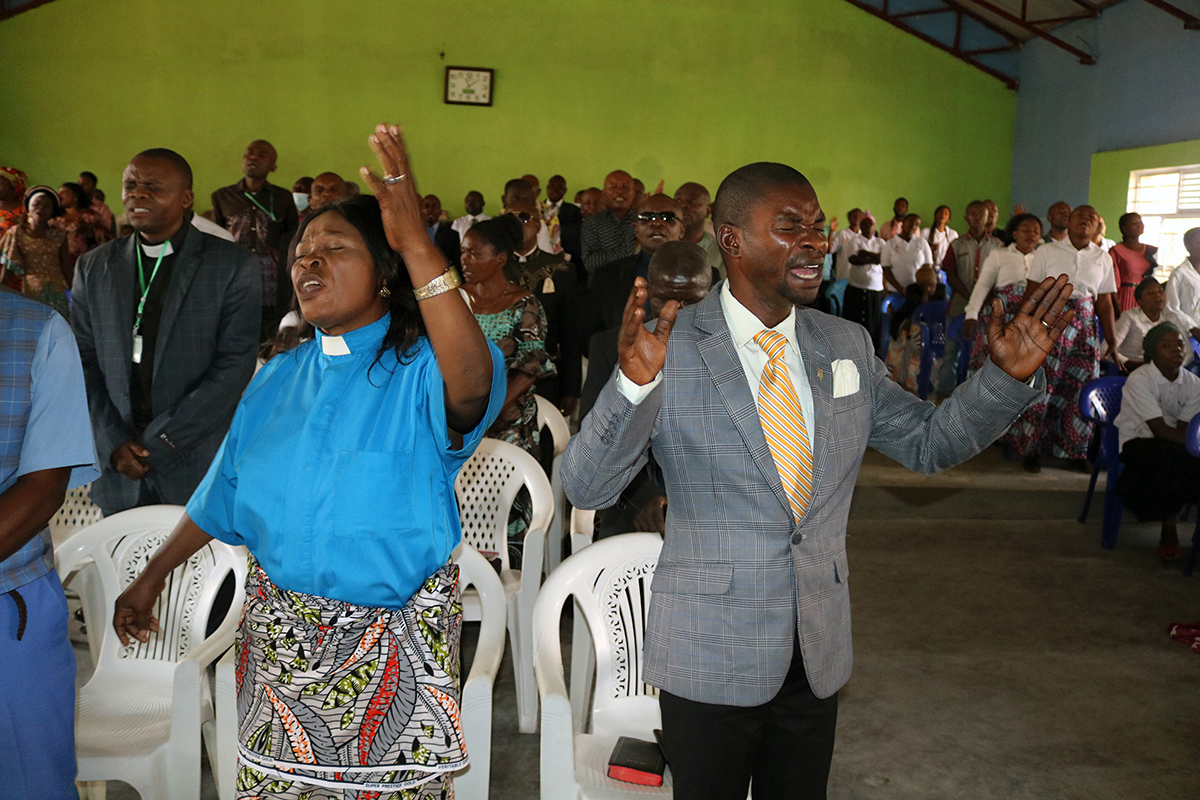
“The explosion … happened just a short distance from where more than 180 United Methodists were attending service,” said Pastor Kambale Vanzane of Kasindi United Methodist Church.
Paluku Kalihali, Kasindi United Methodist Church’s lay leader, had been invited to a baptism ceremony at the Pentecostal church that day.
“I thank the Lord that I was not injured in the attack,” Kalihali said. “It was the first time for me to see such an event. … God is good because I was not affected.”
Kalihali, who is a nurse at a local hospital, said more help is needed for those injured in the explosion because there is a lack of medicine.
He also pleaded for the government to restore peace in North Kivu and Ituri where there is increased civil unrest. He said more needs to be done to keep churches secure, noting that there were several visitors from different communities in the Pentecostal church on the day of the bombing.
Subscribe to our
e-newsletter
Germain Masinda, Beni District superintendent, said, “As long as there is no restoration of peace in the area, we will continue to witness such loss of lives, hence the need to seek lasting peace. And this lasting peace will only come from the Lord our God.”
Masinda said the church will have to intensify awareness campaigns for peace to prevail in the area and also encourage residents to report all suspicious persons to the security forces.
“We are now living in fear as we don't know where the next attack will be as churches are becoming the targets,” he added.
Masinda said if such attacks continue, church members will have no choice but to stop attending worship services.
United Methodist Bishop Gabriel Yemba Unda, the national moderator of Christian churches in Congo, strongly condemned the bomb attack and called for investigations to identify the perpetrators.
The World Council of Churches also denounced the attack.
“The ability to worship freely and without fear is at the very core of the fundamental human right to religious freedom,” said the Rev. Jerry Pillay, the council’s general secretary.
“We pray for the bereaved families and community, and for the wounded. We denounce this despicable attack, the perpetrators of which must be apprehended and prosecuted to the full extent of the law.”
Kituka Lolonga is a communicator in the Kivu Conference.
News media contact: Julie Dwyer, news editor, newsdesk@umcom.org or 615-742-5469. To read more United Methodist news, subscribe to the free Daily or Weekly Digests.

