
Key points:
- A new book details the long road for Black Methodists to get full equality in the denomination.
- The United Methodist Church has desegregated, but isn’t yet integrated, says the Rev. Bonnie McCubbin, a historian and the book’s author.
- McCubbin embraces the “pilgrimage” approach to history because it takes into account that progress happens along with setbacks.
When it comes to race, The United Methodist Church is finding its way back to John Wesley.
In her book “I Love to Tell the Story: A Pilgrimage Towards Racial Justice in The United Methodist Church,” the Rev. Bonnie J. McCubbin takes on the travails of Black Methodists who have strived for equity for 242 years.
The Methodist movement founded by John Wesley started off “being very anti-racist,” said McCubbin, pastor of Old Otterbein United Methodist Church in Baltimore and the director of museums and pilgrimage/conference archivist for the Baltimore-Washington Conference.
“You couldn’t be a Methodist and own slaves.”
Learn more

From there, things got a lot worse before getting better. In “I Love to Tell the Story,” McCubbin combines that history with a batch of related oral histories and an explanation of “pilgrimage” as a way of viewing the past and a spiritual discipline equal with fasting, reading Scripture and prayer.
Telling the story of desegregation
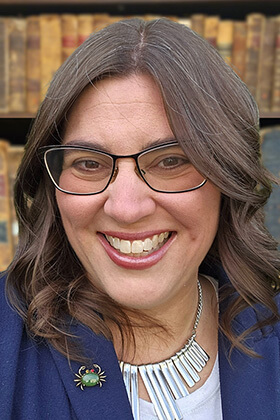
The Rev. Bonnie McCubbin. Photo courtesy of McCubbin.
The Rev. Bonnie McCubbin identifies herself as a “white chick from the sticks” who has taken on an overdue and needed telling of the Black Methodist experience in her book “I Love to Tell the Story: A Pilgrimage Towards Racial Justice in The United Methodist Church.”
There have been “great books on the actual logistics of the Central Jurisdiction and the votes that happened and the internal machinations,” McCubbin said. “But no one had really recorded the narrative history, and that’s what I think is different here, and I think people are grateful that that narrative is being recorded.”
In the book, McCubbin explains how she got interested in the Black experience in the church.
“When I was 7 or 8 years old and I went to the Black Baptist church in a ‘rough’ area of Baltimore city, it was an eye-opening experience,” she writes in the acknowledgements section that opens the book. “My social justice heart grew that day. I decided that I was going to do whatever I could to ensure that all people were treated equally, fairly and had the same opportunities — even if I wasn’t sure what that meant at the time.”
She has undergone training experiences to confront her biases as a white woman, and came to feel that time was running out to get the story because people were passing away.
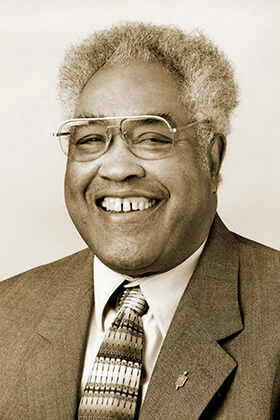
United Methodist Bishop Forrest C. Stith. 2004 file photo by Mike DuBose, UM News.
Her efforts have been endorsed by Black church leaders including Bishop Forrest C. Stith, who served as a bishop from 1984 to 1996. In the book, McCubbin quotes him: “Bonnie, I’m glad you are doing this work because someone needs to. But you better hurry up, because we are all dying over here.”
The past cannot be changed, McCubbin said, “but I can change the way we talk about and remember the past,” she wrote. “I can use my white privilege to amplify Black voices so that as a society and a denomination, we can go on to perfection of love in this lifetime.”
“I really do believe that pilgrimage draws us closer to God,” she said.
McCubbin regularly leads in-person pilgrimages on bus tours but believes it’s also a good approach to studying history.
“Pilgrimage is unfinished,” McCubbin added. “It embraces the paradox, the unanswered questions about faith, life and God. … We might set out on a pilgrimage to get answers to questions, only to discover that we find some answers but gain even more questions in the process.”
The pilgrimage lens works well on this subject because perspectives and biases have varied over the years.
“It helps us really focus on that journey and that development from where we used to be to where we then developed into, and to where we are now and where we’re headed in the future,” McCubbin said. “It allows us to focus on it because pilgrimage isn’t static. It’s dynamic. It’s something that’s constantly changing.”
Even trips to Disneyland are different experiences each visit, she pointed out.
“If we get a little more serious, the Trail of Tears was a pilgrimage,” she said. “But it works — because no matter how many times you go to a site, every time you go, it’s a different experience.”
Methodist history as time went by saw the fortunes of Black Methodists decline because of racism and the Civil War. Black people were included, but limits were imposed such as insisting on white control of churches, limited leadership roles for minorities and segregated seating at worship services.
“I think it’s frustrating for a lot of people to look at that history and know Wesley’s trajectory (in Britain), and then to see it shift once it came to the United States,” said the Rev. Emily Nelms Chastain, assistant professor of Christian History and Methodist Studies at United Methodist-related Perkins School of Theology at Southern Methodist University.
“It’s frustrating for me personally as a Southerner,” Chastain said. “Because of where the population is growing (at that time), there are more people who are uncomfortable with abolition completely, and so they just kind of give in.”
Some Black Methodists responded by starting their own denominations, such as the African Methodist Episcopal Church (1816) and the African Methodist Episcopal Zion Church (1821). Those still exist today.
The new denominations were a way for Black Methodists to get autonomy, McCubbin said.
“In that era, Black persons were unable to gather without a white overseer present because of the anti-slave laws, so they chose this route to allow their preachers to have greater say and leadership,” she said.
The Methodist Episcopal Church split in 1844 over slavery. Northern churches (mostly) opposed slavery while the new Methodist Episcopal Church, South, supported the institution. But Blacks were marginalized in varying degrees in both.
In 1939, the Central Jurisdiction was formed in the Methodist Church as a structure for Black congregations, grouping them together while white churches were grouped separately by geography. This was an attempt at a “separate but equal” solution to race.
“I think the majority (reason for creating the Central Jurisdiction) is definitely racism,” Chastain said.
“I think there’s still that need for the South to control when they’re coming into that merger in 1939, and so by putting in that jurisdiction, they can say, ‘Well, yeah, that’s cool, but here are our boundaries.’ … It’s still steeped in very much that Jim Crow era that’s still there, that’s still happening, especially in the South.”
The Civil Rights Movement and 1968 merger of The Methodist Church and the Evangelical United Brethren Church led to the dissolution of the Central Jurisdiction and moving Black congregations into the geographic areas with white churches.
“That was a stipulation, that the church couldn’t continue the Central Jurisdiction,” Chastain said. “Methodist students had been fighting and pushing for an end to the Central Jurisdiction for 20 years at that point, and they weren’t listening.
“And so the Evangelical United Brethren Church with that requirement kind of pushed everybody else out of voluntary mode into mandatory mode to integrate the denomination,” she said. “Had that not been on the table, I’m not sure we would even be where we are now.”
And where exactly are we?
In the oral history section of the book, prominent Black United Methodists highlight both the gains and losses while integrating the church.


The Rev. E. Allen Stewart, a longtime Black pastor in the Baltimore-Washington Conference who retired in 2021, said, “I think what was gained (with the folding of the Central Jurisdiction) was a wider experience for people to see worship in more than one way. I think what was lost was some of the authentic Black worship.”
Subscribe to our
e-newsletter
Barbara Ricks Thompson, a Black woman and the first president of the United Methodist Commission on the Status and Role of Women, said that integration “hopefully has helped all of us to see each other more like brothers and sisters than like enemies of some sort. At least if not enemies, as lesser than or better than anyone else.”
Integration and desegregation are not the same thing, McCubbin said.
“We still have Black churches,” she said. “We still have white churches. Very few of our churches reflect the diversity of our communities.
“We desegregated in the ’60s. We are still not an integrated denomination. Sunday morning is still the most segregated hour of the week.”

Patterson is a reporter for UM News. Contact him at (615) 742-5470 or newsdesk@umcom.org. To read more United Methodist news, subscribe to the free UM News Digest.