

Key points
- The Hispanic Youth Leadership Academy helps Hispanic-Latino young people discern their gifts for leadership, ministry and service.
- The program strengthens students’ sense of belonging during a time of heightened challenges for immigrant communities.
- An ecumenical learning environment prepares young leaders to serve both church and community with a commitment to justice and faith.
As Hispanic-Latino communities across the United States continue to navigate heightened immigration concerns, public hostility and growing uncertainty, church leaders increasingly are asking not whether to invest in young leaders, but how to prepare them for faithful leadership in a rapidly changing society.
For more than two decades, the Hispanic Youth Leadership Academy — known as HYLA — has answered that call by helping young people explore leadership, vocation and Christian service.
This summer, students from Texas, Tennessee, Massachusetts and Washington, D.C., gathered at Nashville’s Scarritt Bennett Center for HYLA’s high school preparatory session, where they participated in leadership development, theological reflection, spiritual formation and college exploration.
The ministry encourages students not only to develop academic and community leadership skills but also to discern God’s call in their lives through conversations about faith, justice, ministry and the church.
Unlike many youth leadership initiatives, HYLA intentionally combines leadership formation with theological education, helping participants understand that Christian leadership also carries pastoral, ethical and spiritual responsibility.
Founded as a United Methodist initiative to support Hispanic-Latino youth, HYLA has evolved into an ecumenical ministry that welcomes students from a wide range of Christian traditions.
The Nashville gathering included participants from United Methodist, Presbyterian, Episcopal, Catholic and evangelical churches.
Rather than minimizing denominational identities, the academy’s national program director said the experience demonstrates how Christians from different traditions can work together to prepare leaders committed to serving their communities and pursuing justice.
“The diversity wasn’t a challenge — it became one of the program’s greatest strengths,” Valentina San Juan said. “We wanted every young person to hear that they belong.”
That affirmation comes at a time when many immigrant families continue to live with anxiety because of restrictive immigration policies, enforcement actions and public rhetoric questioning their place in American society.
Those concerns affected the academy directly. In 2025, organizers canceled the Nashville session after families expressed concern about students’ safety amid immigration enforcement activity. Being able to return in 2026 represented more than resuming a program; it became an act of pastoral care and community accompaniment.
“We need to keep telling our young people that they belong,” San Juan said. “They belong in their churches, in their communities and on college campuses. They have a history, and they have a community standing behind them.”
During the week, students visited Vanderbilt University, where they met Latino faculty members, researchers and leaders whose personal stories reflected many of the students’ own experiences.
Organizers said the message was clear: Higher education, church leadership and theological study are places where Hispanic-Latino young people belong and can thrive.
For many participants, HYLA became a place to discover not only their potential but also their responsibility to serve others.
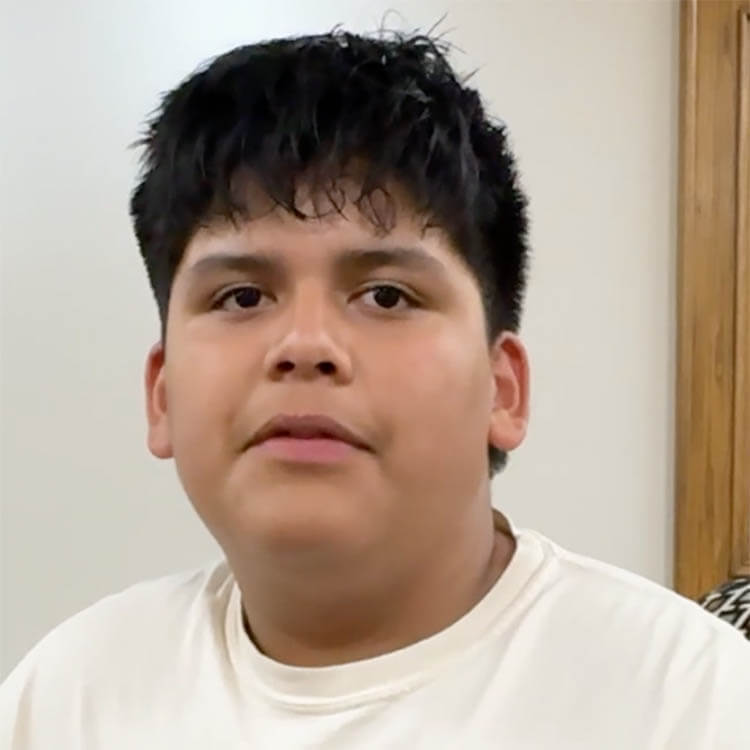
Joseph Valtierra, 14, of Monterey, Tennessee, said the experience helped him realize that no one has to face life’s challenges alone.
“I learned that no matter who you are or where you come from, there are always people willing to support you,” he said.
He added that one lesson stayed with him throughout the week: “We all have a voice, and we should use it to stand up for ourselves and to help others.”
Learning about late civil rights leader the Rev. James Lawson during their visit to Vanderbilt left a lasting impression.
“Even though he faced discrimination because of his work in the Civil Rights Movement, he kept fighting for justice,” Valtierra said. “That inspired me.”
He also saw connections between leadership, education and ministry.
“It helped me understand how I can combine my studies with ministry to serve others and share God’s message,” he said.
For Savi Vásquez-Ramírez, a high school senior and member of Eastminster Presbyterian Church in Nashville, the welcoming atmosphere shaped the week.
“When I go somewhere new, I usually worry about how people will receive me,” Vásquez-Ramírez said. “Here, everyone was kind, welcoming and respectful.”
The experience also encouraged participants to engage respectfully with differing perspectives while speaking with confidence about their own convictions.
“We should never stay silent,” Vásquez-Ramírez said. “If we don’t make our voices heard, we won’t be able to help our communities or defend our rights.”

Students also reflected on how leadership begins with everyday acts of service.
Esteban Sánchez from San Antonio said the academy broadened his understanding of Hispanic-Latino leadership.
“I was impressed by how Latino communities have built spaces of unity and support even where they make up a much smaller minority,” he said.
He also came away with a renewed sense of responsibility.
“I’ve learned to appreciate the blessings I’ve received through my church, my family and my community,” Sánchez said. “Now I better understand my responsibility to use those blessings to serve people facing greater challenges.”
Even small acts, he added, can make a difference.
Throughout the week, participants and facilitators emphasized that Christian faith cannot be separated from service, justice and engagement with the world.
Adriana Leija, an academy board member and treasurer, said the ministry provides something many young people urgently need.
“HYLA offers a place where young people feel safe, heard, valued and loved,” she said.
From that foundation, participants are encouraged to return home ready to strengthen their churches and communities.
“We want them to build bridges, create networks of support and become leaders who inspire hope and positive change.”

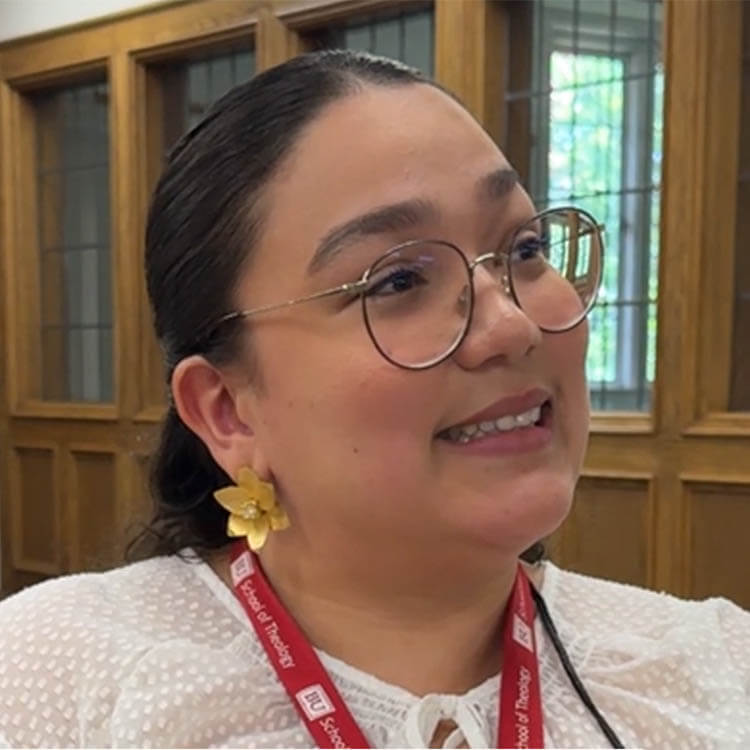
Hanna Dias, a Brazilian graduate student at Boston University School of Theology who served as a facilitator, said the program also affirms participants’ cultural identity.
Subscribe to our
e-newsletter
As an Afro-Brazilian woman studying in the United States, Dias understands the challenges of adapting to a new culture while remaining true to one’s identity.
“I didn’t come to this country to stop being Brazilian,” she said. “I came to study and serve my community with the knowledge I gain here.”
She believes one of the academy’s greatest strengths is helping students recognize that their cultural heritage is an asset rather than a barrier to leadership and ministry.
As the Hispanic-Latino population continues to grow in the United States, church leaders face increasing opportunities — and responsibilities — to prepare a new generation of leaders for ministry, education and community engagement. The students who gathered in Nashville offered a glimpse of what becomes possible when churches, families, colleges and community organizations invest together in young people.
Vásquez is Hispanic-Latino Relations coordinator for United Methodist Communications. For more information, contact UM News at +1-615-742-5470 or IMU_Hispana-Latina@umcom.org.


