
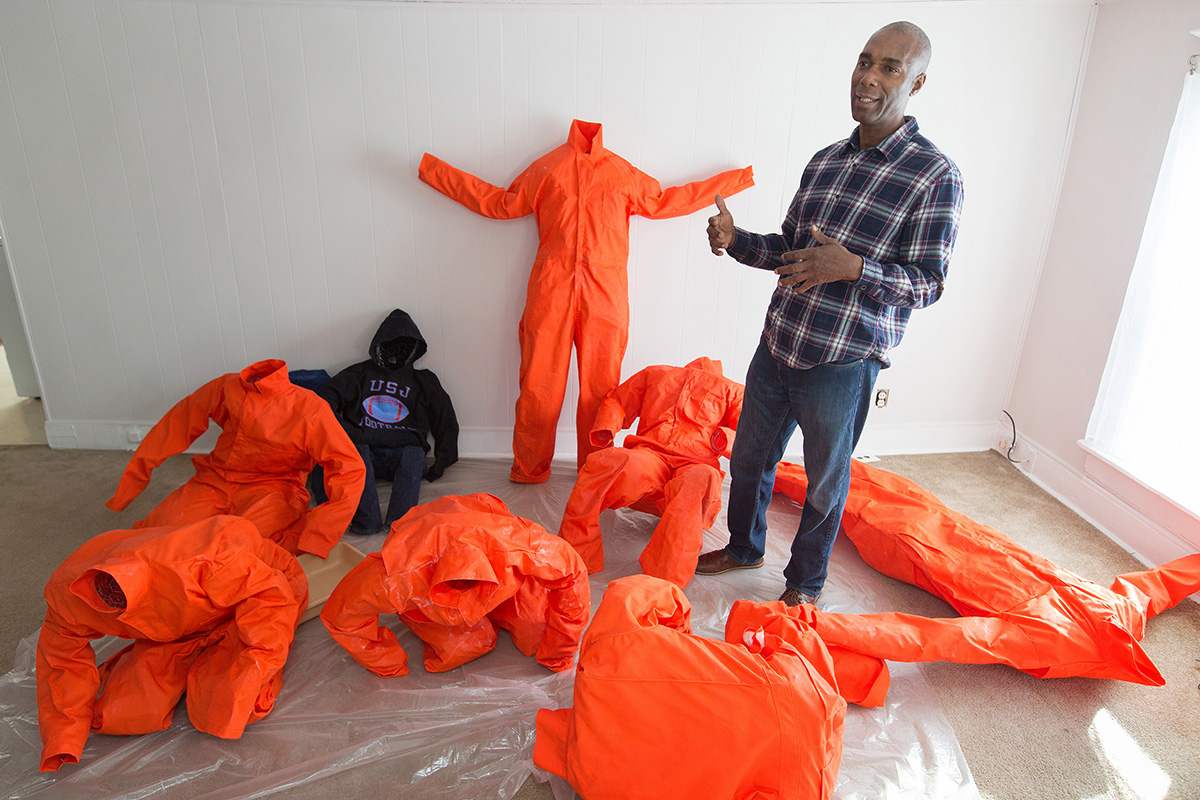
About 600,000 inmates will be released from prison this year, which may feel like more of a threat than an opportunity.
During five webinars this week, United Methodists will argue that it is a great opportunity to do God’s work, and they’ll suggest ways to do it.
The “Released: I’m Home, Now What?” webinars are sponsored by Strengthening the Black Church for the 21st Century and United Methodist Communications’ ResourceUMC. The Zoom events, beginning at 6 p.m. U.S. Central time Monday through Friday, require registration to attend.
“I see this as a ministry that the church really needs to embrace because 600,000 returning citizens come (home) every year, and guess what? They’re coming to your communities,” said the Rev. Michael L. Bowie, national director for SBC21, the national racial ethnic plan of The United Methodist Church.
“Instead of running from them, how do we run to them?” Bowie said. “(We have to) realize they can be a huge part and expand the kingdom of God and really help reduce this pervasive issue of mass incarceration in our communities.”
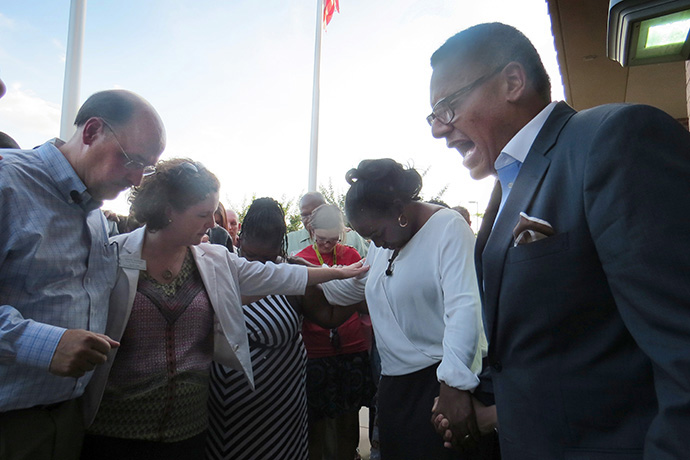
The Rev. Michael L. Bowie leads North Texas Conference clergy and laity in prayer outside the McKinney, Texas, police department in 2015. The group was protesting an officer's treatment of Black youth at a pool party dispute. Bowie, now national director for SBC21, the national racial ethnic plan of The United Methodist Church, is encouraging church members to support former inmates and help them find gainful employment. File photo by Sam Hodges, UM News.
“I made a horrible decision that affected many lives,” Hough said. “I went to prison six months after being married. I received a life sentence and I was there for almost 20 years.”
In addition to his church duties, Hough, a former Marine, works at Californians for Safety and Justice and Shields for Families, both of which support vulnerable families. He will speak during some of the seminars.
“By the grace of God, some doors are open,” Hough said. “(The seminars will) give some information to the churches that are trying to figure out, ‘How do we help the men and women who are coming home? How do we help the men and women that are still incarcerated? How do we support them?’”
Many released prisoners are resigned that the only jobs they can get are manual labor, because the majority of employers won’t consider them for anything else, Hough said.
“The natural abilities that God has placed inside me are somehow silenced now,” said Hough, who eventually beat those odds.
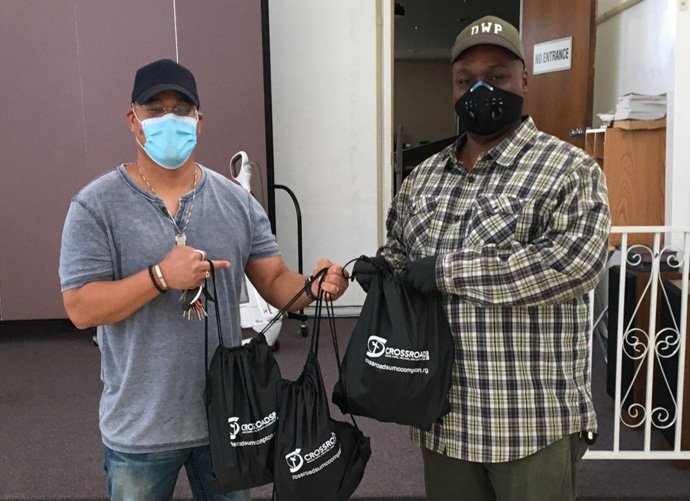
Saun Hough (left), associate pastor at Crossroads United Methodist Church in Compton, Calif., hands reentry hygiene kits to Jerrel McCoy, lead community health worker at Shields for Families in 2020. The church mobilized to create 3,500 kits for people released from prison by the state of California. File photo courtesy of Crossroads United Methodist Church.
“Not just to look at them, but to see them — see their worth, see their value and see the huge role they can play in the community.”
Register for webinar
The “Released: I’m Home, Now What?” Zoom webinars, sponsored by Strengthening the Black Church for the 21st Century and ResourceUMC, begin at 6 p.m. U.S. Central time April 26-30. Registration is required to attend.
Sessions
April 26 — Motivation Monday: Presenters will discuss their dedication to providing information to help envision new ways to transform the lives of persons impacted by incarceration.
April 27 — Testimony Tuesday: Women will share testimony about the transition from prisoner to citizen.
April 28 — Wisdom Wednesday: Leaders will share impactful resources and conversation about crime and incarceration.
April 29 — Thriving Thursday: Former male prisoners will share their stories of seeking employment and striving for emotional and mental wellness.
April 30 — Freedom Friday: A surprise guest will highlight this presentation about how churches can impact social justice as a way of having fresh ways to engage youth and young adults.
Sessions
April 26 — Motivation Monday: Presenters will discuss their dedication to providing information to help envision new ways to transform the lives of persons impacted by incarceration.
April 27 — Testimony Tuesday: Women will share testimony about the transition from prisoner to citizen.
April 28 — Wisdom Wednesday: Leaders will share impactful resources and conversation about crime and incarceration.
April 29 — Thriving Thursday: Former male prisoners will share their stories of seeking employment and striving for emotional and mental wellness.
April 30 — Freedom Friday: A surprise guest will highlight this presentation about how churches can impact social justice as a way of having fresh ways to engage youth and young adults.
“When you’re fighting and … trying to establish yourself beyond that horrible decision that you made and to live out what is the best in you, it’s very difficult because there’s so many barriers that you have to overcome,” Hough said.
Many church members, especially in older congregations, are hesitant to work in prison ministries, Hough said.
“They shy away from it because it’s so hard,” he said. “It’s easier to do a homeless ministry and it’s easier to do a foster care ministry because you get more sympathy.”
As of 2018, Black Americans comprised 12% of the adult population in the U.S., but made up 33% of the prison population, according to the Pew Research Center.
At least some of those Black prisoners are behind bars because of racism, Bowie maintains.
“There’s a portion of people who have been incarcerated for minor drug infractions,” he said. “The other races would get either rehabilitation or probation. … I believe the church can play a major role in dismantling racism that’s prevalent in our judicial system as it relates to incarceration.”
The stigma on released prisoners is considerable, even in churches, Bowie said.
“You have very few Black congregations who are part of this work,” he said. “I think there’s an embarrassment. I think there’s guilt and shame that Christians in the Black church need to overcome.”
Many Black Christians have family members who are serving time, Bowie said. All the more reason to be actively helping prisoners when they come home to have support and find gainful employment, he said.
“What better way in the body of Christ to realize … it’s all about having a second chance,” Bowie said.
Patterson is a UM News reporter in Nashville, Tennessee. Contact him at 615-742-5470 or newsdesk@umcom.org. To read more United Methodist news, subscribe to the free Daily or Weekly Digests.
Like what you're reading? Support the ministry of UM News! Your support ensures the latest denominational news, dynamic stories and informative articles will continue to connect our global community. Make a tax-deductible donation at ResourceUMC.org/GiveUMCom.


