
At 11:10 a.m. May 6, a single drummer slowly beat a rhythm signaling the beginning of a peaceful interruption of the 2004 General Conference.
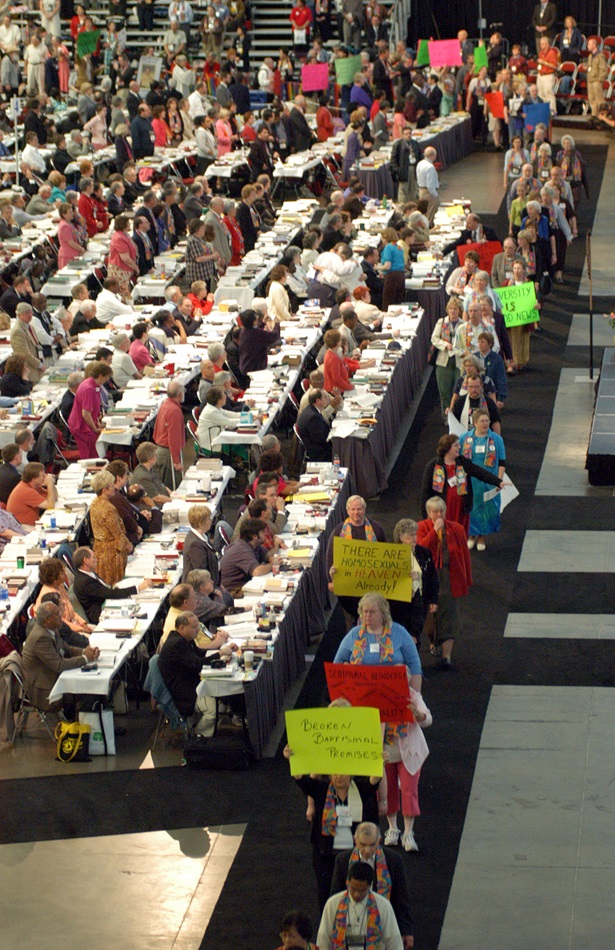
The demonstration was led by Soulforce, a gay rights advocacy group. More than 500 people circled the floor of the conference for 35 minutes carrying banners and singing hymns of reconciliation.
“The drum signals us that there are guests among us,” said Bishop Janice Huie of Arkansas, who was leading the morning session. “They come in peace as a witness among us. I invite you to embody God’s love to these strangers and friends.”
Leading the group around the room, a single voice issued an invitation to “those who want to reconcile, those who want justice, come out and join us.”
Mark Miller, delegate from Greater New Jersey, took the stage and led the group in singing several songs, beginning with “What Does the Lord Require of You?” and ending with “Marching to Zion.”
Many of the marchers carried signs with messages such as “There Are Homosexuals Already in Heaven” and “God Loves You and Me.”
Dressed in liturgical robes, some members of the group walked to the altar and poured water into the baptismal fount.
Marjorie Carlson, a participant in the demonstration, explained that adding the water was meant to symbolize a common bowl.
“We have been holding water at the entrance to General Conference every morning and inviting people to remember their baptism. We brought that water here to remember what we bring to the church, that we are of one faith and baptized by one God.”
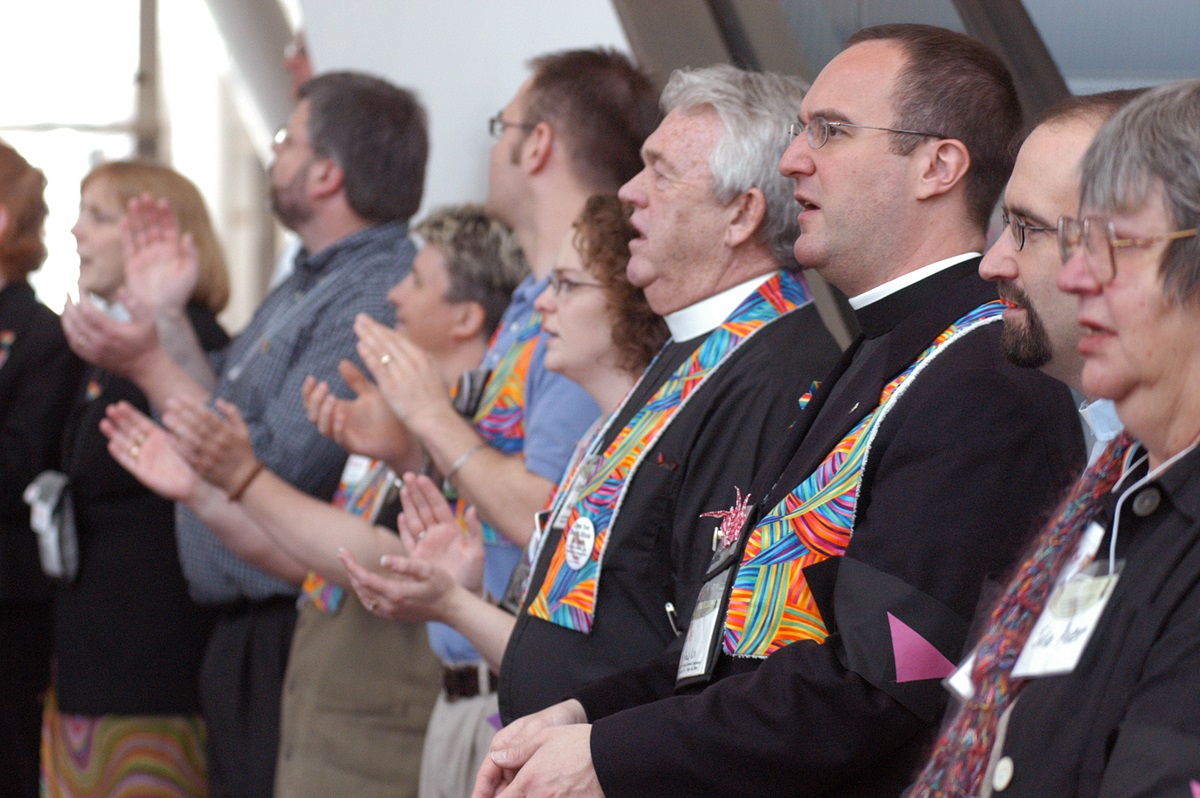
As the demonstration went on, many delegates and bishops on the podium stood, sang and clapped in unison with the demonstrators.
In a press conference held immediately after the demonstration, Jim Perry, chairperson of the Committee on General Conference, said he thought it was “a peaceful, worshipful moment.”
“It has been our goal over the past four years in planning this conference that we engage in peaceful, respectful conversation,” he said. “It is my hope that this helped people feel closer, whether they are in agreement over the issue or not.”
*Gilbert is a United Methodist News Service news writer.
News media contact: (412) 325-6080 during General Conference, April 27-May 7. After May 10: (615) 742-5470.
Related
Like what you're reading? Support the ministry of UM News! Your support ensures the latest denominational news, dynamic stories and informative articles will continue to connect our global community. Make a tax-deductible donation at ResourceUMC.org/GiveUMCom.


