
Key points:
- As mpox cases rise, The United Methodist Church is mobilizing in Congo, the epicenter of the outbreak.
- United Methodist clergy and community relays are actively educating their communities about symptoms, modes of transmission and the importance of prompt medical care in the event of suspected mpox.
- The United Methodist Board of Ministries’ Global Health Unit is supporting efforts by providing resources and technical assistance to church health boards in Africa.
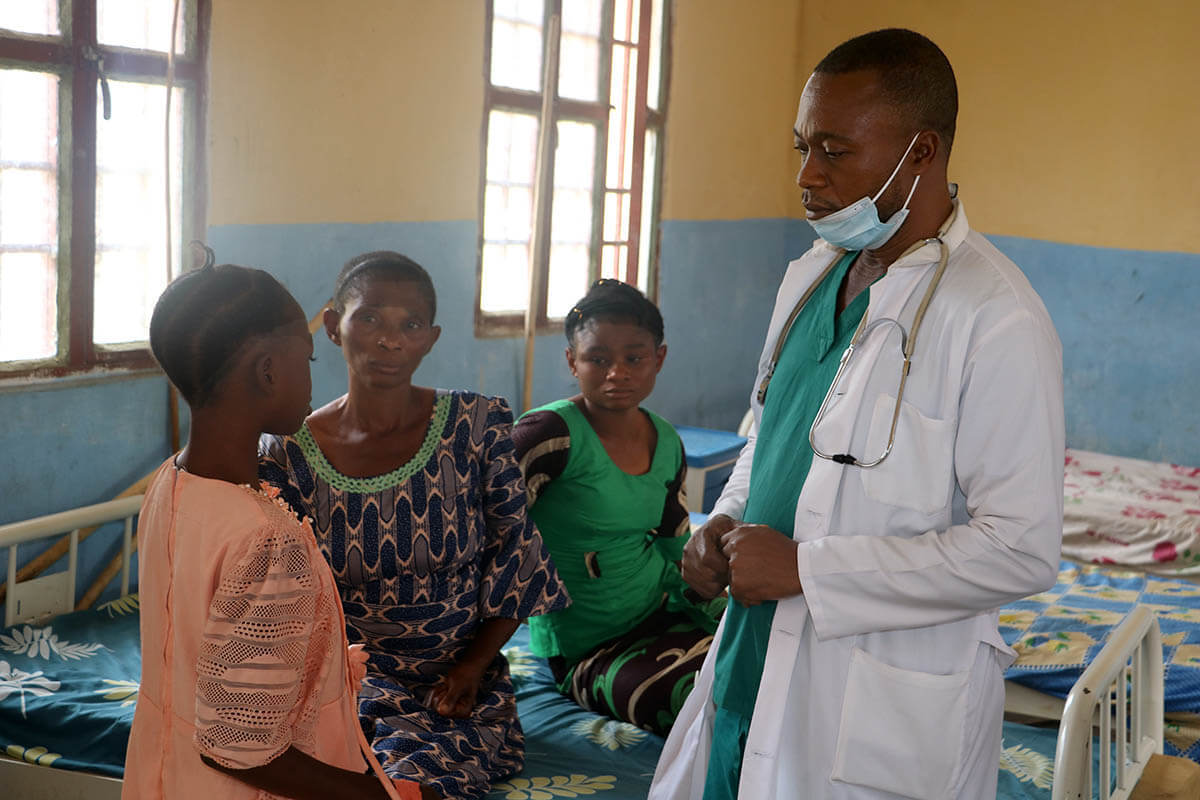
As Africa faces a worrying resurgence of mpox, The United Methodist Church is playing an active role in the fight against the disease, particularly in Congo.
United Methodist clergy and health workers have been busy educating their communities about symptoms, modes of transmission and the importance of prompt medical care in the event of suspected mpox, a viral disease that occurs mostly in central and western Africa. Symptoms include fever, headache, muscle pain, swollen lymph nodes and a rash.
The virus was previously known as monkeypox, because it was first seen in research monkeys. In late 2022, the World Health Organization changed the name to mpox, saying the term monkeypox could be construed as stigmatizing and racist.
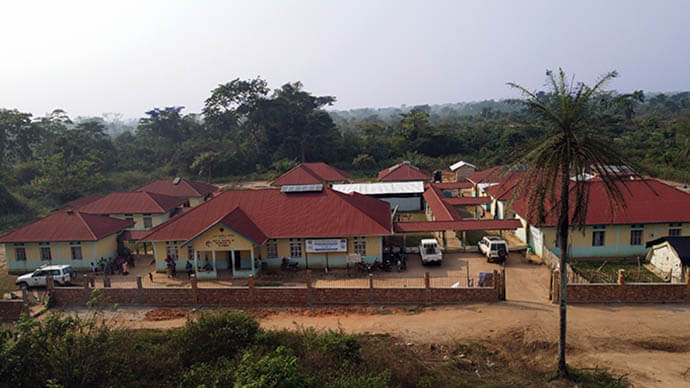
The Rev. Tambwe Salumu, superintendent of the Tunda District in Congo, said that all pastors in the region are working to raise awareness in their local communities. Every Sunday, pastors take advantage of worship services to educate congregations, he said.
“Our mission as pastors goes beyond simple preaching. We have a duty to enlighten our communities, to guide them towards a better understanding of the world and their role in it,” Salumu said. “I firmly believe that education is the key to the flourishing of our communities. As pastors, we have the privilege and responsibility to sow the seeds of knowledge and wisdom.”
The clergy outreach is complemented by community health workers who are trained to identify signs of illness and refer people to local hospitals. The workers, based in every village, district and town, crisscross their regions to talk about the virus and treatment.
Dr. Damas Lushima, The United Methodist Church’s health board coordinator in the East Congo Episcopal Area, said that in eastern Congo, 81 United Methodist medical structures work with 2,430 community health workers. He said the community relays are the eyes and ears of the operation.
“They are essential for informing, reassuring and directing people towards appropriate care,” he said.
Lushima said the continent is facing the spread of a new strain of the virus, which is more deadly and more transmissible than previous strains. Earlier this month, WHO Director-General Dr. Tedros Adhanom Ghebreyesus declared mpox a public health emergency of international concern.
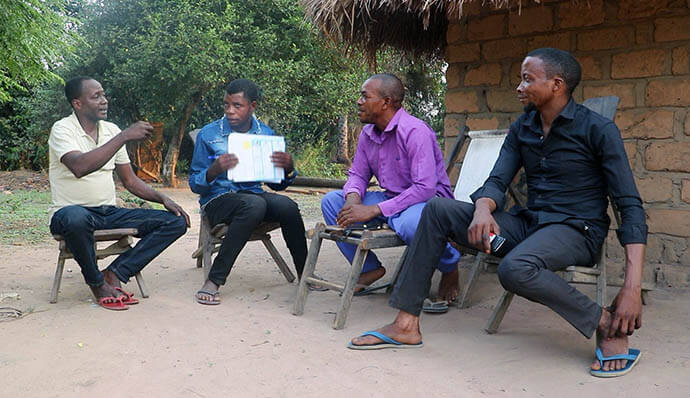
The first cases of mpox were reported at the end of 2021 in Weta, a town 25 kilometers (about 15 miles) from the United Methodist Mission of Tunda in eastern Congo, and the virus has been gaining ground in Africa in recent months.
Since the beginning of this year, 18,737 suspected cases and 5,265 confirmed cases of mpox have been reported in Africa, with 617 deaths, the Africa CDC reports. According to the health agency, since 2022, there have been 40,874 cases and 1,512 deaths in 15 African Union member states. Congo, the epicenter of the outbreak, accounts for 96% of all cases, the agency reports, noting that children under 15 account for 66% of cases and 82% of deaths in the country.
Last year, thanks to a partnership with the Institut National des Recherches Biomédicales (National Institute for Biomedical Research), The United Methodist Church helped set up a research laboratory at Tunda General Hospital, a United Methodist medical facility in the region. The laboratory enables rapid diagnosis of mpox and effective monitoring of the outbreak.
Tunda is one of the ecclesiastical districts of the East Congo Conference, where the first American missionaries settled in 1922
“The community health workers living in the Tunda health zone are being put to good use to raise community awareness of how to recognize symptoms and refer sick people to the general reference hospital for treatment in the research laboratory,” Lushima said.
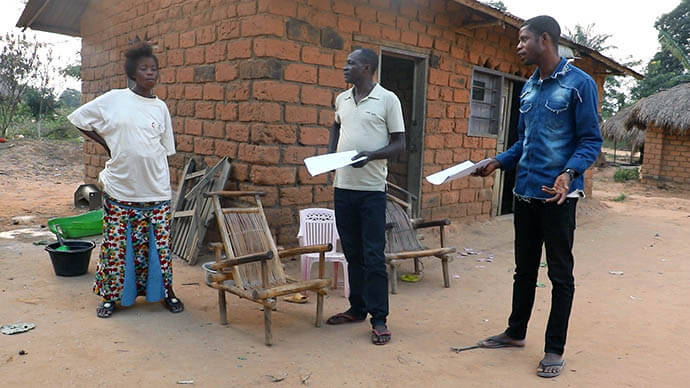
In the villages of Wenga and Dikungu in the Kibombo territory, UM News followed Kiteke Kahodi and Michel Tahindja Tashinga, two United Methodist community relays, as they worked to raise awareness house by house. The men patiently explained the risks of mpox, answered questions and allayed people’s fears.
“At first, people were suspicious, afraid of the disease and didn’t know how to protect themselves,” Kahodi said, “but when we take the time to explain to them, to answer their questions, we see fear turn into understanding.”
Kahodi said that seeing communities become aware of the ongoing outbreak is what gives him the greatest pleasure. “This is what motivates me to continue this work on a voluntary basis,” he said.
Tashinga said the efforts are making a difference.
“Every door we knock on is a family we’re protecting,” he said. “It’s hard work, but we know it’s important. We’re here for our community, so that no one is left in the dark about this disease.”
The support of The United Methodist Church is appreciated in the region.
Patrice Lumumba Okeke from the village of Wenga, pastor of 5th Community of Pentecostal Free Churches in Africa, said he was delighted to receive the mpox awareness messages. Lumumba heads a family of eight. His home is one of the households Kahodi and Tashinga visited.
“Before, I didn’t know what mpox was, let alone differentiate it from other skin diseases with the same symptoms,” he said. “Now, thanks to the information given, I can recognize the symptoms and know what to do if I notice them in myself or someone else in my family.”
Keponjo Diasa, a resident of Tunda United Methodist Mission, said he felt more confident following the awareness-raising message.
“I was afraid of mpox, but the pastors explained to us how it is transmitted and how to protect ourselves,” Diasa said. “The community relays are really helpful. They came to the mission to talk about mpox and answer our questions. It’s important to have this information close to home.”
Subscribe to our
e-newsletter
Dr. Philippe Okonda, consultant for the United Methodist Board of Global Ministries’ Global Health Unit in Congo, pointed out that combating mpox in Africa is a major challenge requiring a multisectoral approach.
“The action of The United Methodist Church is part of this dynamic, complementing the efforts deployed by health authorities and international organizations,” Okonda said. “Awareness-raising and prevention are essential tools for containing the spread of mpox.”
The church’s Global Health Unit provides technical resources, assistance and referrals to The United Methodist Church’s health board partners across Africa who are affected by the current mpox outbreak.
In the event of a public health emergency, health councils supported by The United Methodist Church are equipped to respond due to the regular support they receive each year from Global Health. Since 2017, health boards in East Congo, Central Congo, North Katanga and Southern Congo have received grants from Global Ministries to maintain adequate medicines and medical supplies, build new water supply facilities, renovate buildings and wards, and provide specialized training to medical staff for sustainable health outcomes, the agency reports.
“We are committed to ensuring that vulnerable communities are safe and protected from epidemics and other health emergencies,” said Roland Fernandes, top executive of Global Ministries. “To do this, we are strengthening the health systems of health council partners to detect, assess and respond rapidly and sustainably to this and other types of health emergencies.”
Lushima said that the commitment of The United Methodist Church — in collaboration with health authorities and international organizations — offers an inspiring model for community-based epidemic control.
“The combination of awareness-raising, prevention and scientific research represents hope for the affected populations,” he said. “Solidarity and collective action remain the most powerful weapons in the face of health challenges.”
Londe is a UM News correspondent in Congo.
News contact: Julie Dwyer, news editor, newsdesk@umcom.org or 615-742-5469. To read more United Methodist News, subscribe to the free Daily or Weekly Digests.

