
Key Points:
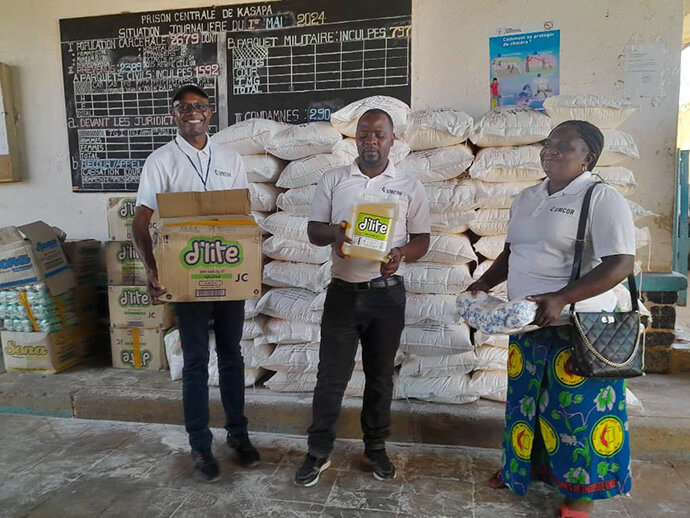
- With support from UMCOR, United Methodists in Southern Congo provided 16.5 tons of food and other supplies to inmates.
- People incarcerated at Kasapa Central Prison live in difficult conditions due to overcrowding and the age of the facilities.
- Church leaders took the opportunity to bring a message of hope and faith to the prisoners, encouraging them to find redemption.
Men and women incarcerated at Kasapa Central Prison recently received help from The United Methodist Church.
The United Methodist Committee on Relief, the humanitarian and development arm of the church, provided a $10,000 grant to purchase 16.5 tons of cornmeal, vegetable oil, beans, soy, soap, sugar and salt for inmates. Kasapa is near Lubumbashi, a city in the south of the Democratic Republic of Congo.
The Rev. Caleb Mbaz, coordinator of the Disaster Management Office for the South Congo Episcopal Area, which includes Zambia, reported that people incarcerated in this prison live in difficult conditions. More than 80% of those detained at Kasapa are not convicted criminals, he said, but defendants awaiting trial.
“We are a structure that helps the underprivileged in different ways. After learning about the precarious conditions in which the Kasapa prisoners live, we didn’t hesitate to come and, through this social gesture, put a smile back on the prisoners’ faces,” Mbaz said.
Kasapa, the largest prison in Haut-Katanga, was built in the colonial years with a capacity of 850 prisoners, but it now houses more than 2,679 inmates, said Papa Kitule, prison director.
Overcrowding and prolonged confinement in tight, dark, poorly heated and often damp spaces contribute to the spread of disease and the worsening of health conditions.
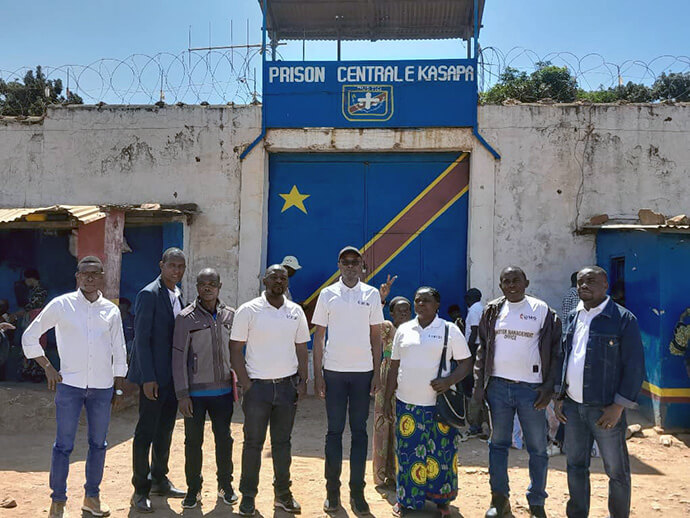
The distribution operation was an opportunity for the church to preach good news to the prisoners.
Conference evangelism president René Ayind delivered a message of hope and faith. He encouraged the inmates to draw on the biblical examples of those who overcame adversity and found redemption despite injustice.
“History teaches us that even in the face of human injustice, God, the supreme judge, dispenses justice,” Ayind said. He urged prisoners to learn from their mistakes and embark on a path of self-improvement.
Kitule expressed gratitude to The United Methodist Church for its ongoing support.
“We are deeply grateful to UMCOR and The United Methodist Church for their commitment to helping those most in need, in accordance with God’s word,” he said. “This social action is a testament to their compassion and dedication to those deprived of freedom.”
Subscribe to our
e-newsletter
Sam Kasongo, imprisoned at Kasapa, thanked church members for their support.
“We live more and more,” he said, “thanks to the generosity of benefactors like The United Methodist Church. We thank the United Methodist episcopal region of Southern Congo and Zambia for thinking of us.”
Mimi Ilunga, another inmate, added, “We are deeply touched by this attention and precious help, which allow us to keep hope alive.”
Mbaz said the testimonies underline the crucial impact of the social actions conducted by The United Methodist Church. The incarcerated, he said, “often live in difficult conditions and depend on external solidarity to meet their basic needs.
“That’s why we’ll always strive to bring help to people in need because, for us as a church, beyond bringing spiritual nourishment, we have this duty to assist them (physically). It’s also a way of evangelizing.”
Kasweka is director of the communications department for the South Congo and Zambia areas.
News media contact: Julie Dwyer at newsdesk@umnews.org. To read more United Methodist news, subscribe to the free Daily or Weekly Digests.


