Americans are more polarized than ever. We United Methodists don’t want to be.

In an ever-more-polarized society, the United Methodist Church this week has tried to model an approach to disagreement that the U.S. political system would do well to emulate.

Despite deep differences over gay marriage and whether gay men and lesbians can be ordained as clergy, we are working hard at our once-every-four-years meeting to stay united as we search for solutions. Like Americans, we United Methodists have a common history to draw upon as we persevere together.

Members’ intense drive to remain together in the face of difference seems to stand out as many other once-dependable American institutions — such as our political parties — seem ready to fracture.

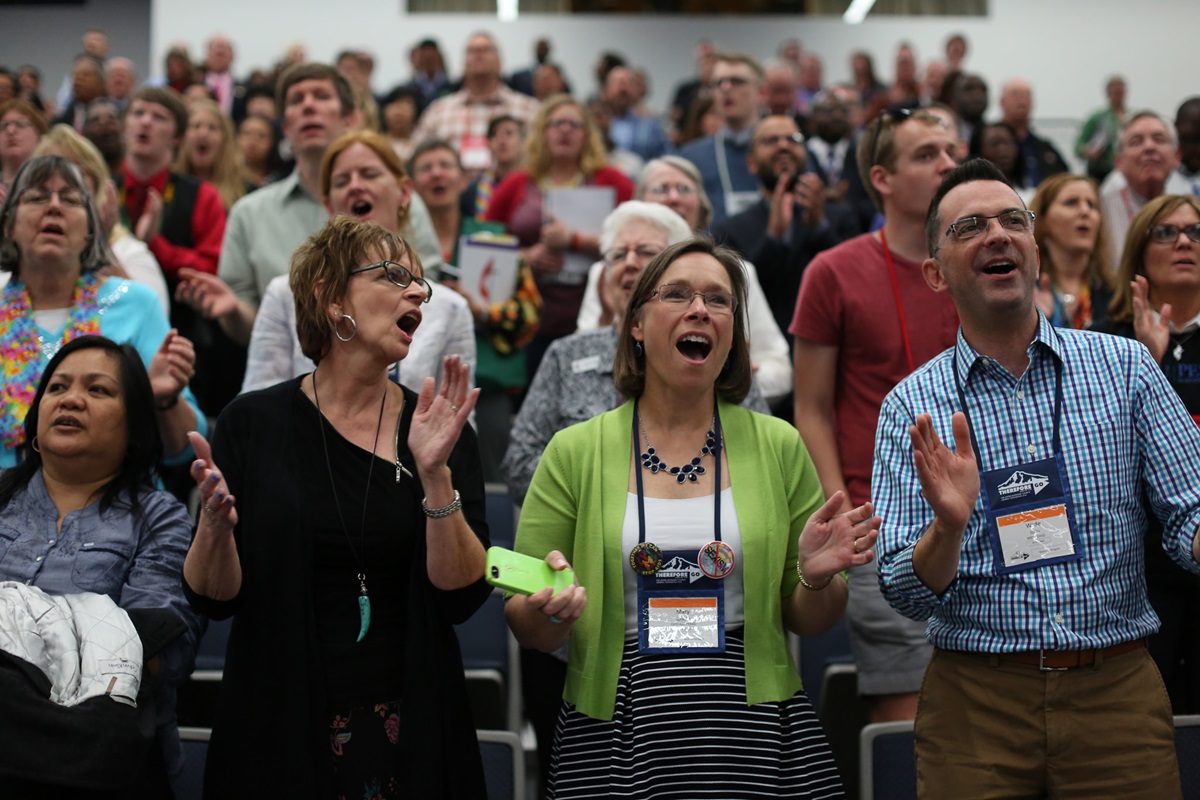
For the past 10 days, our global denomination has been at our General Conference, United Methodism’s top policy-making session. Unity in our “united” church has been sorely tested by the topic of sexuality, which has threatened to boil over at every quadrennial gathering of the Methodists since 1972.

This time, when 864 delegates from around the world gathered in Portland, Ore., discussion of “schism” and “separation” hovered in the air.

Read the entire article at The Washington Post website.

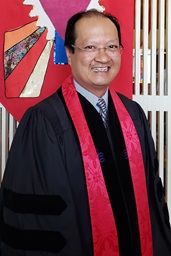
Rev. Tom Berlin is senior pastor of Floris United Methodist Church in Herndon and a delegate to the 2016 United Methodist Church General Conference. Mike McCurry, a White House press secretary under President Bill Clinton, was a General Conference delegate in 2004 and 2008 and teaches at Wesley Theological Seminary in Washington.


Like what you're reading? Support the ministry of UM News! Your support ensures the latest denominational news, dynamic stories and informative articles will continue to connect our global community. Make a tax-deductible donation at ResourceUMC.org/GiveUMCom.

Sign up for our newsletter!

Subscribe Now
Social Concerns
The Rev. Christopher P. Momany. Photo by Kristen Schell.

For every righteous ‘no,’ there must be a holy ‘yes’

Methodism’s Wesleyan-Holiness heritage holds principles that can be applied to today’s struggles around human dignity.
Church History
The Methodist Church’s 1956 General Conference meets from April 25 to May 7 in the municipal auditorium in Minneapolis. On May 4, the first Friday of the legislative assembly, the delegates voted to make women eligible for full clergy rights. “Now it is up to us to prove in clear and deep witness to the whole church our consecration and our loyal devotion to the work of the Kingdom of God,” said Margaret Henrichsen, a General Conference visitor, after the vote. In 1967, she became the first U.S. woman appointed district superintendent. Photo courtesy of Archives and History.

Why the 1956 women-clergy vote matters

Seventy years ago, the Methodist Church supported full conference membership for women clergy — a decision that would have a resounding impact when The United Methodist Church formed in 1968 and even today.
General Conference
Emily Allen, a veteran lay delegate from the California-Nevada Conference, delivers a report during the 2024 United Methodist General Conference in Charlotte, N.C. on May 3, 2024. Allen has been elected to serve as the interim General Conference secretary beginning July 1. She will lead the planning of The United Methodist Church’s international legislative assembly, scheduled May 8-16, 2028, in Minneapolis. Photo by Larry McCormack, UM News.

Bishops elect interim General Conference head

Emily Allen will lead the planning of The United Methodist Church’s international legislative assembly, next scheduled in 2028.

United Methodist Communications is an agency of The United Methodist Church

©2026 United Methodist Communications. All Rights Reserved