Key points:
- Convening a General Conference outside the United States is welcome news, but it is important to clarify the intent behind creating two sites.
- The speed of the decision raises concerns, including the perception of insufficient consultation with stakeholders in different parts of the world, writes the Rev. Kalaba Chali.
- Greater transparency around key considerations would help the church better understand why certain options were pursued and others were not.
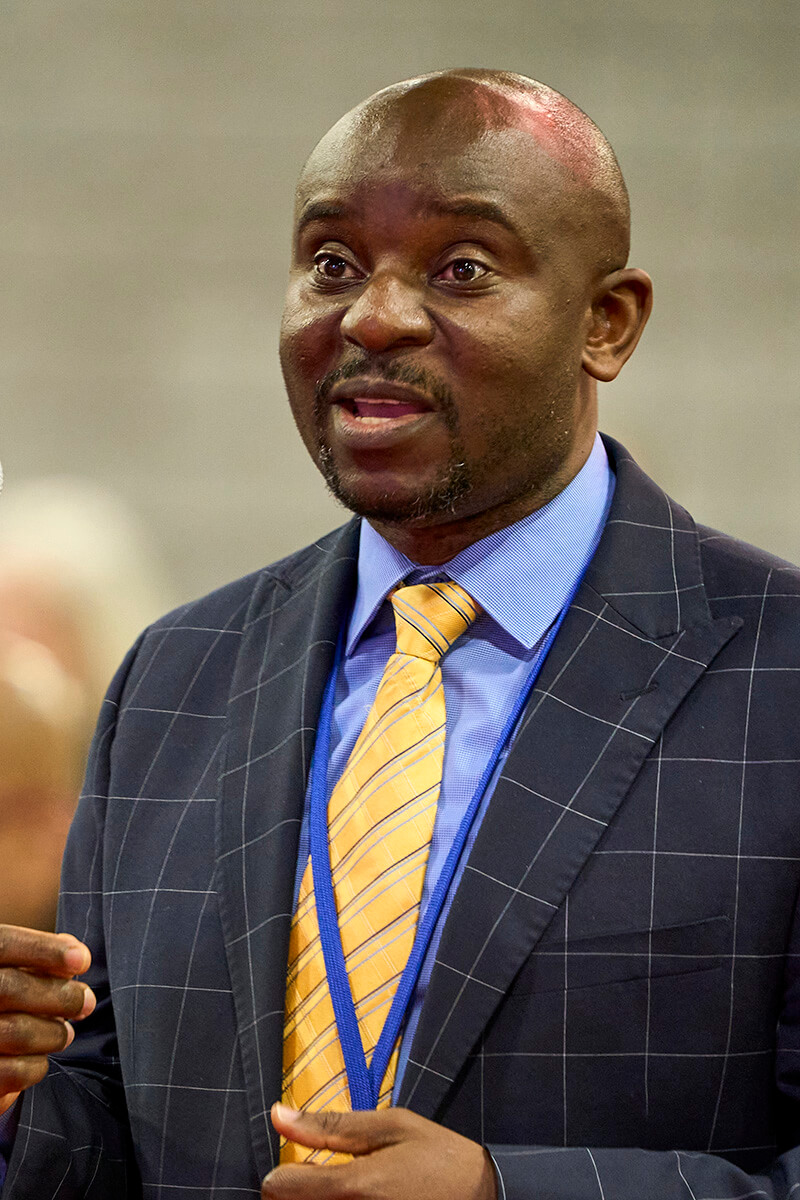
Photo by Paul Jeffrey, UM News.
Commentaries
The recent announcement by the Commission on General Conference regarding the selection of Zimbabwe as a second site for the 2028 General Conference has generated considerable discussion, questions and concerns across the denomination. I would like to add my own reflections to the conversation.
First, it is important to acknowledge that, for many United Methodists, particularly those outside the Western world, the concept of convening a General Conference at a site outside the United States is welcome news. It represents an effort to embody the worldwide nature of The United Methodist Church and potentially increase participation from delegates and guests beyond the United States.
In this environment, it is important to clarify the intent behind creating two sites for General Conference 2028 rather than one site outside the United States. Are these intended to be two co-equal sites, or is the second site being created primarily for delegates, particularly from Africa, who may be unable to obtain visas?
The answer to that question carries significantly different implications. My opinion assumes a co-equal site model, which is the most equitable model when offering two sites rather than one site outside the United States. Nevertheless, several important questions remain unresolved under a co-equal site model. For example, will delegates be allowed to choose which site they attend, or will the commission determine and assign participants to specific locations? Clarifying these issues is essential before evaluating the proposal’s broader implications.
At the same time, the decision to move quickly toward Zimbabwe as the selected second site raises legitimate concerns. Among them is the perception that there was insufficient consultation with stakeholders from Africa, the United States, Europe and the Asian region, specifically the Philippines, all places where The United Methodist Church maintains a significant presence.
It is also fair to recognize the complexity of making such a decision during a period of rapidly changing immigration policies in the United States, parts of Europe and a few African nations. Many of these changes have created additional hurdles to travel and increased uncertainty regarding visa access for delegates and guests.
Some of the public responses to the announcement have focused on important questions concerning the safety and accessibility of the conference for LGBTQ+ delegates and guests.
At the same time, there may be other concerns that have received less attention. For example, some African delegates and guests may have reservations about the current immigration climate and reports of xenophobia in South Africa, rejecting South Africa as a potential host. Whether such concerns were raised during the decision-making process is unclear. Likewise, the significance of the United Methodist presence within a potential host country may have played a role in evaluating possible locations.
Whatever the case, broader consultation and feedback could have provided valuable perspectives and insights before selecting a second site on the African continent or anywhere outside the U.S.
Comparing possible host countries
One approach might have been for the commission to present several possible host-country scenarios, outlining both the advantages and disadvantages of each. For example, Angola, Mozambique, South Africa and Zimbabwe could have been evaluated using a common set of criteria, including:
- The presence of The United Methodist Church in the possible host country.
- Safety and accessibility for all participants, including LGBTQ+ delegates and guests.
- Adequate infrastructure, including transportation systems and lodging.
- Reliable internet connectivity and electrical service.
- Visa requirements that allow the vast majority of delegates and guests to travel.
Some countries may offer legal protections and greater inclusivity while lacking reliable infrastructure. Mozambique, for example, has a significant United Methodist presence but faces challenges related to infrastructure, transportation, internet access and electrical reliability.
Whereas, Zimbabwe has a strong United Methodist presence and generally adequate infrastructure, but its legal environment is hostile for LGBTQ+ persons.
This leaves countries such as South Africa and Angola, both of which deserve serious consideration as alternatives. In my view, one of these countries may better balance the various priorities and concerns inherent in hosting a worldwide church gathering such as the General Conference.
South Africa scenario
Advantages:
- Adequate conference, lodging and transportation infrastructure.
- Legal environment that is generally more welcoming to LGBTQ+ persons.
- Reliable internet connectivity and electrical service.
- Reasonable visa access for most delegates and guests.
- The government may be open to work with the church to address xenophobic issues against African delegates and even immigrants (this could be an opportunity for advocacy).
Challenges:
- Relatively smaller United Methodist presence compared to some other African nations.
- Concerns among Africans regarding xenophobic attitudes toward African immigrants.
- Ongoing concerns about crime and security in certain cities.
Angola scenario
Advantages:
- Strong United Methodist presence and history.
- Acceptable conference, lodging and transportation infrastructure (Luanda has a 3,000-seat convention venue).
- Legal environment that is not punitive toward LGBTQ+ persons.
- Visa requirements that are manageable for most delegates and guests.
- Potentially stronger sense of connection to The United Methodist Church’s African membership.
Challenges:
- Infrastructure and travel capacity may still require careful evaluation.
- Less experience hosting large international gatherings compared to some other countries, like South Africa.
Ultimately, I wonder how various constituencies within the church would have responded if these and other scenarios had been openly presented for consideration. While consensus may never have been reached, a broader process of consultation and listening would have been worthwhile. Even if the final decision remained unchanged, many in the church may have felt more included in the discernment process.
Preference for single site
My preference would have been for General Conference 2028 to be held in a single location outside the United States rather than divided between two sites. While financial realities and contractual obligations may have limited the available options, I am not convinced that this alternative received adequate consideration.
Subscribe to our
e-newsletter
The church has demonstrated a willingness to invest significant resources in international meetings, including the recent Leadership Gathering in Canada. This raises a reasonable question: Could some of those resources have been directed toward making a single, fully worldwide General Conference outside the United States possible?
I recognize that I do not have access to all the financial details or contractual constraints involved. Nevertheless, greater transparency around these considerations would help the church better understand why certain options were pursued and others were not. The pursuit of a truly worldwide gathering may have been costly, but it might also have provided the clearest expression of our identity as a worldwide church gathered around one table.
The question before us is not simply which country hosts the conference. Rather, it is how The United Methodist Church makes decisions that reflect its worldwide identity, honor diverse perspectives, and ensure that all delegates and guests can participate fully in the work of the church.
Chali is a Great Plains Conference district superintendent and General Conference delegate. He traces his roots to northern Zambia, where both of his parents are from, and grew up in the Democratic Republic of Congo, where he received his call to ministry.
News media contact: Julie Dwyer at (615) 742-5470 or newsdesk@umnews.org. To read more United Methodist news, subscribe to the free UM News Digest.


