

Key points:
- The Rev. Ed King worked for racial equality in his native Mississippi. He also co-founded the Mississippi Freedom Democratic Party that challenged the state’s all-white political establishment.
- When his civil rights activism cost him his conference membership in 1963, King found a welcome home in the Methodist Church’s Central Jurisdiction.
- Fellow United Methodists remember him as someone who did not grow weary in doing good.
The Rev. Ed King risked both his livelihood and life to help his country and church realize the principle “that all men are created equal” and “endowed by their Creator with certain unalienable Rights.”
So, perhaps it is fitting that the United Methodist civil rights activist died at age 89 on the Fourth of July as his nation celebrated the 250th anniversary of adopting that founding principle in the Declaration of Independence.
King defied his native Mississippi’s viciously strict segregation in the 1960s — facing jailtime, beatings and worse to bring Black and white people together at lunch counters, on the voter rolls and in Christian worship.
“He taught me so much about race,” said retired Bishop Woodie White, a civil rights veteran himself. “He taught me so much about reconciliation, and he was brave.”
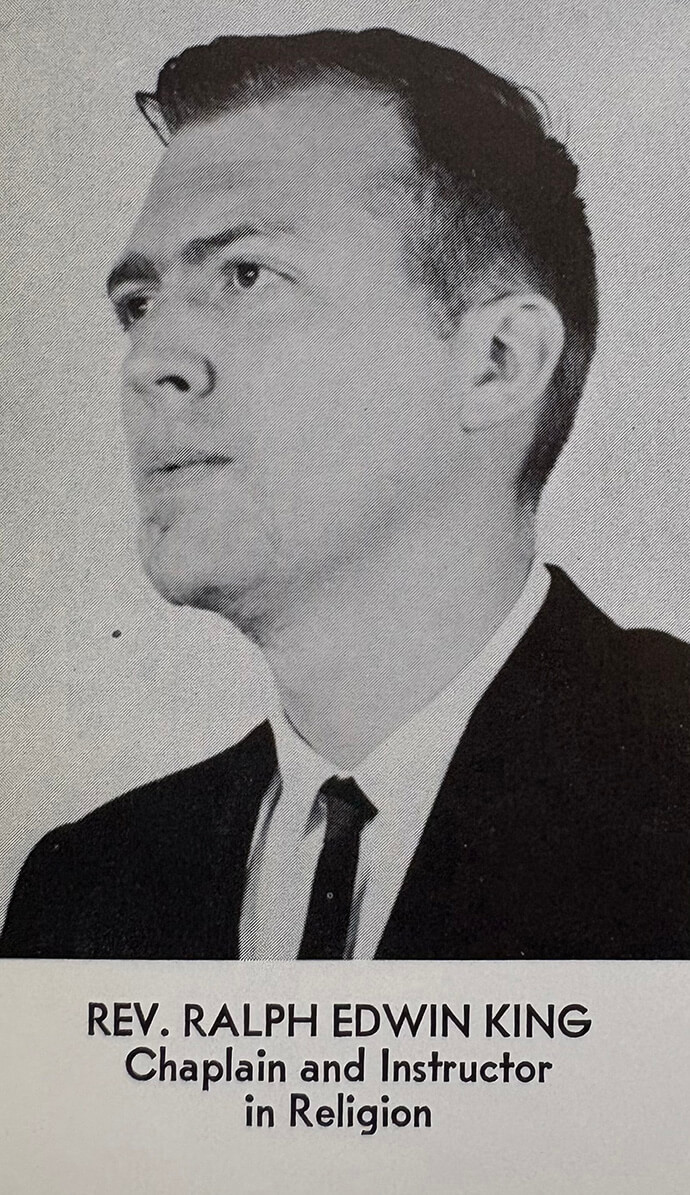
One of the most prominent white activists in the Mississippi movement, King was involved in many of the seminal civil rights efforts in the state — including Freedom Summer to promote voting rights and Freedom Schools to address educational inequality. King helped coordinate sit-ins, voter registration drives and an effort to desegregate Sunday church services.
He also co-founded the Mississippi Freedom Democratic Party that both championed Black voting rights and challenged — on the national stage — the validity of Mississippi’s exclusively white Democratic Party. In that effort, he worked closely with Fannie Lou Hamer, one of the key leaders in the fight for political representation.
He remained committed to the movement even after his friend Medgar Evers was killed by an assassin’s bullet, and six days later, he and another friend were injured in a car crash that many believed was also an attempt on his life. The car crash shattered King’s jaw and tore up his face. He required multiple surgeries over the next dozen years, but the right side of his face still bore the signs of his injury.
Because of his unwavering support for racial equality, the National Civil Rights Museum in Memphis, Tennessee, named King an “Icon of the Movement” in 2011.
“I really remember the connection he made between his faith and his convictions,” said the Rev. Maxine Bolden, a Mississippi district superintendent. She got to know King first as a student at Tougaloo College in Jackson, and later when she followed him as a chaplain at the Black private college.
She recalled him telling students that being a civil rights activist could come with a heavy price, but it was nothing more than “what Christ did for us.”
Bishop White first met King nearly 70 years ago when they were roommates while studying for ordained ministry at United Methodist-related Boston University School of Theology.
“When I first met him, I came in, he was in the room, and I heard this Southern accent,” White recalled. “I’m from New York, so I said to myself, ‘Somebody’s made a mistake.’ But of course, we introduced ourselves, and we became fast friends.”
King and his wife, Jeannette, were even part of the future bishop’s wedding to his wife, Kim. White would go on to become the first top executive of the United Methodist Commission on Religion and Race and later bishop of what are now the Illinois Great Rivers and Indiana conferences.
Throughout their ministry, the two remained friends. White described King as “the bravest person I’d ever met.”
Retired Bishop William T. McAlilly, who like King is a Mississippi native, echoed that sentiment.
“Dr. King was a giant in Mississippi, literally laying his life on the line for a better world during the civil rights challenges in our state,” McAlilly said.

‘The idol of segregation’
The praise from United Methodist bishops stands in stark contrast from how church leaders initially received King’s civil rights activism.
The Rev. Ralph Edwin “Ed” King Jr., who was born Sept. 20, 1936, grew up attending what is now Crawford Street United Methodist Church in Vicksburg. There, he learned about Jesus’ call to love God and neighbor, but he also saw that many in his community were ignoring that call.
“By the time I was 10 or 12 in Vicksburg, I had realized that America had not figured out yet how to deal with our history of slavery and continuing racism,” he said in a 2018 interview with the University of Mississippi Medical Center.
He became determined to strike down what he described as “the idol of segregation.”
While a sociology major at United Methodist-related related Millsaps College in Jackson, he started attending meetings at nearby Tougaloo College. There, he became friends with Mississippi NAACP leader Evers, who encouraged him to get involved in the movement.
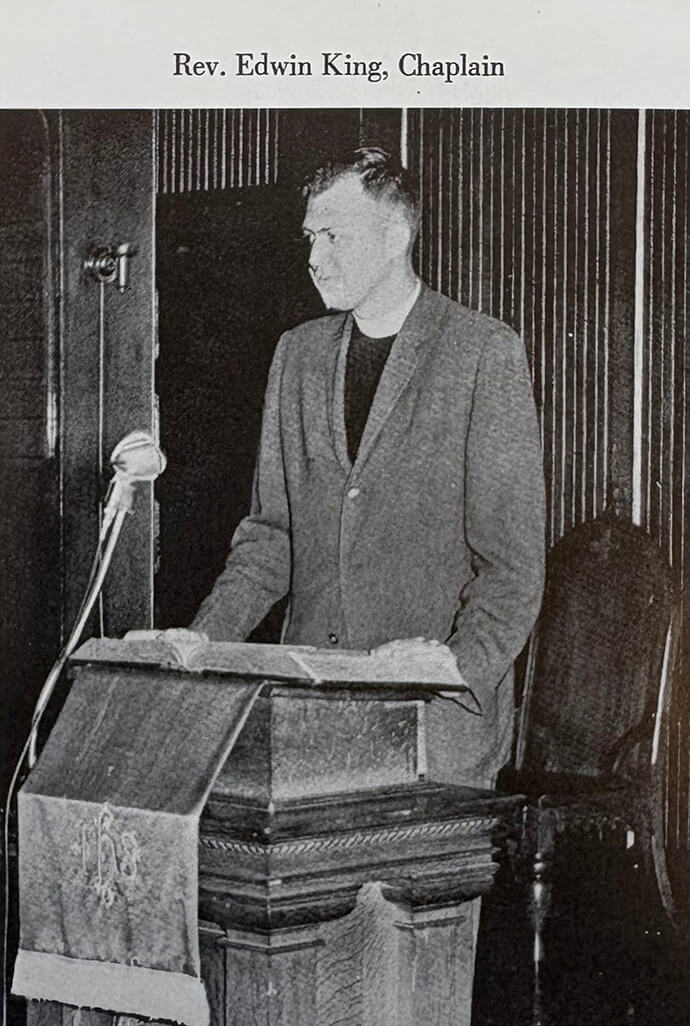
In 1960, while still a seminary student at Boston University, King experienced his first arrest trying to desegregate public facilities in Montgomery, Alabama. His second arrest came after trying to eat at a restaurant with a Black Methodist minister. He was sentenced to a week of hard labor.
After graduating, King began his pastoral ministry in Massachusetts. But again, with Evers’ encouragement, he returned to Mississippi in 1963. He was accepted into the Methodist Church’s all-white Mississippi Conference on a trial basis and accepted a job as chaplain at Tougaloo. At the historically Black school, he worked with faculty and students to organize sit-in protests.
On May 28, 1963, he assisted Tougaloo students in a sit-in at the Woolworth’s lunch counter in downtown Jackson that changed the trajectory of his ministry. While the students remained nonviolent, a white mob attacked — dumping ketchup, mustard and sugar on their heads and beating one student until he passed out. In response, the police arrested the sit-in participants, including King and his wife.
King got out of jail on May 31 in time to attend the annual conference’s clergy session, which was also being held in Jackson. The clergy, by a vote of 89 to 85, voted to discontinue his conference membership — essentially removing his rights as Methodist clergy.
The Rev. Joseph T. Reiff, a United Methodist elder and retired religion professor at United Methodist-related Emory & Henry College in Virginia, recounted what transpired in his book “Born of Conviction: White Methodists and Mississippi’s Closed Society.” At the time, white Mississippi Methodists were already in turmoil over the “Born of Conviction” statement, published by 28 white Methodist pastors, on Jan. 2, 1963. That document stood against racial discrimination and insisted public schools should be kept open after desegregation.
King was not one of the 28 because he had not returned to Mississippi until shortly after the statement’s release, Reiff said. Still, he added, many of the signers admired King for putting their words into action and regretted not speaking up more for his continued membership. The signers also were facing pushback themselves, including from their bishop, and most eventually would transfer out of the conference.
King, fortunately, found an ally in the late Methodist Bishop Charles Franklin Golden, who welcomed the young college chaplain to join his conference in the Central Jurisdiction — formed in 1939 to segregate Black church members. King would remain part of the Central Jurisdiction until the formation of The United Methodist Church in 1968 compelled conferences to integrate.
Years later, Reiff’s late father — the Rev. Lee H. Reiff, a Millsaps religion professor — invited King to teach at Millsaps. King’s students included a number of future United Methodist leaders, including Bishop McAlilly.
“I have never known a person more serious about and committed to working toward a true Beloved Community,” the younger Reiff told UM News.

Worshipping together
In the 1960s, King continued his appointment at Tougaloo College, and his civil rights work. That included trying to challenge churches that preached love for all humanity but kept their pews segregated.
King helped lead what some came to call “the kneel-in movement,” but he simply called “church visits.” As part of the effort, Black and white Christians would seek to attend all-white churches.
Some were arrested, including the future Bishop Woodie White, then a pastor in Detroit who joined the effort at King’s invitation. White and others in his group each spent two nights in jail and were each fined $1,000 for trespassing and $1,000 for “disturbing divine worship” for trying to worship at what is now St. Luke’s United Methodist Church in Jackson. Three decades later, he would be invited back to that church as a guest preacher.
Even those not arrested were often turned away. That included Methodist Bishops Golden and James K. Mathews, an interracial pair who tried to worship on Easter Sunday in 1964 at what is now Galloway Memorial United Methodist Church in Jackson.
Learn more
King later wrote that these church visits were not “demonstrations” against the church but “‘demonstrations’ of our belief that people, black and white, who could pray and praise God together could also talk and reason together… .”
The Rev. John Elford, a retired United Methodist pastor, has written about King and the church-visit campaign in his book “Our Hearts Were Strangely Lukewarm: The American Methodist Church and the Struggle with White Supremacy.”
“When I asked Ed about the influences on him as a young person that led him into social justice, he gave me a surprising answer,” Elford told UM News. “He said it was Sunday school classes and youth meetings at his Methodist church growing up. There he first learned that the Methodist Church had Social Principles, and there he was able to engage with others in vigorous debates about justice, not only in the United States, but in the world.”
In 1970, King served as a special envoy for what is now the United Methodist Board of Global Ministries, giving lectures and sermons about his nonviolent work.
Embracing church teachings
His commitment to The United Methodist Church also shone through when he made his church home at Galloway Memorial United Methodist — the church that had decades earlier turned him, the bishops and others away.
The Rev. Joey Shelton, who was Galloway Memorial’s senior pastor from 2008 to 2016, recalled King also stressing how his early church life motivated his courage.
“Ed knew he was loved by God. Ed claimed and loved all people as his neighbors,” said Shelton, who also is a former dean of chapel at Millsaps. “Ed had the gift of humbly loving himself enough to unflinchingly walk with God down treacherous trails. He held no malice.”
In his later years, King became a faithful chronicler of the Civil Rights Movement, always willing to share photos, stories and guidance to help people continue to work for racial justice.
Lee Smith, the building and facilities manager at Galloway Memorial, and his wife became good friends with King in his later years and helped him when he moved into a senior-living space. Smith chuckled that King had a story from every picture hanging in his apartment.
“He never wavered in any way, shape, form or fashion in the time that I knew him,” Smith said. “He has the same commitment to civil rights.”
Subscribe to our
e-newsletter
King’s influence continues to have a profound effect not only on his church but also his nation.
Among his students at Tougaloo College was U.S. Rep. Bennie Thompson, a fellow United Methodist who chaired the U.S. House Select Committee investigating the Jan. 6 attack on the U.S. Capitol.
Thompson called King his “spiritual and political guide.”
“He pulled me into the Civil Rights Movement, encouraging me to participate in demonstrations, voter registration in the Mississippi Delta, Fannie Lou Hamer’s campaign for Congress, and the Mississippi Freedom Democratic Party,” said Thompson, a Mississippi Democrat.
“He did it as a white man who was completely at ease in a sea of Black folks — something so rare during that time. A lot of lives changed because he chose to stand with Blacks when so many were against us. His legacy will live on in every person he brought into the fight for justice.”
King is survived by his daughters Lil and Meg. His wife, Jeannette, died in 1984. A memorial service at Galloway is in the planning stages.
Hahn is assistant news editor for UM News. Contact her at (615) 742-5470 or newsdesk@umnews.org. To read more United Methodist news, subscribe to the free UM News Digest.


