

Key points:
- Supported by a grant from the Yambasu Agriculture Initiative, the farm provides a model for community empowerment and evangelism.
- The farm is focusing on developing its infrastructure, including building water systems and rehabilitating the piggery unit, and will ultimately have 30 dairy cows and 100 pigs.
- The project engaged the local community to mold and bake 200,000 bricks on site, a measure that cut building costs while creating temporary jobs for 18 residents.
The Malawi Provisional Annual Conference of The United Methodist Church is forging a path toward economic self-sustainability and enhanced spiritual witness through the rapidly growing Mikundi Dairy Farm.
The project is supported by a $200,000 grant from the Yambasu Agriculture Initiative, a United Methodist Board of Global Ministries program honoring the legacy of the late Bishop John K. Yambasu. The farm is more than a commercial venture; it is an integrated model for community empowerment and evangelism.
Located at Mikundi, in the central region of Malawi, the farm is demonstrating how sustainable agriculture can simultaneously improve livelihoods, secure the church’s financial future and draw people closer to Christ.
An ambitious multi-phased project began in April 2025 with a focus on infrastructure and efficiency, transforming a previously neglected irrigation farm into a modern livestock center. The initial success hinges on strategic planning, cost-cutting and community engagement.
The first and most critical hurdle was establishing a cost-effective and durable physical plant. Recognizing the prohibitive expense of purchasing readymade materials, the farm project coordinator initiated a plan to produce materials locally.
“In the first place, it was an irrigation farm. We found the farm bushy. We started working on transforming the farm into a livestock farm,” explained Charles Namika, the farm manager.
“We needed to buy bricks and noted that the bricks were expensive to purchase. We thought it will be wise to mold and bake the bricks on our own to cut costs as an efficient measure. We invited the community to help mold 200,000 units to be used in building all needed infrastructures.”
Bishop’s visit signals new hope in Malawi

The farm saved three times the cost by baking its own bricks, in addition to providing temporary employment for 18 people, he said.
This self-sufficiency has allowed resources to be channeled into other critical areas, such as procuring a mini-truck, which has significantly eased operational logistics.
“The good thing is that we did well to start with buying a mini-truck for the farm, which has eased the farm development work,” the farm manager noted. “The truck is being used to buy feeds and transport building materials for the farm and to fetch maize stocks for feeds.”
Modernizing the water system is crucial. The farm is working on incorporating a modern water system, maintaining old tanks and replacing those that are not functioning to eliminate the problem of water leakages. While the farm waits for the application for government electricity, it has installed solar power as a temporary measure to aid office operations. The final electrical hook-up will be essential for operating machines in the milking parlor area.
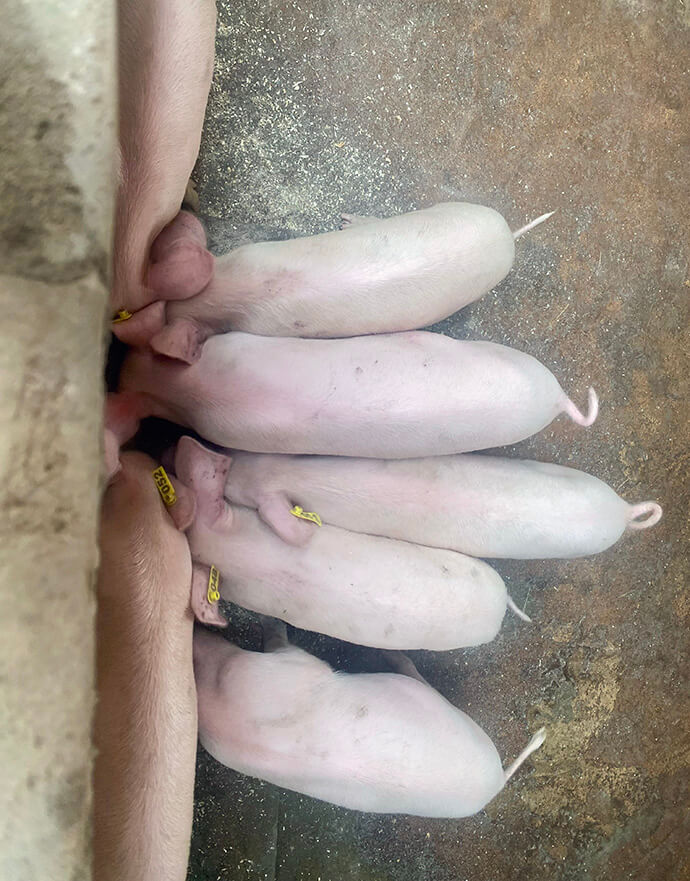
The development of the piggery unit is underway. Rehabilitation of the pig house is a priority to minimize heat pressure and ensure optimal conditions.
“The plan is to maintain 43 pigs for proper management. (In 2026), we aim to have around 100,” Namika said. Currently, 27 pigs have been bought, featuring pure breeds like Camborough and Large White.
Feed security is being addressed innovatively. Local community farmers supply maize stocks, which will be cut into bales for safe storage and used as a hay substitute, preventing the environmentally damaging practice of burning crop residue. The farm has already managed to buy enough specialized feed components, including madeya (bran), grains, sunflower cake, salt, lime and ground fish mill, to last until April for the current livestock. Looking ahead, three hectares are planned for planting rose grass seed to ensure a sustainable forage supply.
The farm plans to purchase 30 dairy cows in February, and it is working on completing a 7.4-hectare fenced grazing area.
The long-term vision extends beyond just selling raw commodities. “The plan is to have a big milk tank for the people to sell and earn money, and the farm will also have its milk tank from the raised cows in 2027,” Namika said.
The goal is to process the farm’s products into fresh milk, yogurt, cheese and other dairy items, with the piggery unit focused on meat production, completing an integrated agricultural value chain.
Ensuring the spiritual and community harvest, the Mikundi Dairy Farm’s mandate is inherently spiritual and social. It is designed to be a vehicle for ministry, reflecting the mission of the Yambasu Agriculture Initiative.
“I believe that the farm shall support the church ministerial work, social witness programs and community development works,” said Kephus Mtambo, farm project coordinator. “The farm is a social witness of the UMC ministry, for it is also helping people to come to Christ. In doing so, the church is growing, and there is great hope that the church will earn more members.”

This spiritual grounding is integrated into daily operations. The recent purchase of a motorbike, intended to ease transport logistics where the farm truck might be limited, was marked by a moment of consecration. Evangelist Jephter Manda, who dedicated the motorcycle, emphasized the need for its purpose to align with Christian values.
“The dedication was emphasized on righteous, safety and effective utilization of the motorbike,” Manda stated, stressing that the blessing was centered on Psalm 33:1.
The village chief acknowledged the tangible benefits the church’s initiative is bringing to the area in Mikundi where the farm is located.
Subscribe to our
e-newsletter
“Since The United Methodist Church came with this farm, we have seen jobs for our young people and a strong development partner,” said Group Village Headman Moses Chiphaka. “This is truly bringing life back to our village, and we pray for its success. The cooperation between the church and the community on projects like brick molding shows true partnership.”
To further cement this relationship, the farm plans to establish a maize mill and a sunflower pressing facility. Local people will be allowed to grind their maize and press their sunflower for free, while the farm will retain the grains and sunflower cake for livestock feed, an example of synergistic community support.
The farm employs five laborers, three technicians, the manager and two project staff, forming a team ready for the challenges ahead. Like any large-scale project, it faces hurdles. The main challenges noted are external: the fluctuating Malawian kwacha exchange rate and the resulting increases in the price of materials and supplies.
Despite these headwinds, the leadership remains focused on celebrating successes, including having adequate transport, a growing labor force, and the steady, on-time funding from the Yambasu Agriculture Initiative.
The Rev. Daniel Mhone, superintendent of the Malawi Provisional Conference, affirmed the farm’s long-term importance to the church.
“The Mikundi Dairy Farm is a powerful testimony to what can be achieved when faith, diligence and sustainable entrepreneurship meet,” Mhone said. “This YAI grant is not just funding a farm; it is investing in the long-term solvency of our conference and the spiritual vitality of our communities. We are cultivating hope and a resilient future for The United Methodist Church in Malawi.”
Nkhoma is a communicator in Malawi.
News media contact: Julie Dwyer at (615) 742-5470 or newsdesk@umnews.org. To read more United Methodist news, subscribe to the free UM News Digests.


