
Key points:
- The Oklahoma Conference ministry for prisoners reentering society started receiving residents in 1998, but it began two years earlier in the minds of two United Methodist pastors who wanted to do something about recidivism.
- An October celebration for Exodus House’s 25th anniversary drew lay and clergy people who have supported the ministry, as well as former residents.
- Shane Vaughn, a 2003 graduate of the program, now owns and operates a construction company. He said Exodus House made a big difference in his life.
“Exodus House is where God turned my life around,” said Shane Vaughn, a 2003 graduate of the Oklahoma Conference ministry that was created to help people fresh out of prison start a new life.
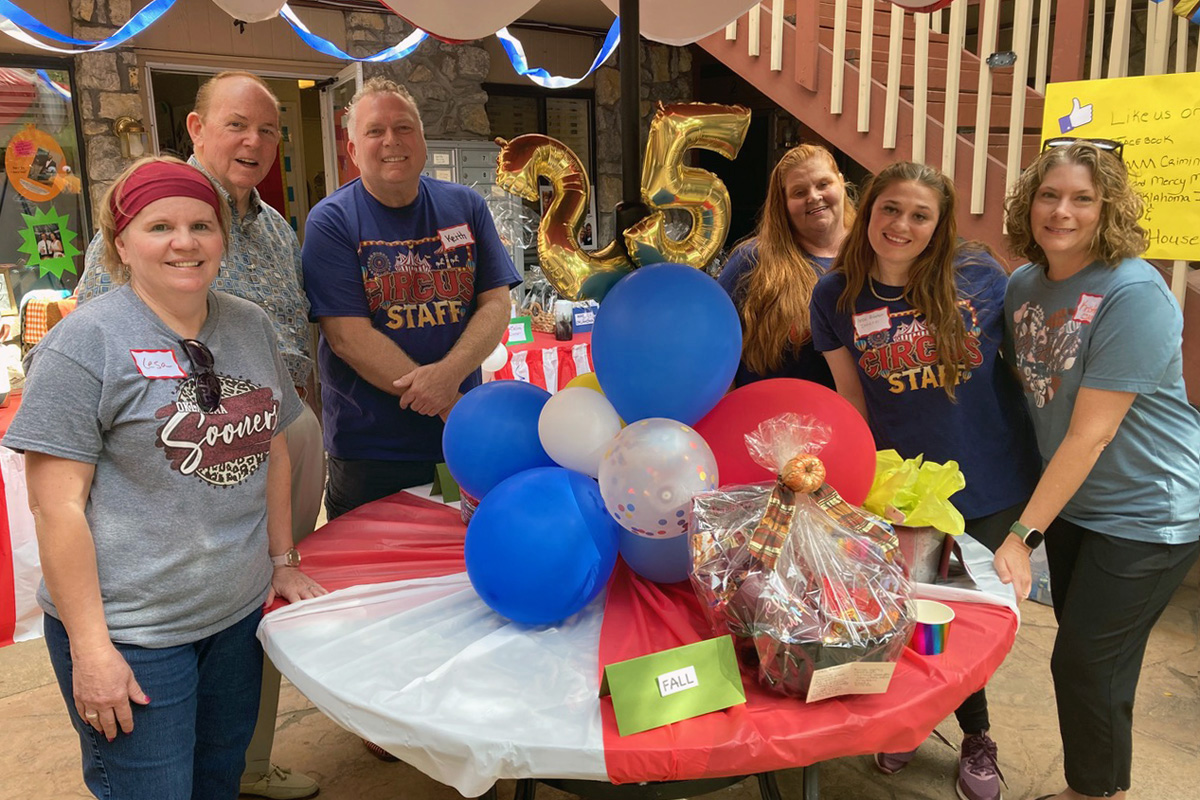
Vaughn was one of about 85 people who came out to celebrate the 25th anniversary of Exodus House on Oct. 21. He was joined by lay and clergy people who had been supporting the ministry, but most of the day’s guests were former residents like him.
It was a day of celebration, said Robin Wertz, resident director of Exodus House.
“(It) was a beautiful fall day — perfect for our outside activities and cool enough for our chili cook-off,” she said.
Exodus House started receiving residents in 1998, but it began two years earlier in the minds of two Oklahoma Conference pastors: The Revs. Stan Basler and Dale Tramper. They decided to do something about recidivism — the tendency of recently released prisoners to commit new crimes and be returned to prison.
Basler, founding director of Criminal Justice and Mercy Ministries for the Oklahoma Conference, had seen recidivism while practicing law before he entered the ministry. Tramper, then pastor of Redemption United Methodist Church in Oklahoma City, had seen it while ministering to prisoners bused in from nearby prisons who attended his church’s Sunday afternoon worship services. Some had been in prison several times.
After Basler and Tramper shared their observations and research, they concluded that many inmates needed a transitional step from prison to complete freedom. To help meet that need, they designed Exodus House: a supportive environment where recently released prisoners could live rent-free for six months — more if necessary — while receiving physical, emotional and spiritual help with their addictions and other problems that contributed to their criminal activity.

While at Exodus House, their goals would include arranging to pay court-ordered obligations, finding a job, regaining driving privileges, saving money and building a support system.
Vaughn said Exodus House made a big difference in his life.
His parents and grandparents were alcoholics who lived in a low-income, high-crime neighborhood of Oklahoma City. His parents divorced when he was a child and left him with his grandparents.
“My grandfather beat me any time I did something he didn’t like, especially when he was drunk, which was most of the time,” he said. “My dad was a drug addict and died of an overdose. My mom was a prostitute.”
By the time he was 13, Vaughn was smoking pot. By 19, he was using heroin.
“From the time I was 13, I had a job of some kind — car hop, taking out trash, anything that would make money for my habit,” he said.
Vaughn said he had been in prison four times starting at 19. Alcohol and drug violations were involved each time.
The first time he was released, his father picked him up and took him straight to a bar. Before he knew it, he was back in prison.
“The next two times I got out of prison, the same thing happened,” he said. “I went right back to the same old haunts, hung out with the same guys, did the same stupid things and went right back to prison.”
During his fourth imprisonment, Vaughn was nearly 30.
“The way I was living, I was going to be in prison the rest of my life. I didn’t like it, but I didn’t think I could do anything about it,” he said.
Subscribe to our
e-newsletter
One day he saw a sign-up sheet for a four-day weekend event sponsored by a group called Kairos International. It was for people who wanted to change their lives. It caught his attention, so he signed up and was approved.
“I went expecting to feel like a mule at the Kentucky Derby, but those four days were the best time I had ever had in or out of prison,” he said. “The men and women who came to the prison shared how God had enabled them to change the direction they were going and overcome uncontrollable obstacles.”
Vaughn said attending the event caused him to start thinking God might not be like he had thought: angry like his grandfather, looking for a reason to punish him. It gave him hope.
He said he also met people who were “sober and sane and kind.” One was the late Rev. Eldon Moeling, a United Methodist pastor, who Vaughn considers “the kindest man I have ever known.”
After he was released from prison, Vaughn stayed a few days at his brother’s house in Oklahoma City, where Moeling dropped by and prayed with him.
“I felt his love and God’s,” Vaughn said. “He stocked my refrigerator with essentials. I didn’t have a change of clothes. We were about the same size, so he went home and brought me some of his clothes. I had never been so well-dressed.”
Even more importantly, he said, Moeling gave him an application to Exodus House and helped him fill it out. He describes going to Exodus House as the best thing that had ever happened to him.
“God used everything I experienced at Exodus House — the worship services, Bible studies, counseling, accountability, self-discipline — to teach me what I needed to learn,” he said. “I learned there are sober and sane and kind people in the world, people who will even sacrifice and risk to help you, even if you think you are worthless.
“Most important of all, I learned that … God loves me.”
Vaughn is active at his church. Now a member of Kairos International, he goes back to prison twice a year and shares his story.
Bowdon is a retired communicator from the Oklahoma Conference and a member of the United Methodist Association of Communicators Hall of Fame.
News media contact: Julie Dwyer at (615) 742-5470 or newsdesk@umnews.org. To read more United Methodist news, subscribe to the free Daily or Weekly Digests.


