


Key points:
- Taking a break from volunteering at vacation Bible school at Hartzell Mt. Zion United Methodist Church, seven cousins talked about what it was like to live through the hurricane.
- The family members said they stuck together as a community after the storm.
- The young men also shared the lessons Katrina taught them.
Corey DuPlessis was 9 years old when Hurricane Katrina swept through his home.
“Actually, I remember it vividly because we had just had a father-son fishing trip out at the church and me and my dad had won. We had brand-new poles and everything. When we came home, they were floating, broken in the yard.”
Seven young men, ranging in age from 29 to 40, took time away from volunteering for vacation Bible school at Hartzell Mt. Zion United Methodist Church to gather in the Rev. Tiffanie Postell’s office to talk about what it was like to live through Katrina and the devastation left behind.
The cousins swapped stories about escaping their homes with relatives and friends as the storm dumped up to 7 feet of water.
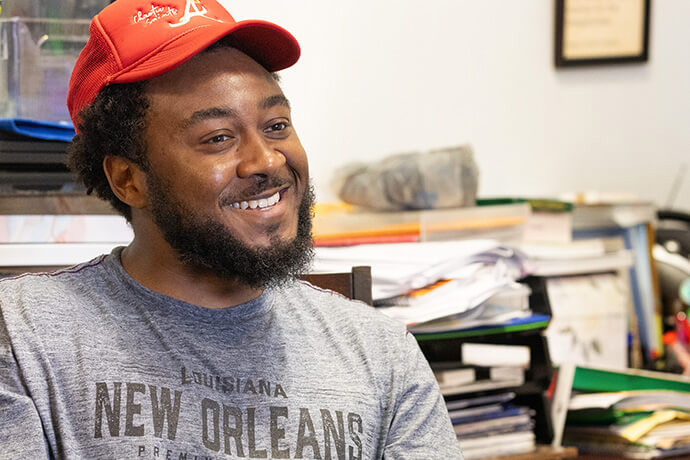
All the young men remember mud, downed trees and the smell.
“This is a family church. I remember going from house to house cleaning out,” said Jared Townsend, who was 11 at the time of the storm. “It’s the craziest thing; this church looks like an updated version of the same church.”
They remember doing everything together: playing basketball, attending church and going through the hurricane.
“We all live in (Indian) Village; we are all connected. We grew up going to vacation Bible school, coming to this church to play basketball, Sunday school. And these kids are going to have that same type of memory. That’s something beautiful to me, just the community,” said Joe Guyton, who was 20 at the time of the hurricane.
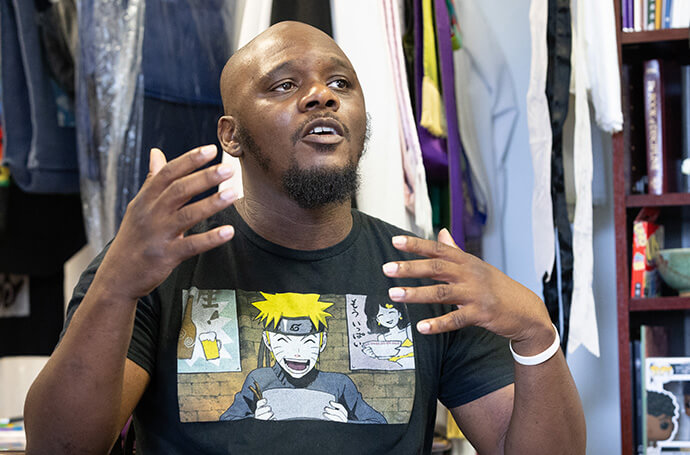
The village is marked by a historic marker about the Native American presence, particularly the Muskhogean, Tangipahoa and Acolapissa tribes, before European settlement.
The most distinct thing Quin Johnson said he remembers was just coming back together.
The group discussed rusted coat hangers, the humidity and having to throw out some of their favorite things.
But they remember well some of the lessons Katrina taught: Tell someone where you are going if a storm is approaching; have walkie-talkies and CB radios because phones won’t work; check in when you are safe and never leave anyone behind.
Back to main story:
Hurricane Katrina survivors remember storm
Gilbert is a freelance writer in Nashville, Tenn., who covered the aftermath of Hurricane Katrina for UM News in 2005.
News media contact: Julie Dwyer at newsdesk@umnews.org. To read more United Methodist news, subscribe to the free UM News Digests.


