
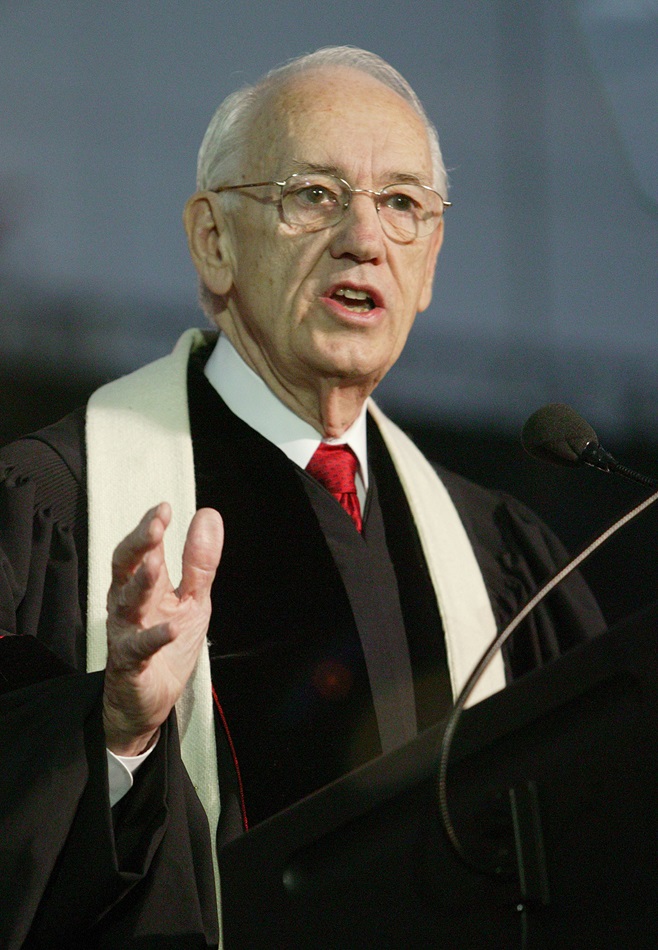
Bishop Robert E. Fannin told the 2004 United Methodist General Conference that “most of the questions, concerns and opportunities facing the church are spiritual matters.”
In his sermon during the May 6 morning worship service, Fannin, episcopal leader of the Birmingham Area, also told those gathered, “The world is craving to hear the Good News, and we need to find the spirit and the enthusiasm to say, ‘He lives, He lives and He lives in the United Methodist Church!’”
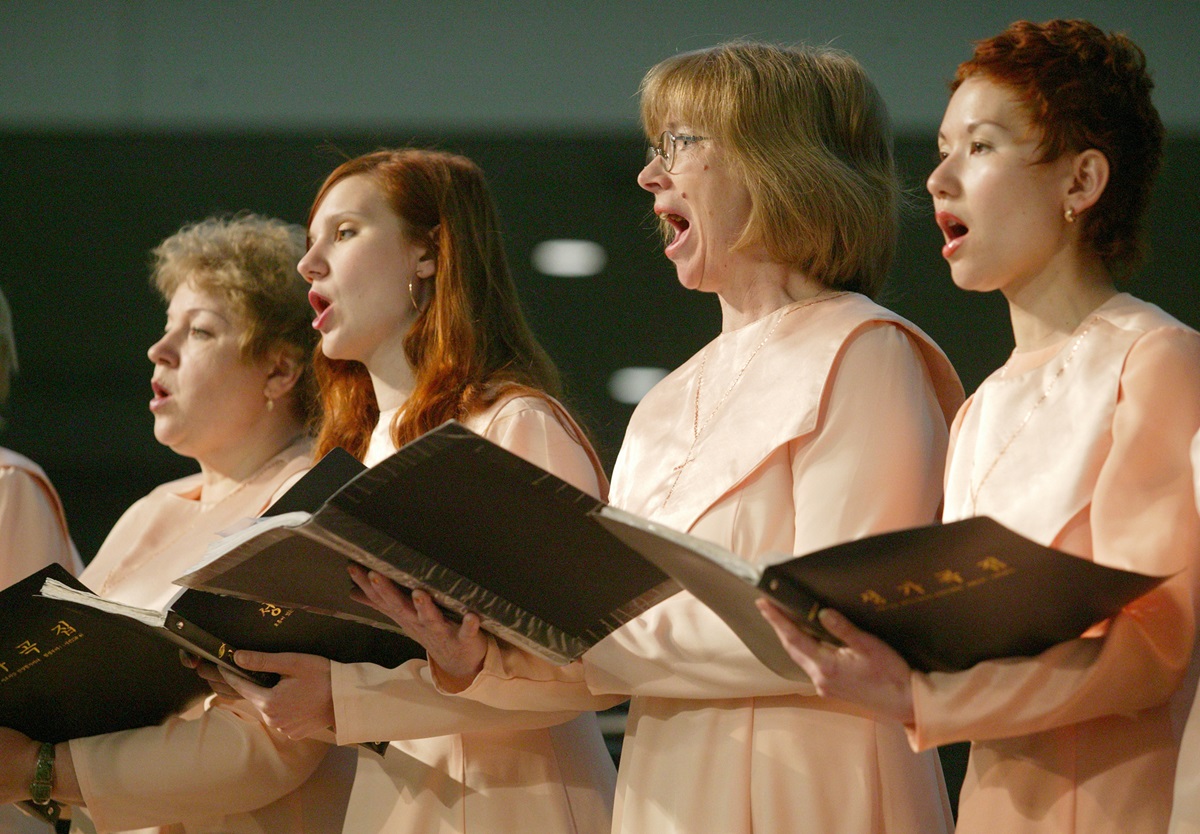
During the service, worshippers experienced the global nature and spirit of the United Methodist Church with the music of the Mytischi United Methodist Church Choir of Moscow, Russia. Before the sermon began, the congregation stood, held hands and sang, “We were baptized in Christ Jesus.”
During the sermon, Fannin told worshippers, “We the people called United Methodist and we the people called Christian must recapture in our words, actions, programs, worship and vision a spirituality that speaks to today’s world.” He continued, “I believe that as new generations of seekers for truth, we must once again merge mind and heart so as to speak with authority about the story of Jesus and His love.”
Fannin told a story of meeting a woman at a car rental counter who had recently visited a United Methodist church and reported to him that the service was the “deadest thing” she had ever attended. He warned the conference that if she, and other seekers like her, visit another United Methodist church, no matter what its style of worship, it will depend on “the presence of the Spirit” whether these seekers will want to become a part of that community of faith.
He also challenged the General Conference with the words of John Wesley, founder of the Methodist movement: “Give me 100 preachers who fear nothing but sin, and desire nothing but God, and I care not a straw whether they be clergy or lay, such alone will shake the gates of hell and set up the Kingdom of God upon earth.”
Fannin told the delegates from around the world, who have spent the last eight days debating and voting on various issues, “If we cannot agree that our primary task is the presentation of Jesus Christ as Lord and Savior, then some of you got on the wrong bus, came to the wrong town and the wrong conference.”
*Clifton is director of communications for the North Alabama Conference.
News media contact: (412) 325-6080 during General Conference, April 27-May 7.
After May 10: (615) 742-5470.
Related
Like what you're reading? Support the ministry of UM News! Your support ensures the latest denominational news, dynamic stories and informative articles will continue to connect our global community. Make a tax-deductible donation at ResourceUMC.org/GiveUMCom.


