

Key points:
- Friends and colleagues say retired Bishop José Gamboa Jr. was a servant leader who passionately blazed trails for The United Methodist Church in the Philippines’ Davao Area.
- He was elected to the episcopacy in 1986 and served for eight years.
- Gamboa served as a local pastor before his ordination as a deacon and elder. He also was a longtime faculty member of Union Theological Seminary in Manila.
Retired Bishop José Gamboa Jr. is being remembered for his humility, courage and unwavering commitment to Christian education, evangelism and servant leadership.
The first resident bishop of the Davao Episcopal Area in the southern Philippines and longtime faculty member of Union Theological Seminary in Manila died Dec. 22 at age 97.
“We praise our Lord for the life and ministry of Bishop Gamboa, a faithful servant whose leadership has left a powerful legacy in The United Methodist Church and in the lives of pastors who were his students at the seminary,” said retired Bishop Rodolfo A. “Rudy” Juan, who officiated at the Dec. 27 interment.
“The good bishop practiced Christ-centered leadership rooted in humility when he pioneered the work in the Davao Episcopal Area. His pastoral ministry mirrored Christ’s calling, manifested by compassion, truth and love.”
Gamboa was elected to the episcopacy on June 20, 1986, at Knox Memorial United Methodist Church in Manila. The date was made even more meaningful as it coincided with the birthday of his beloved wife, the late Edita Bote Gamboa, the Council of Bishops noted in a statement announcing his death. Gamboa served until his retirement in 1994.
“As a bishop who fruitfully served for eight years, he led not by position alone, but by example, modeling integrity, sacrifice and prayerfulness,” Juan said.
Gamboa was Juan’s seminary professor and predecessor in the episcopal area where he later served for six years.
“He reminded me that ministry is not about power, but about service; not about recognition, but about faithfulness,” he said.
Juan also recalled that during moments of physical weakness, Gamboa expressed his wish that Juan would officiate his burial.
“Indeed, we lost a great servant-leader, but as Scripture says, ‘Well done, good and faithful servant.’ We celebrate Bishop Gamboa’s legacy of faith, leadership and love for God and His people.”
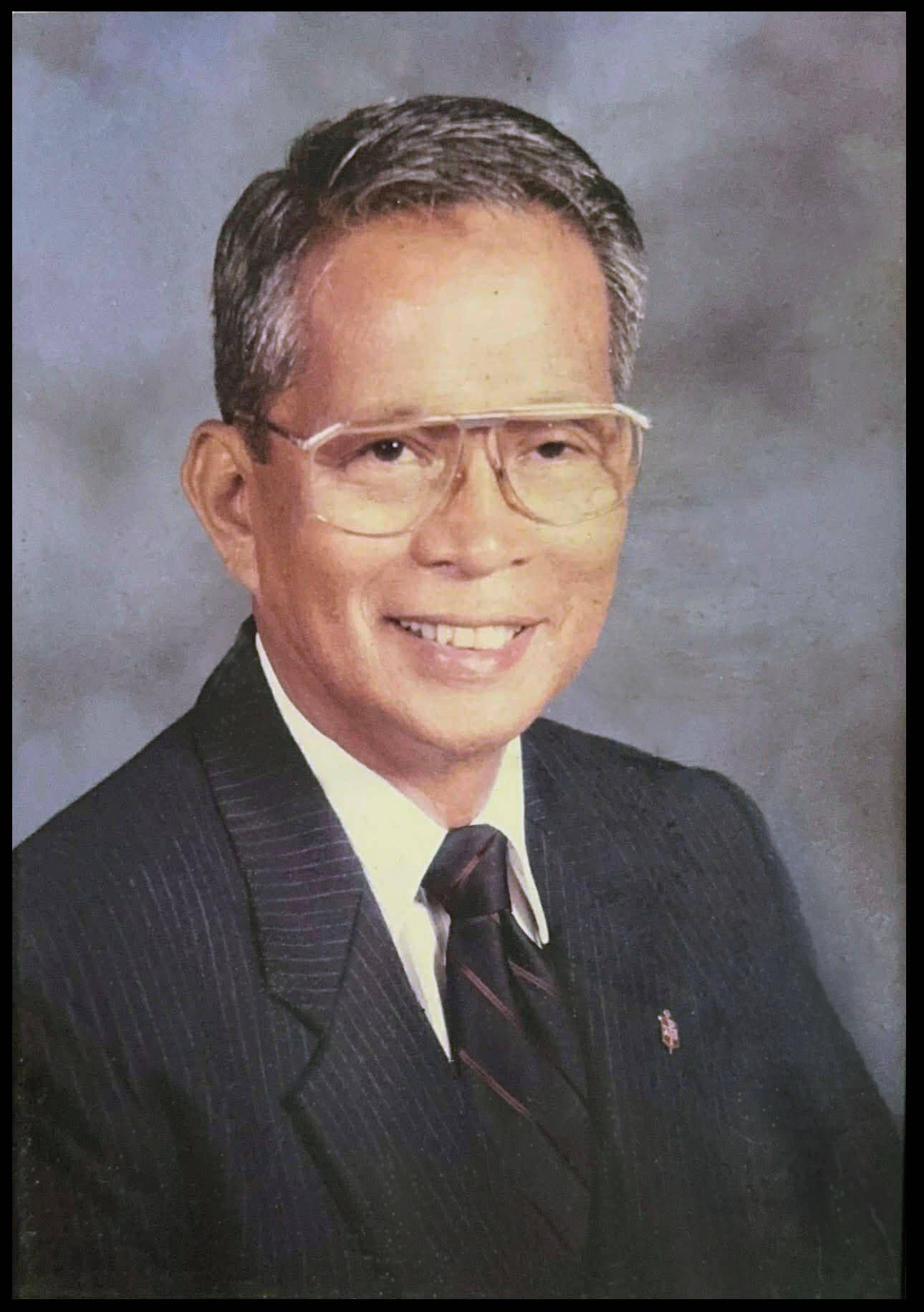
Gamboa was born in Cabanatuan City on March 25, 1928. His call to ministry was formed at home. His father, the Rev. José Gamboa, served for 46 years, and his mother, Guadalupe Castro Gamboa, served as a deaconess and later as a local pastor.
The younger Gamboa pursued his studies at Philippine Wesleyan College, Wesley Theological Seminary in Washington, D.C., and Centro Escolar University in Manila, where he received his Doctor of Education.
He served as a local pastor before his ordination as a deacon and elder. Gamboa returned to Philippine Wesleyan College to teach beginning in 1962 and later joined the faculty of Union Theological Seminary in 1969. He served as director of the Theological Education by Extension program beginning in 1974 and became professor of Christian Education in 1977.
Bishop Rodel M. Acdal, Philippines Central Conference Colleges of Bishops President and leader of the Baguio Episcopal Area in the northern Philippines, said Gamboa’s life and ministry are widely known, deeply respected and cherished by generations of United Methodists.
While his personal encounters with the late bishop were limited, Acdal said, Gamboa’s experiences are well-documented in his book, “A Shepherd Goes Island Hopping.”
“His episcopal ministry spanned vast regions in Mindanao, including the Visayas and Palawan, and was marked by extraordinary courage — traveling difficult roads, braving rough seas and facing hazardous journeys to ensure that the Gospel reached even the most remote communities,” he said.
Acdal praised Gamboa’s faithful and courageous leadership, his perseverance and “service measured by lives transformed rather than titles held.”
Bishop Ruby-Nell M. Estrella of the Manila Area likewise emphasized that Gamboa’s leadership is worth emulating, noting how he passionately blazed trails for The United Methodist Church in the Davao Area by planting churches despite the challenges of a multicultural context.
Bishop Israel M. Painit, who today leads the Davao Area, recounted Gamboa’s long journey of mission and ministry. “The Davao Episcopal Area would not be what it is today without his intentional programs in mission and evangelism,” he said.
Retired Bishop Leo A. Soriano said when Gamboa arrived, there was no Methodist presence in the Visayas.
“I have journeyed closely with Bishop Gamboa. I witnessed how he worked, how he served and how he gave himself fully to the people entrusted to him. That his burial falls within this Christmas season is deeply meaningful. It reminds us of the mystery of Incarnation — God becoming human in Jesus, entering history not from a distance, but by walking among the people to bring salvation,” Soriano said.
“In much the same way, Bishop Gamboa embodied this incarnational ministry. … He did not merely administer from afar; he came, he lived among the people, and he established the church where none had existed. His leadership was presence, not position — service, not power.”
Retired Bishop Ciriaco Francisco counted Gamboa as a mentor.
“He was my professor at Union Theological Seminary. … I always asked him for guidance. I look up to him as a humble servant, kind-hearted, and a disciple who develops others to make disciples through Christian education and exemplary life.”
Gamboa was instrumental in establishing Southern Philippines Methodist Colleges Inc., one of his many enduring contributions to the region, said Framer Cristy C. Mella, the organization’s president, who called the late bishop “a good friend.”
The Rev. Eleazar Fernandez, former President of Union Theological Seminary, remembered Gamboa as “a devoted teacher who cared deeply about both content and pedagogy.” She said his mild, non-imposing presence shaped generations of students. “His leadership reminds the church that how we teach and lead matters as much as what we proclaim,” he said.
Retired Deaconess Eloida F. Lindo of Rizal said Gamboa made a significant contribution to the advancement of Christian education across the Philippines Central Conference. He authored educational resources published by the Board of Christian Education and Communications, including a confirmation manual still used in local churches nationwide.
He also was active in training laypeople to teach Sunday school and Bible study groups, and he consistently valued the growth of Christian education during his administration, Lindo said.
“For Bishop Gamboa, being a bishop was just a title,” she said. “He remained a pastor, a shepherd who interacted with church members with humility and integrity. His office was always open, and he treated everyone equally, regardless of status or education.”
Subscribe to our
e-newsletter
Deaconess Cristina N. Manabat, former president of Harris Memorial College in Taytay, echoed that sentiment. “God gifted The UMC with a man of God with a pure heart, humility and sincerity,” she said. “He exemplified servant leadership like that of our Lord Jesus Christ.”
The Rev. Francis V. Fajardo, chaplain of Wesleyan University Philippines, noted that the bishop’s courage, wisdom, and steadfast faith guided the church through challenging chapters of the nation’s history.
Two clergy contemporaries remembered Gamboa as a humble, visionary and faithful shepherd.
The Rev. Estan Cueto, former president of the National Association of Filipino American United Methodists and retired clergy in the California-Nevada Conference, recalled “Kuya Peping” as a caring mentor devoted to leadership formation and church development in Mindanao.
The Rev. Ben Macadenden, a retired district superintendent, described him as a tireless evangelist whose God-inspired vision strengthened unity in the Visayas.
The most intimate tributes came from Bishop Gamboa’s children. He and his late wife had five children, four of whom are still living.
“My dad, the bishop, would visit small churches in Mindanao, and the local congregation would prepare a special table, a banquet, in his honor,” shared son Wesley Lowell Gamboa. “But he would gently ask the pastor and the people if he could instead sit and eat with them. He never liked being treated as someone special.
“In the remote provinces of Mindanao,” he added, “people would gather around him, amazed that a bishop had come to visit them. … Many of these places had never been visited by any bishop before. Yet my Tatay remained deeply humble. Rather than keeping his distance, he chose to mingle with God’s people, sharing meals, stories and fellowship as one of them.”
Dr. Stella Gamboa-Cua, the bishop’s daughter, expressed gratitude to the church for loving her father as both episcopal leader and shepherd.
“To us, he was simply ‘Tatay’ — gentle, prayerful and quietly joyful — but to the church, he gave his whole heart,” she said.
“That love was never symbolic; it was lived out in concrete acts of care. He spent his personal resources for the least among us, sharing rice with poor families until his final days, supporting retired pastors and sustaining the school he helped establish. Many times, he set aside his own needs so he could respond to the needs of others.”
Even in total blindness, she noted, her father’s resilience and faith never waned.
“His life became a quiet yet powerful witness to perseverance rooted in faith,” she said.
“He believed that ministry was not about position, but about presence — showing up, listening deeply and walking with people wherever they were. If there is one thing he would want to leave with us, it is this: Remain faithful, remain kind and never forget that the work of God often unfolds in the ordinary journeys we share together.”
Mangiduyos is a communicator in the Philippines.
News media contact: Julie Dwyer at newsdesk@umnews.org. To read more United Methodist news, subscribe to the UM News Digests.

