
United Methodists have reaffirmed 2000 years of Christian teaching regarding sexuality. This is the same view held by the most rapidly growing parts of the church today. And it is the only view that will hold The United Methodist Church together.
Our view on sexuality is a compassionate, biblical and beautifully nuanced statement. It affirms the worth of every person, declares sexuality to be a gracious gift of God, protects the rights of those who might be mistreated because of their sexuality, and states what the Bible affirms – not all sexual practices, heterosexual or homosexual, are acceptable in the sight of God.
Unfortunately, this view doesn’t fare well in an overly sexualized, decadent Western culture that prizes individual happiness and cares little for biblical holiness. Our society teaches us from the youngest of ages that sex is our right, that an active sex life is essential for being a whole and healthy person, and that the Bible is unable to speak to our modern way of life.
It concerns me little that our fallen culture teaches such things. It concerns me greatly that when the church teaches differently, it is called homophobic, spiritually violent and dishonest – even by some of my fellow United Methodists.
We are a divided church regarding the practice of homosexuality. We are not divided in acknowledging that many people are hurting because of our reaffirmation of the historic position.
We are not divided in caring for our brothers and sisters who have been hurt. We all care and we all care deeply. No one in the UMC takes any pleasure in the pain of others, whether or not they agree with our views.
“We are not divided in caring for our brothers and sisters who have been hurt.”
That’s why those of us who represent the part of the church that holds the traditional view were glad to tell our bishops and the agenda committee that we saw no need to vote on other petitions regarding sexuality after the first votes were taken. We were happy to move those issues to the end of the agenda, knowing that they would not be addressed because we felt no need to increase the pain that our brothers and sisters were experiencing.
Consistency and the Discipline
But we are divided. And we are divided about the Scriptures. Some who want to change the church’s view regarding sexuality simply read the Bible differently than we do. Others believe the Bible teaches that the practice of homosexuality is not acceptable in the sight of God, but they believe that the Scriptures were so conditioned by the culture of their human authors that they no longer apply authoritatively to our time.
We are divided. Then, some ask, why not acknowledge that in The Book of Discipline? Well, for several reasons. The first is consistency. We United Methodists disagree on practically everything. We disagree on abortion. Some want a more restrictive position. Others want a position that leans more toward a woman’s right to choose for any reason. But we have landed on a position and we do not begin it with the statement that people of good faith can differ on abortion.
We are divided on collective bargaining, consumption, civil disobedience, universal government provided health care and the death penalty. But in none of those instances do we feel it necessary to detail the majority and minority views and end up suggesting that we really aren’t sure what we believe.
Those who want us “to be honest” and admit our differences regarding homosexuality have not called for us to acknowledge how divided we are on any of these issues.
The view of the average world Christian
A second reason for refusing to put into the Book of Discipline a statement that there is a majority and a minority view is because the framing of our differences this way is “Western-centric.” There has not been a “minority” view until modern and post-modern times, and even in the 21st century there is no real minority opinion outside the United States and Europe. The United States is not the center of the secular or the Christian world. The fact that there is a minority view in the United States does not mean that it should be detailed and defended in the book that holds together a global church.
The epicenter of Christianity is now far to the south and to the east of The United States. Not only does the average Christian not look like middle-class white Americans, the average Christian does not think like middle-class white Americans. The average world Christian does not believe that individual happiness is more important than the church’s holiness, does not believe that the clear teaching of Scripture can be dismissed by a liberal hermeneutic, or that the latest cultural ideas trump 2,000 years of consistent Christian teaching – a practice that C.S. Lewis and others referred to as “chronological snobbery.”
The cry that we must change our beliefs and our practices or we will become culturally irrelevant and “lose the young people” is incredibly sad. Really, is that how we determine Christian doctrine – by what works with a particular demographic in a particular society? Following that logic, we would preach one message about sexuality in the U.S. because if we don’t young adults will leave us. But in Africa we would preach a different message because young people there would reject a message that we are told would be enticing in the U.S.
Our primary concern should be to preach what is true with love, not what will attract a crowd. Our mission is to transform the world not to be transformed by it. And I believe that the gracious proclamation (through words and deeds) of God’s truth has the power to transform our fallen culture just as it has every fallen culture it has encountered.
The perils of compromise and false hope
One final reason. We cannot give those who want to change our position false hope. Let’s be honest. Very few who disagree with the church’s position will be satisfied when we state that we disagree. They want us to affirm homosexuality as being a sacred gift in the same way we affirm heterosexuality. They will not be content until we change our policies so that we marry homosexual couples and ordain practicing homosexuals.
“Our primary concern should be to preach what is true with love, not what will attract a crowd.”
Acknowledging our differences may be all that some need to feel that the church has made room for GLBT persons, but that is not the desired end. And should we traditionalists “compromise” by stating that United Methodists are of two minds, those who want to change our position will believe that they are one step closer to doing so.
We traditionalists are not going to change. Right or wrong, we believe that holding our position is a matter of being faithful to Scripture. And should the UM position change, we will leave the UM Church – millions of us – rather than deny Scripture. Whether or not we should, we will. We will not stay in a church that we perceive to be unfaithful to the clear teachings of the Bible. That is what has happened in the Episcopal Church USA, the Evangelical Lutheran Church in America and the Presbyterian Church (USA). And that is what will happen with The United Methodist Church.
Room for honest discussion
So, knowing that a compromise will not be sufficient and will only give false hope to those who want to change the church’s view, knowing that we traditionalists will not abandon our views, and knowing that changing the church’s position will lead to schism, we simply see no reason to take a step that will lead to the demise of the church we love.
The United Methodist Church provides room for all people, and it allows space for honest discussions. It offers the love of Christ to everyone and the hope of transformation to all who desire it. We hold the Church’s historic view, and it is the view held today by the vast majority of Christians around the world. And we can be proud that the children of Wesley have found a way to remain faithful to this view that so beautifully combines grace and truth.
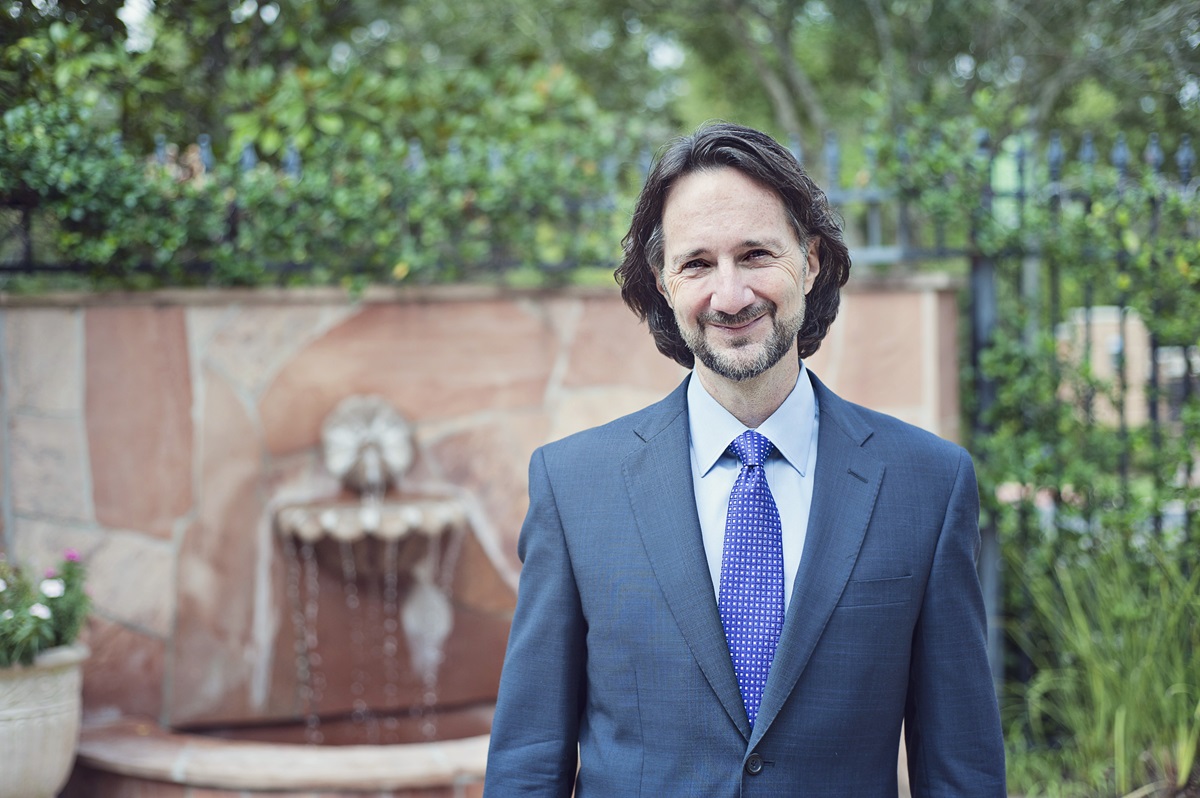
*Renfroe is the president and publisher of Good News and pastor of adult discipleship at The Woodlands United Methodist Church in The Woodlands, Texas.
Like what you're reading? Support the ministry of UM News! Your support ensures the latest denominational news, dynamic stories and informative articles will continue to connect our global community. Make a tax-deductible donation at ResourceUMC.org/GiveUMCom.