
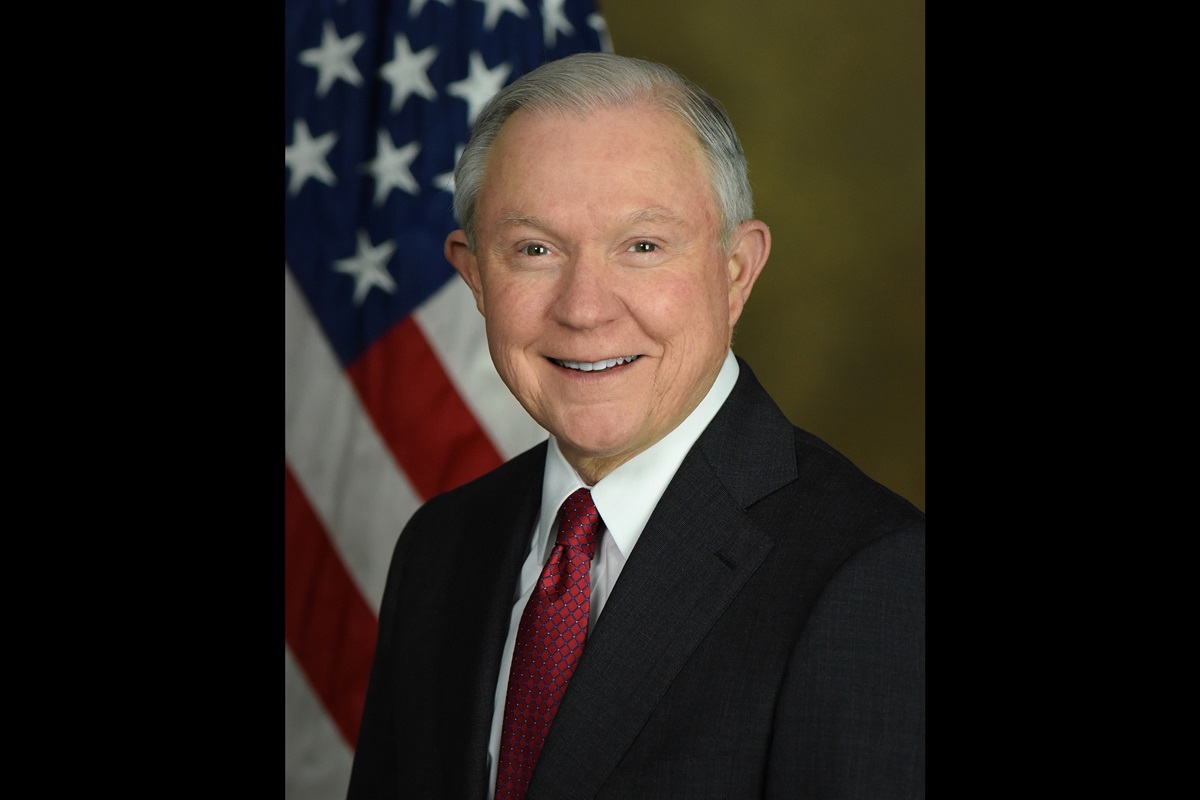
More than 600 United Methodist clergy and laity say they are bringing church law charges against U.S. Attorney General Jeff Sessions, a fellow United Methodist, over a zero tolerance U.S. immigration policy — a policy that includes separating children from parents apprehended for crossing into the U.S. illegally.
However, an authority on church history and polity said he’s unaware of a complaint against a lay person ever moving past the district level.
The group claimed in a June 18 statement that Sessions, a member of a Mobile, Alabama, church, violated Paragraph 2702.3 of the denomination’s Book of Discipline.
Specifically, the group accuses him of child abuse in reference to separating young children from their parents and holding them in mass incarceration facilities; immorality; racial discrimination and “dissemination of doctrines contrary to the established standards of doctrines” of The United Methodist Church.
All are categories listed in 2702.3 as chargeable offenses for a professing member of a local church.
“I really never would have thought I’d be working on charges against anybody in the Methodist connection, much less a lay person,” said the Rev. David Wright, a Pacific Northwest Conference elder and chaplain at the University of Puget Sound in Washington State, and organizer of the effort to charge Sessions.
But Wright said the Trump administration’s zero tolerance policy as enforced by Sessions, combined with Sessions’ use of Romans 13 to justify the policy, led him and others to conclude that more than a statement of protest was needed.
Sessions did not immediately respond to a request for comment left with his press office. In recent speeches, he has said the zero tolerance policy on illegial immigration is in the national interest and will protect children by discouraging immigrant parents from taking them on dangerous journeys to cross into the U.S.
The Rev. William Lawrence, professor emeritus at Perkins School of Theology and an authority on Methodist history and polity, said anyone in the church can bring a charge against anyone else. While it’s not uncommon for pastors, district superintendents and bishops to get complaints about a layperson, he said a formal complaint bringing charges is extremely rare.
The Book of Discipline allows for a church trial and even expulsion of a lay member, but the first step in a long process would be for the member’s pastor and district superintendent to solve the complaint through “pastoral steps,” Lawrence said.
“I’m not aware of any circumstance in the 50-year history of The United Methodist Church when a complaint against a lay person moved beyond the stage of its resolution by a district superintendent or a pastor,” he added.
Wright said the group’s goal in filing charges was to prompt such discussions.
“I hope his pastor can have a good conversation with him and come to a good resolution that helps him reclaim his values that many of us feel he’s violated as a Methodist,” Wright said.
He added: “I would look upon his being taken out of the denomination or leaving as a tragedy. That’s not what I would want from this.”
Wright said the complaint has been emailed to Sessions’ home church in Alabama, and to a Northern Virginia church that Wright said he understands Sessions regularly attends.
Sessions’ pastor at the Alabama church did not return calls.
Bishop David Graves of the Alabama-West Florida Conference did not respond to a request for comment on the group’s move against Sessions, whose home church is in that conference. A spokeswoman said he hasn’t been given details of the complaint.
Graves did release a statement that specifically addresses the separation of parents and children.
“I implore Congress and the current administration to do all in their power to reunite these families,” he said. “Changes to these laws need to be addressed starting today. Let us join our voices in prayer for the separated families, for those working to end this injustice and for our nation’s leaders.”
The Trump administration’s zero tolerance policy, specifically the separation of parents and children, has been widely criticized by religious leaders, including conservative evangelicals.
Last week, Sessions cited a verse from Romans to support the policy, prompting another round of criticism. Those critics included United Methodists.
The Rev. Susan Henry-Crowe, top executive of the United Methodist Board of Church and Society, decried both the policy and Sessions’ invoking of the Bible in its defense.
Calling the Trump administration’s zero tolerance policy “immoral,” former first lady Laura Bush, a lifelong United Methodist, said the policy that separates children from parents “breaks my heart.”
Bush, writing in the Washington Post, said people on all sides agree that the current immigration system is not working but said zero tolerance is not the answer.
“In 2018, can we not as a nation find a kinder, more compassionate and more moral answer to this current crisis?” she wrote. “I, for one, believe we can.”
Laura Bush and her husband, former President George W. Bush, are members of Highland Park United Methodist Church in Dallas.
Some individual United Methodists have written Sessions’ pastor on their own, asking for accountability from Sessions on the immigration policy.
The Rev. Valerie Nagel Vogt, associate pastor of Travis Park United Methodist Church in San Antonio, mailed such a letter on June 15. She said she was prompted, in part, by imagining her own feelings if she were separated from her two young children.
Vogt also hopes for a searching conversation on immigration and United Methodist values between Sessions and his pastor.
“I believe it is in community that we learn, grow and become more like Jesus,” she said. “There is abounding grace and an ongoing need for all of us who claim to follow Jesus to ask for forgiveness.”
The Rev. Abigail Parker Herrera, community outreach coordinator for Servant (United Methodist) Church in Austin, Texas, also wrote a letter to Sessions’ Alabama church.
She too is hoping Sessions will be persuaded to a new position on immigration, based on conversation with his pastor.
“Christianity wouldn’t exist if we didn’t believe people could change,” she said.
A number of interfaith leaders signed a June 7 letter calling for an end to the policy of separating families, including two United Methodists, Bishop H. Kenneth Carter Jr., president of the denomination’s Council of Bishops, and Jim Winkler, top executive of the National Council of Churches.
“Tearing children away from parents who have made a dangerous journey to provide a safe and sufficient life for them is unnecessarily cruel and detrimental to the well-being of parents and children,” the letter said.
The Clergy Letter Project, an organization representing a wide array of religions and denominations, including The United Methodist Church, also has voted to condemn the government’s separation of immigrant children from their parents.
Criticism of the use of family separation as part of a zero tolerance policy has come from a number of other religious groups and individuals, including Roman Catholic bishops and the Rev. Franklin Graham.
Hodges is a Dallas-based writer for United Methodist News Service. Kathy L. Gilbert and Linda Bloom of UMNS contributed to this story. Contact them at 615-742-5470 or newsdesk@umcom.org. To read more United Methodist news, subscribe to the free Daily or Weekly Digests
Like what you're reading? Support the ministry of UM News! Your support ensures the latest denominational news, dynamic stories and informative articles will continue to connect our global community. Make a tax-deductible donation at ResourceUMC.org/GiveUMCom.


